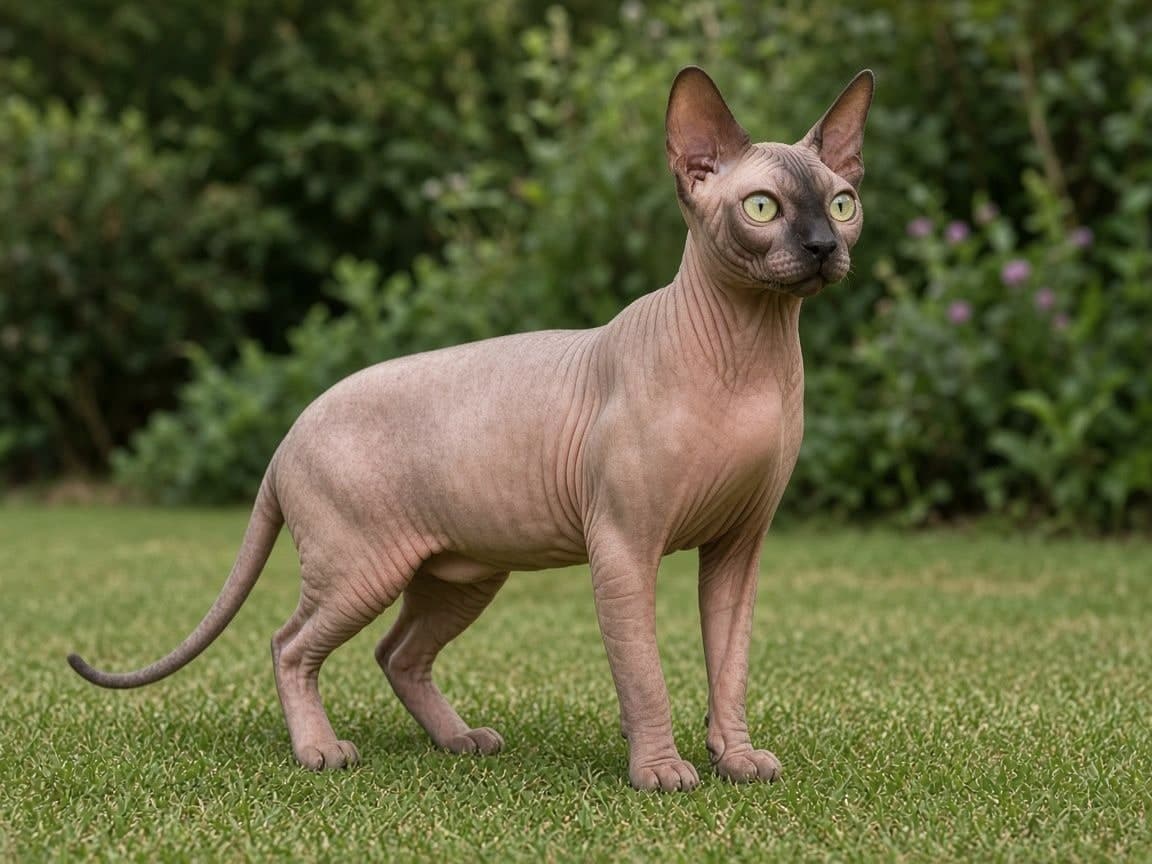
Sphynx at a glance
- Size
- Medium
- Weight
- 2.5–5.5 kg
- Life expectancy
- 8–14 years
Typical for the breed, not a promise about any one cat. Not assessed yet: Grooming.
Is the Sphynx right for you?
Like every breed, the Sphynx is not the right fit for every home. Based on the breed’s typical traits:
May suit you if…
- You would like an indoor cat: the breed is often content indoors.
- You have, or would like, another cat.
- You have a calm, cat-friendly dog and can introduce them slowly.
- You would enjoy an active, playful cat and have time to play every day.
Consider another breed if…
- The cat would regularly be alone for long working days.
- You have young children at home.
- This would be your first cat.
- You cannot keep the cat warm, out of strong sun and bathed regularly.
How would the Sphynx fit your lifestyle?
Choose a few details for a general, non-guaranteed view.
About the Sphynx
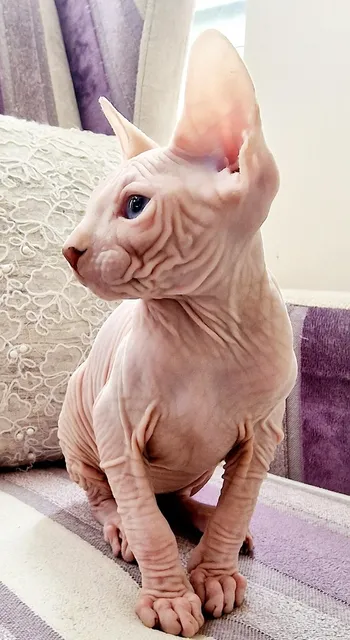
The Sphynx is a medium-sized cat whose most obvious feature is its lack of a fur coat. It is not completely bald: most have a fine down, likened to peach skin or chamois leather, with a little more hair on the nose, feet, tail and ears, and the amount varies between cats. It has no whiskers or eyelashes, and the skin is wrinkled in places, especially on the head. It is typically lively, intelligent and very affectionate, and craves human company.
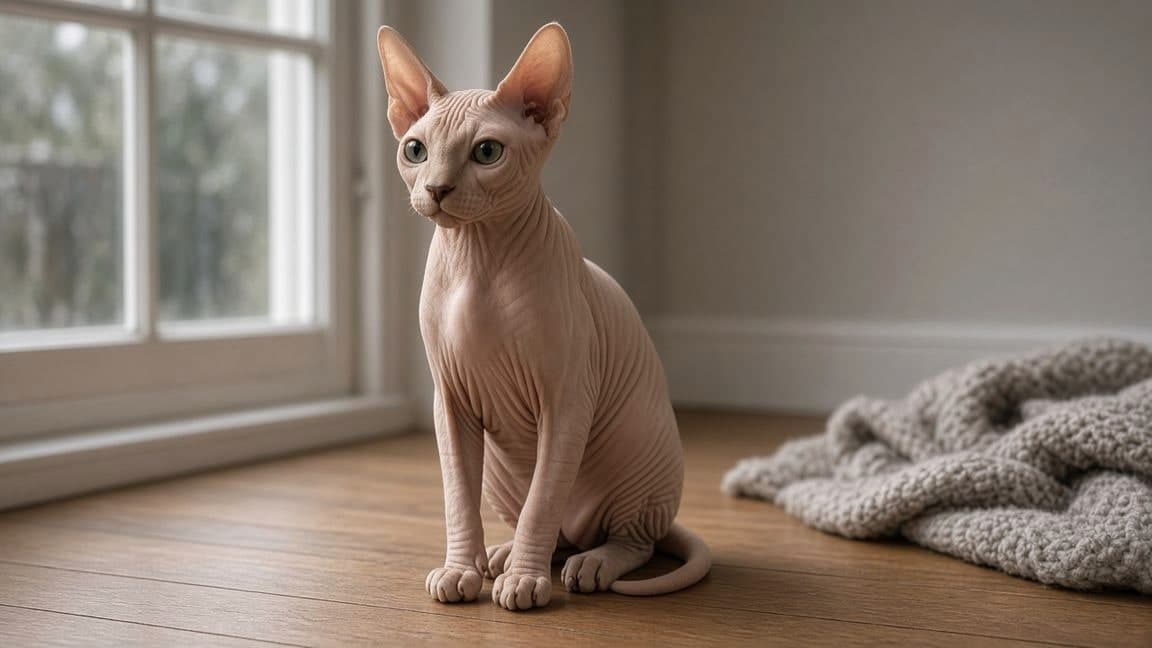
Key characteristics
General breed tendencies, not a prediction for an individual cat.
- Size
Medium
A mid-sized cat.
- Coat length
Hairless
Little or no coat, so skin care and warmth matter.
- Activity level
Very active
Very active; needs plenty of play and things to climb.
- Grooming
Not assessed yet
Our sources do not say enough yet.
- Shedding
Low
Tends to shed little, though every cat sheds some hair.
- Vocal
Very talkative
Often very talkative, with a voice that carries.
- Good with children
Older children
Usually better with older, calmer children.
- Good with other cats
Usually sociable
Usually enjoys the company of other cats.
- Good with dogs
Often fine
Often gets on with a cat-friendly dog.
- Suits first-time owners
Experienced owners
Best with an experienced cat owner.
- Time alone
Prefers company
Prefers company and is best not left alone for long.
- Indoors and outdoors
Happy indoors
Often content as an indoor cat, with enrichment.
Hairless cats have appeared throughout history, but the first recorded Sphynx kitten, called Prune, was born in Ontario, Canada, in 1966 as a natural mutation. Further hairless kittens found in the 1970s were bred with Devon Rex, Cornish Rex, American Shorthair and domestic shorthair cats to widen the gene pool, and most modern Sphynx descend from kittens found in Minnesota and Toronto.
Hairlessness raises welfare concerns that owners should understand. Without fur, the Sphynx is prone to sunburn and skin infections, needs warmth, cannot safely live outdoors and needs regular bathing. International Cat Care's position is that a coat is essential for a cat and that hairless cats should not be bred. The GCCF recognises the Sphynx but has said it does not intend to recognise further hairless breeds, citing reported health problems associated with hairlessness. Despite common claims, the Sphynx is not hypoallergenic, because most cat allergies are caused by an allergen in saliva.
Sphynx temperament
Sphynx are usually extremely outgoing, sociable and affectionate. They want to be involved in everything their owners do, follow them around the house, and will greet visitors and snuggle up with their people. Many are described as almost dog-like in their friendliness to family and strangers. They are very vocal and often seem to hold two-way conversations.
They are gregarious and dislike being alone. The GCCF advises that a Sphynx should never be the only cat in a household and should have feline company, ideally another Sphynx.
Size and appearance
The Sphynx is a medium-sized, muscular cat that is surprisingly heavy for its size, with a modified wedge-shaped head, prominent cheekbones, large eyes and ears, long legs and tail and neat, rounded paws. Adults typically weigh about 2.5 to 5.5 kg, and males are generally around 25% larger than females. They come in all colours and patterns, which show in the fine fur and the pigment of the skin.
How active is the Sphynx?
This is an energetic, curious cat that needs plenty of amusement. Provide toys, food-dispensing puzzles and cat trees, and expect it to entertain itself by pushing things off surfaces if it is bored. Sphynx can learn to play fetch and can be trained using positive reinforcement.
Sphynx grooming
Although there is little hair to brush, the Sphynx is high maintenance. Body oils that a coat would normally absorb build up on the skin, so regular bathing is needed; most Sphynx seem to enjoy it if they are used to it from a young age. The ears and feet can get very dirty with wax and need regular cleaning, taking care not to go into the ear canal. Shedding is very low.
Indoors and outdoors
The Sphynx is an indoor cat. It can easily get sunburnt and has little protection in a fight with another cat. It may go outside under supervision in suitable weather, ideally on a harness, in an enclosed safe garden or a purpose-built run; Purina UK suggests a heated "catio".
It needs a warm home with cosy spots and beds to snuggle into, and heating in cooler weather. The GCCF notes that it does not need extra heat beyond an ordinary bed with a blanket, as too much makes it sweat more. Sphynx usually need slightly more calories than other breeds because their bodies work hard to keep warm. They hate being alone, so they suit homes where someone is around a lot.
Living with a Sphynx
The GCCF says Sphynx enjoy the company of children and suit families with time to give them the attention they crave. Purina UK says they are not ideal with very young children and suit people who want a cat needing more attention than most.
Whatever the breed, young children should be supervised around cats and shown how to stroke them gently and let them walk away.
Children
Usually better with older, calmer children.
Other cats
Usually enjoys the company of other cats.
Dogs
Often gets on with a cat-friendly dog.
Indoors and outdoors
Often content as an indoor cat.
Being left alone
Prefers company and is best not left alone for long.
First-time owners
Best with an experienced cat owner.
Other cats and pets
Sphynx usually live happily with other cats and dogs, and enjoy the company of other animals, particularly other Sphynx.
Sphynx health
Not yet reviewed by a vet. This is general information, not veterinary advice: speak to your vet about your own cat’s health.
Purina UK lists the Sphynx as a generally healthy breed, but International Cat Care lists a wide range of conditions seen in the breed and notes that in a UK study the Sphynx had the shortest life expectancy of all breeds. Purina UK gives a lifespan of 8 to 14 years, while the GCCF gives around 15 years.
Hypertrophic cardiomyopathy (HCM)
A disease in which the heart muscle becomes abnormally thick, so the heart cannot beat effectively. It has been reported in young to middle-aged Sphynx and is strongly suspected to be inherited. The GCCF says breeding only from cats free of the associated gene prevents that form of HCM.
Other heart disorders
International Cat Care says Sphynx are also likely to suffer other heart problems, such as mitral valve dysplasia.
Skin disease and sunburn
The lack of fur makes skin infections and sunburn more likely. International Cat Care lists increased yeast on the skin, ear infections, figurate erythema and maculopapular cutaneous mastocytosis among the skin problems seen in the breed.
Congenital myasthenic syndrome and Devon Rex myopathy
Muscle conditions, most likely genetic, that can cause muscle weakness and nervous signs. Both have been found in the Sphynx, which was developed partly from Devon Rex cats.
Paroxysmal dyskinesia
A movement disorder that has been found in Sphynx cats.
Ocular sequestrum
A discoloured patch on the clear surface of the eye.
Uterine infections and urate bladder stones
International Cat Care lists both among the conditions the breed is likely to suffer.
What health checks should you ask about?
Responsible breeders and rescues are happy to talk about health, and any pressure to decide quickly is a reason to walk away. Before taking a Sphynx home, it is reasonable to ask about:
- Health testing of the parents. Ask which health tests the parents have had for conditions known in the breed, and to see the results.
- Veterinary and vaccination records. Kittens should have had a first vaccination and a vet check, with records you can take home.
- Microchip information. In England, cats must be microchipped and registered by 20 weeks old. Ask who the chip is registered to and how the transfer works.
- Registration paperwork. Registration papers, where they apply, record pedigree. They do not by themselves prove health or how a kitten was raised.
How much does a Sphynx cost to own?
There are two costs: bringing a Sphynx home, and looking after one well. Kitten prices depend on the breeder, health testing and demand; the adverts below show what sellers are asking today.
Ongoing costs are the ones new owners most often underestimate: food, insurance (which usually rises with age), routine vet care, vaccinations and parasite treatment, dental care, grooming, litter, scratching posts and toys, and a cattery or a sitter for holidays. Budget for the whole of the cat’s life, typically 8–14 years, not just the first year.
Buying a Sphynx
If you have decided the Sphynx suits your life, take the same care choosing where your cat comes from. Meet the kitten in person, see it with its mother, and look at how the litter is raised.
- Check who you are dealing with: every Mypetzilla advert shows the seller type and what we have checked.
- Ask about health testing, vaccinations and the microchip before you commit.
- Take your time. Do not be rushed by deposits or "last one left" stories.
- Meet in person before paying anything, and keep conversations on Mypetzilla.
Adopting a Sphynx
Sphynxs do come up for adoption, through rescue organisations, breed rescues and private rehoming, often because an owner’s circumstances have changed rather than any fault of the cat. An adult cat arrives as a known quantity: its size, coat and character are already on show.
Rescues will usually talk you through the cat’s history, any medical care, and the home it needs, including children, other animals and time alone. Be honest about your circumstances: a good rescue would rather place a cat once, well.
Sphynxs looking for homes
Live from Mypetzilla, updated as pets are listed.
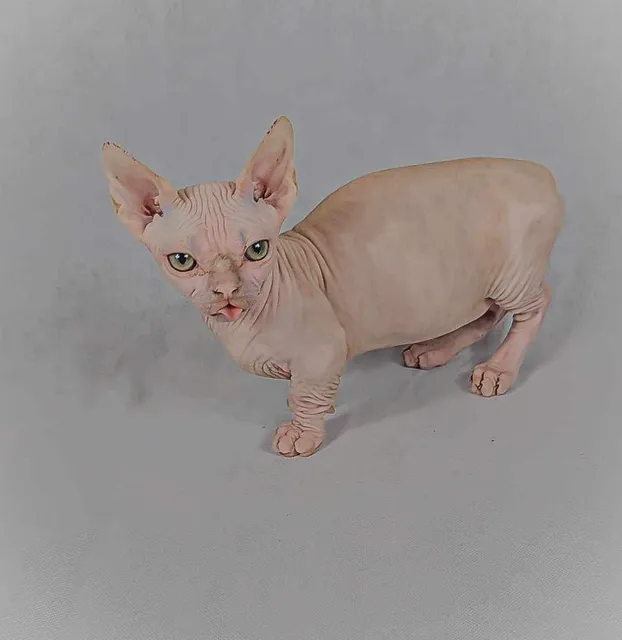
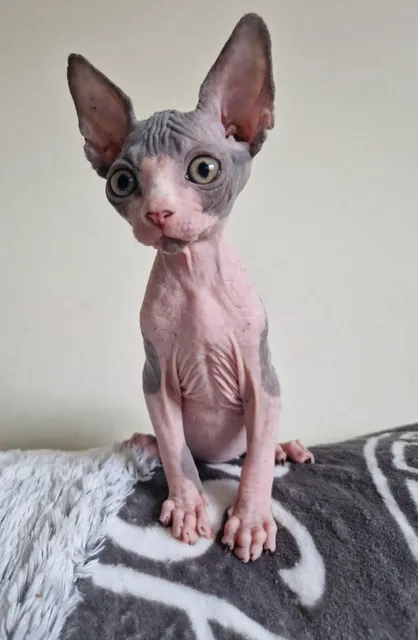
Find Sphynx adverts for sale and for adoption on Mypetzilla now.
Similar breeds you may want to consider
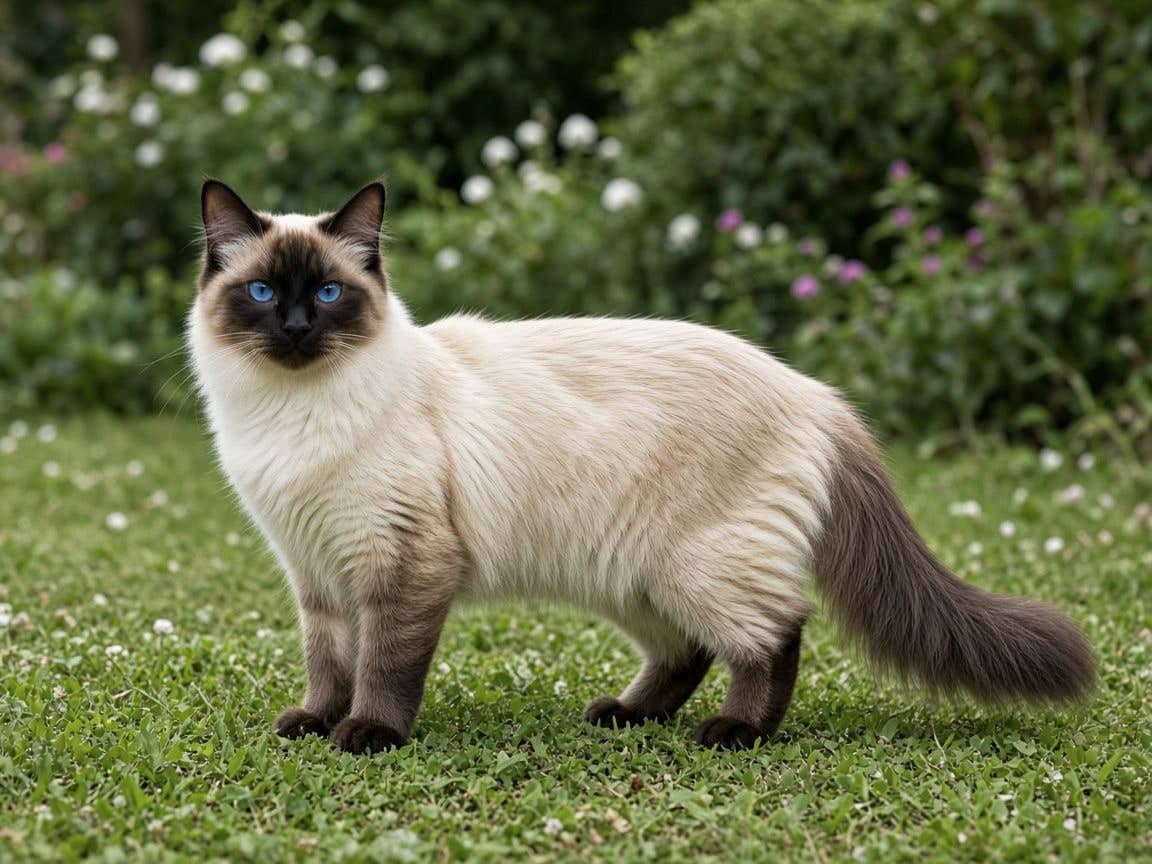
Balinese
Affectionate, inquisitive, playful, curious, outgoing, intelligent, extrovert and demanding.
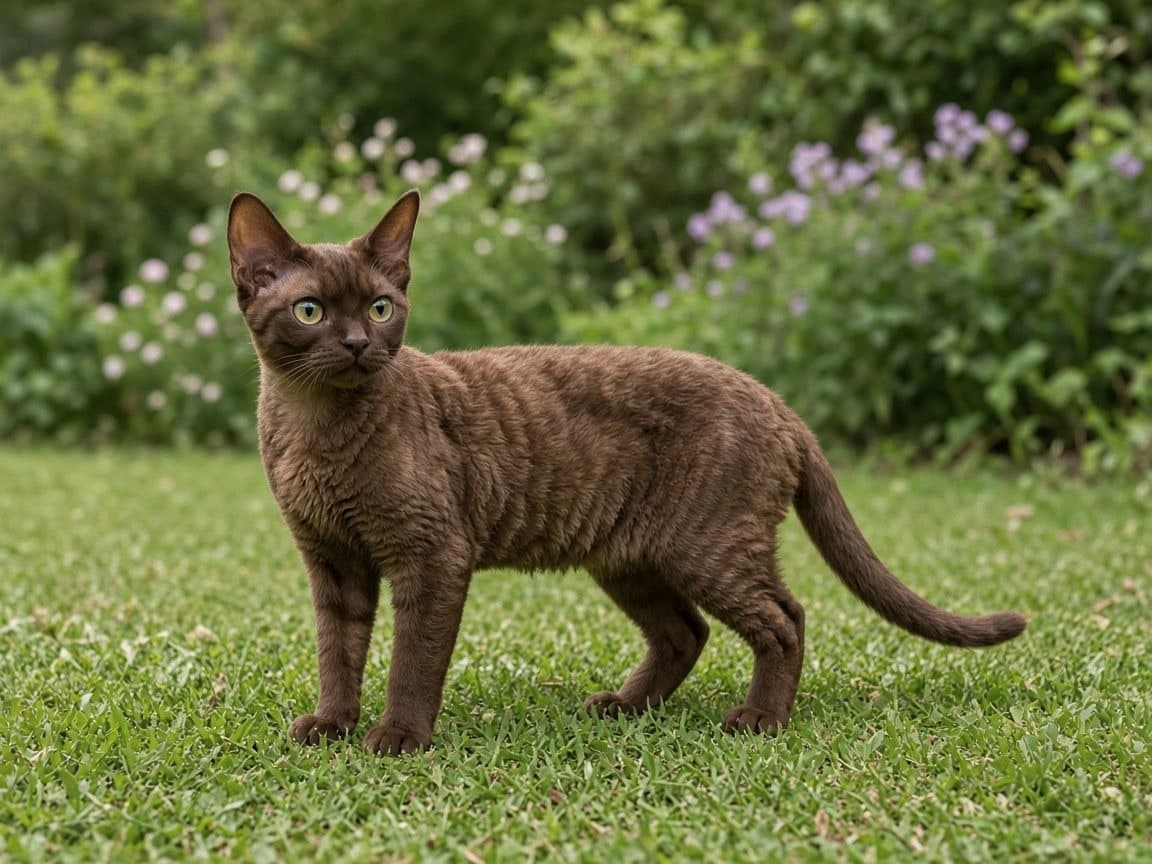
View breed guideDevon Rex
Intelligent, mischievous, active, playful, curious, friendly, affectionate and sociable.
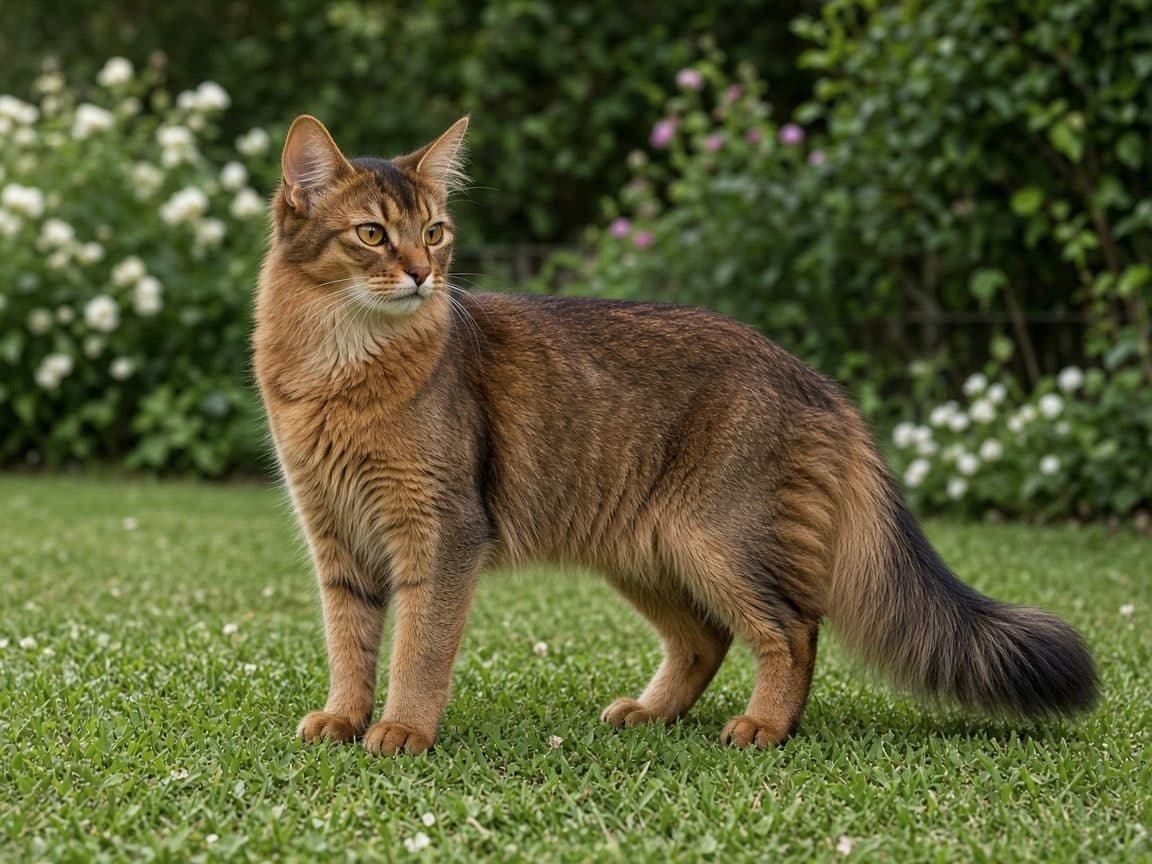
View breed guideSomali
Affectionate, intelligent, inquisitive, playful, loyal, curious, lively and alert.
View breed guide
Sphynx FAQs
Is the Sphynx good with children?
Usually better with older, calmer children. Individual cats vary with breeding, upbringing and health, so ask about the cat you are considering.
Can the Sphynx be an indoor cat?
Often content as an indoor cat. Indoor cats need daily play, places to climb and scratch, and a window to watch from.
How active is the Sphynx?
Very active and usually keen to play. Short play sessions every day help any cat stay fit and settled.
Does the Sphynx shed?
Tends to shed little.
Can the Sphynx be left alone?
Prefers company and is best not left alone for long. Every cat needs company, play and someone to check on it each day.
Is the Sphynx a talkative cat?
Often very talkative. Individual cats vary with breeding, upbringing and health, so ask about the cat you are considering.
Does the Sphynx get on with other cats?
Usually enjoys the company of other cats. Introduce cats slowly, with separate food, water, litter trays and resting places.
Is the Sphynx good with dogs?
Often gets on with a cat-friendly dog. Individual cats vary with breeding, upbringing and health, so ask about the cat you are considering.
How long does the Sphynx live?
Typically 8–14 years. Lifespan varies with genetics, weight, care and luck.
How big does the Sphynx get?
Adults typically weigh 2.5–5.5 kg.