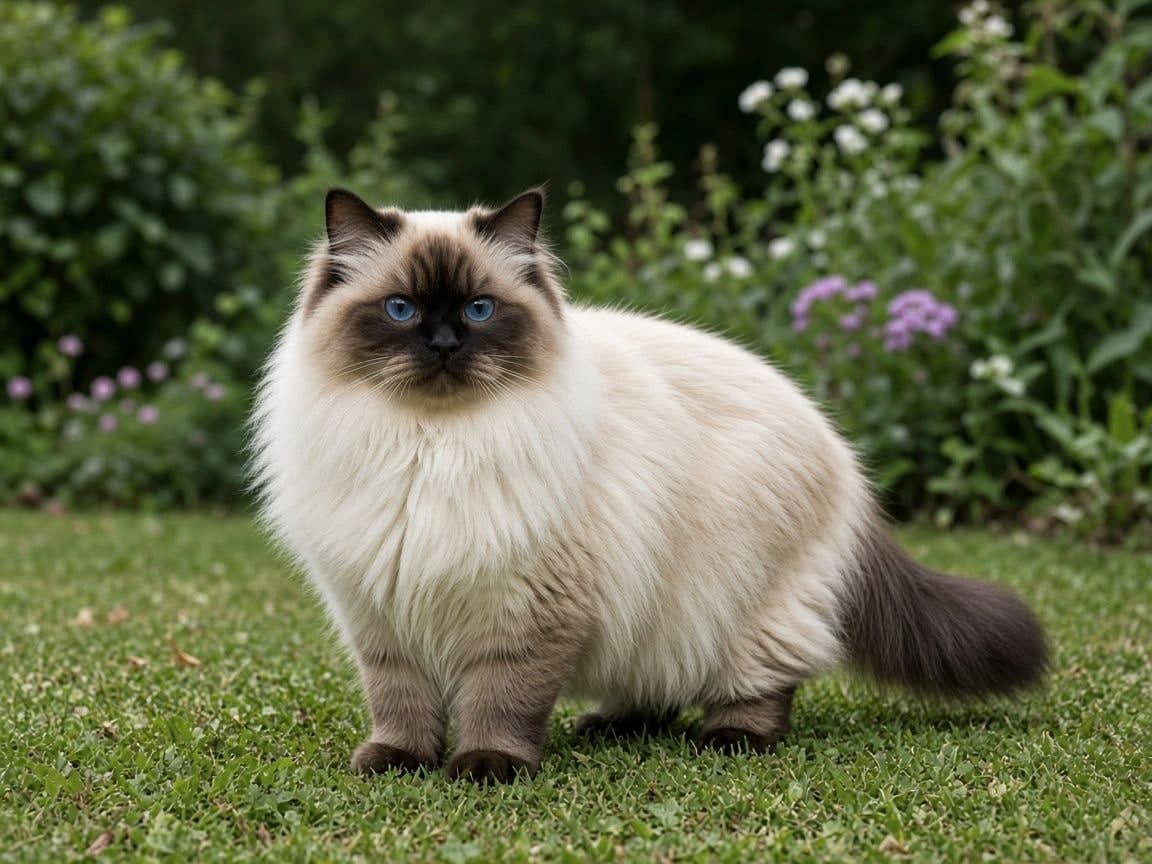
Himalayan at a glance
- Size
- Medium
- Weight
- 3.2–5.4 kg
- Life expectancy
- 14–16 years
Typical for the breed, not a promise about any one cat. Not assessed yet: Other cats, Living with dogs.
Is the Himalayan right for you?
Like every breed, the Himalayan is not the right fit for every home. Based on the breed’s typical traits:
May suit you if…
- You would like an indoor cat: the breed is often content indoors.
- You are out at work for part of the day.
- You would like a cat that is usually calm and laid-back.
- You would like a cat that tends to be quiet.
Consider another breed if…
- You have young children at home.
- You cannot commit to daily grooming.
- You would find a lot of cat hair hard to live with.
How would the Himalayan fit your lifestyle?
Choose a few details for a general, non-guaranteed view.
About the Himalayan
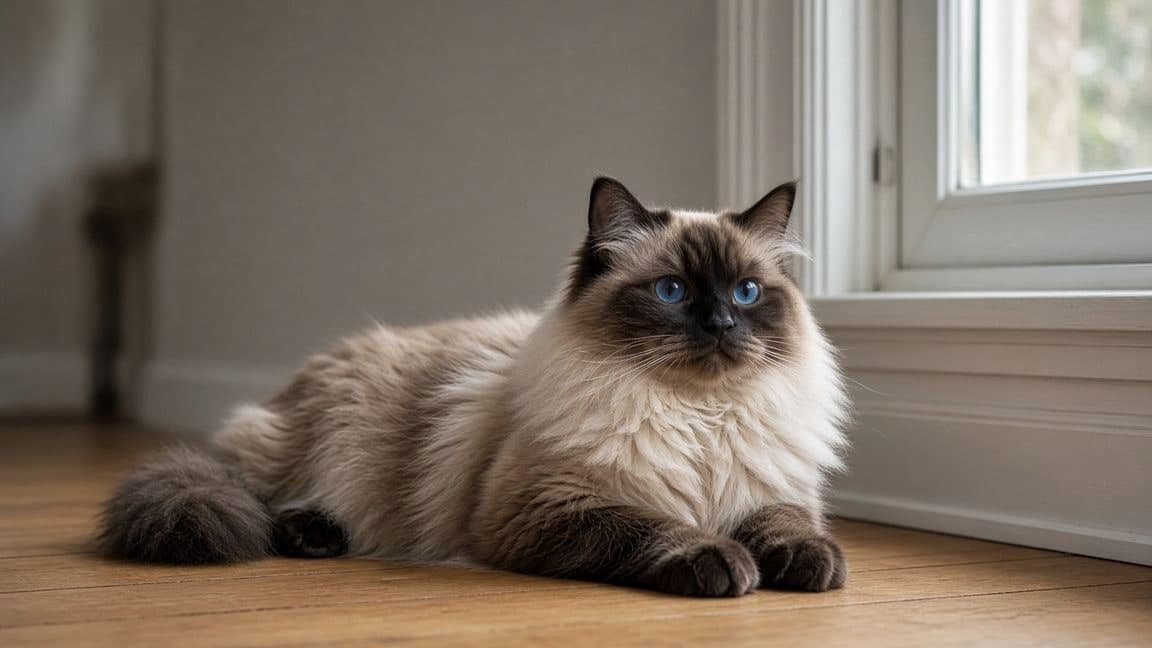
The Himalayan has the long, thick coat and stocky body of the Persian, with the pointed colouring and blue eyes of the Siamese: the mask, ears, legs and tail are darker than the body. In the UK it is not a separate breed: the GCCF treats colourpoint as one of the Persian patterns, and first recognised these cats as the Colourpoint Longhair. TICA also groups the Himalayan with the Persian and Exotic Shorthair. Himalayans are typically sweet, gentle and calm, and prefer a peaceful home.
Key characteristics
General breed tendencies, not a prediction for an individual cat.
- Size
Medium
A mid-sized cat.
- Coat length
Long
A long, full coat.
- Activity level
Laid-back
Usually calm and laid-back around the home.
- Grooming
Daily
The coat usually needs combing every day to prevent mats.
- Shedding
High
Tends to shed a lot, so expect hair around the home.
- Vocal
Tends to be quiet
Usually a fairly quiet cat.
- Good with children
Older children
Usually better with older, calmer children.
- Good with other cats
Not assessed yet
Our sources do not say enough yet.
- Good with dogs
Not assessed yet
Our sources do not say enough yet.
- Suits first-time owners
Some experience helps
Some cat experience helps.
- Time alone
Copes alone
Often copes well alone during the day.
- Indoors and outdoors
Happy indoors
Often content as an indoor cat, with enrichment.
The colourpoint Persian was created deliberately. TICA records an experimental breeding programme that began in 1931 and produced the first Himalayan kitten, further work in Canada in the 1950s, and recognition by the GCCF in 1955 as the Colourpoint Longhair. American registries recognised it as the Himalayan in 1957. The name comes from the pointed pattern, which is called Himalayan in other breeds too.
The modern Persian has a broad, rounded skull and a short, flat face, a shape known as brachycephaly. International Cat Care says that when this is severe it can cause breathing difficulties, eye problems, dental problems and skin infections, and Purina says the breed has a higher risk of health issues. Persians can also carry the gene for polycystic kidney disease. The coat needs daily care, because many Persians cannot keep it free of mats on their own.
Himalayan temperament
Himalayans are usually gentle, quiet and sedate. They are creatures of habit and prefer a calm atmosphere and gentle handling. Many communicate mainly with their large, expressive eyes and a soft, musical voice; some breeders say Himalayans are a little chattier than other Persians.
They are affectionate and like to stretch out beside you or sit on your lap when the mood takes them, but they do not demand constant attention. They are placid most of the time, with occasional bursts of kitten-like play. The GCCF describes Persians as extremely intelligent cats that settle easily into most homes.
Size and appearance
Persians are medium to large, heavily boned cats with a short, cobby body, short thick legs, large round paws and a short, well-furnished tail. Purina gives a weight of about 3.2–5.4 kg, and males are larger than females. The head is round and broad with small ears, large round eyes and a short nose.
The coat is long, thick and fine, with a dense undercoat and a full frill around the face in winter. In the colourpoint pattern the points can be many colours, including seal, blue, chocolate, lilac, red, cream, tortie and tabby points. The eyes are blue.
How active is the Himalayan?
Himalayans are not natural climbers and prefer to stay on the ground rather than leap onto high shelves. They enjoy short, gentle games with a teaser, ball or catnip mouse, and these help keep them active and prevent weight gain. You may need to encourage them to play every day.
Himalayan grooming
The long coat needs combing every day, ideally with a metal comb, to stop tangles turning into mats and to remove loose hair that could cause hairballs. Five or ten minutes of careful combing each day is usually enough. Purina rates shedding as high.
Wipe the eyes and face daily, as the large eyes can run and leave tear stains. Check under the tail after the litter tray, and clean the bib if food stains it. An occasional bath is recommended, and the routine is best started young.
Indoors and outdoors
The Himalayan is very much an indoor cat. Short strolls close to the house are fine, but it is not athletic enough for the wider outdoors and may be bullied by neighbourhood cats. A small sheltered outdoor run for sunbathing can work well. Persians are usually comfortable at home whether you are there or not, and can be left alone while owners work, though they need daily care.
Living with a Himalayan
The GCCF says Persians make excellent family pets and are happy to be combed and stroked by children, but are unlikely to join in boisterous games. Purina adds that a quiet, peaceful home is best, which may rule out homes with very young children or a lot of noisy activity.
Whatever the breed, young children should be supervised around cats and shown how to stroke them gently and let them walk away.
Children
Usually better with older, calmer children.
Indoors and outdoors
Often content as an indoor cat.
Being left alone
Often copes well alone during the day.
First-time owners
Some cat experience helps.
Himalayan health
Not yet reviewed by a vet. This is general information, not veterinary advice: speak to your vet about your own cat’s health.
Purina says the Persian has a higher risk of health issues, mainly because of its flat face. The GCCF notes that conscientious breeders select to avoid these problems. Lifespan figures vary: the GCCF says Persians usually live 15 years or more, while other sources give shorter ranges.
Brachycephalic obstructive airway syndrome (BOAS)
Narrow nostrils, narrow nasal passages and a soft palate that is too long make breathing difficult, sometimes severely. International Cat Care says BOAS is common in these cats.
Eye problems
Very prominent eyes that cannot close fully are prone to keratitis, corneal sequestrum and painful ulcers. Short, deformed tear ducts often cause runny eyes and tear staining.
Dental and jaw problems
In short-nosed Persians the teeth often do not line up properly, which can make biting, chewing, eating and grooming harder and can lead to dental disease.
Skin fold infections
Excess skin folds on a flat face can lead to soreness and bacterial or fungal infection.
Polycystic kidney disease (PKD)
An inherited condition in which cysts form in the kidneys and can eventually lead to kidney failure. GCCF rules have required PKD testing for breeding Persians on the Active Register since 2016. Ask the breeder to show PKD certificates for the parents.
Progressive retinal atrophy (PRA)
An inherited disorder in which part of the eye degenerates, which can lead to blindness. A DNA test is available.
Hypertrophic cardiomyopathy (HCM)
The heart muscle becomes abnormally thick, so the heart cannot beat effectively. TICA advises owners to check with their breeder and vet about this condition.
Other inherited conditions
Hip dysplasia is seen more often in Persians than in many other breeds. Alpha-mannosidosis, a rare inherited storage disease that affects many organs, has also been seen.
What health checks should you ask about?
Responsible breeders and rescues are happy to talk about health, and any pressure to decide quickly is a reason to walk away. Before taking a Himalayan home, it is reasonable to ask about:
- Health testing of the parents. Ask which health tests the parents have had for conditions known in the breed, and to see the results.
- Veterinary and vaccination records. Kittens should have had a first vaccination and a vet check, with records you can take home.
- Microchip information. In England, cats must be microchipped and registered by 20 weeks old. Ask who the chip is registered to and how the transfer works.
- Registration paperwork. Registration papers, where they apply, record pedigree. They do not by themselves prove health or how a kitten was raised.
How much does a Himalayan cost to own?
There are two costs: bringing a Himalayan home, and looking after one well. Kitten prices depend on the breeder, health testing and demand; the adverts below show what sellers are asking today.
Ongoing costs are the ones new owners most often underestimate: food, insurance (which usually rises with age), routine vet care, vaccinations and parasite treatment, dental care, grooming, litter, scratching posts and toys, and a cattery or a sitter for holidays. Budget for the whole of the cat’s life, typically 14–16 years, not just the first year.
Buying a Himalayan
If you have decided the Himalayan suits your life, take the same care choosing where your cat comes from. Meet the kitten in person, see it with its mother, and look at how the litter is raised.
- Check who you are dealing with: every Mypetzilla advert shows the seller type and what we have checked.
- Ask about health testing, vaccinations and the microchip before you commit.
- Take your time. Do not be rushed by deposits or "last one left" stories.
- Meet in person before paying anything, and keep conversations on Mypetzilla.
Adopting a Himalayan
Himalayans do come up for adoption, through rescue organisations, breed rescues and private rehoming, often because an owner’s circumstances have changed rather than any fault of the cat. An adult cat arrives as a known quantity: its size, coat and character are already on show.
Rescues will usually talk you through the cat’s history, any medical care, and the home it needs, including children, other animals and time alone. Be honest about your circumstances: a good rescue would rather place a cat once, well.
Himalayans looking for homes
Live from Mypetzilla, updated as pets are listed.
There are no Himalayan adverts at the moment.
Find Himalayan adverts for sale and for adoption on Mypetzilla now.
Similar breeds you may want to consider
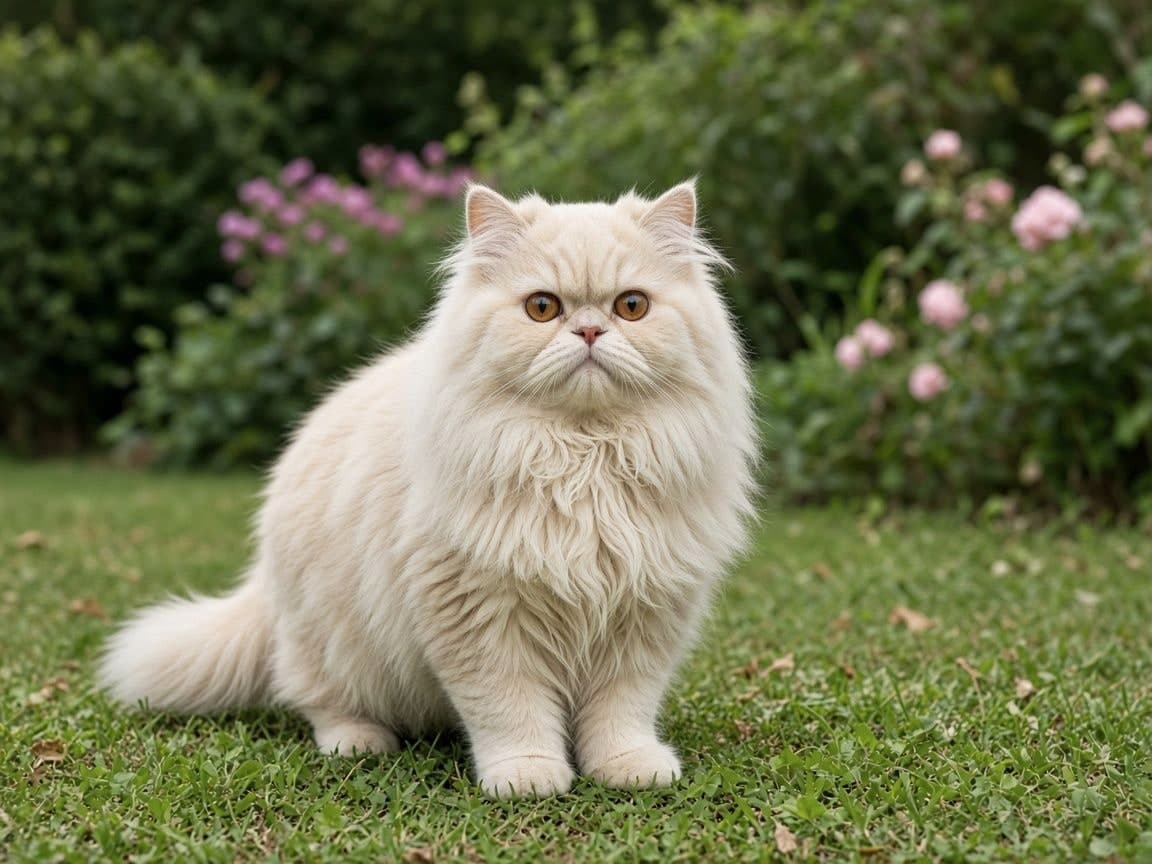
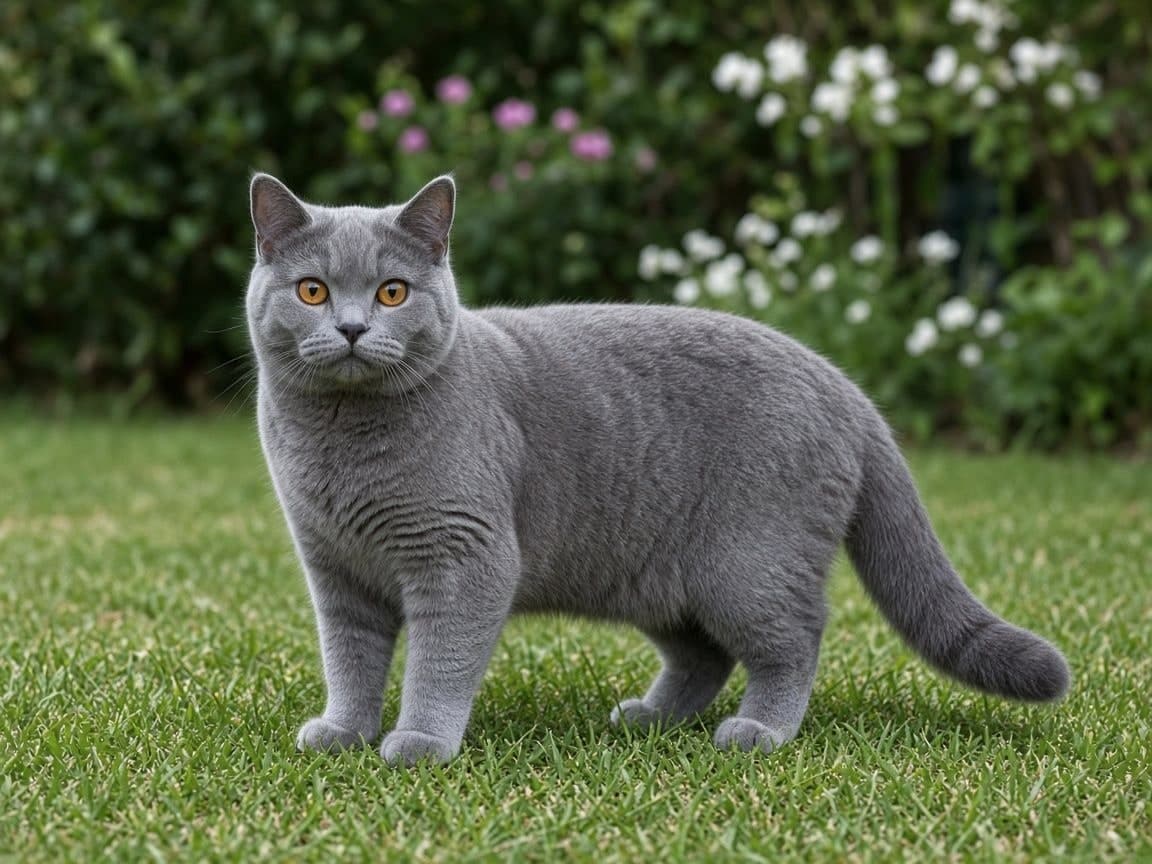
British Shorthair
Patient, tolerant, relaxed, affectionate, loyal, playful, calm and easygoing.
View breed guideBritish Longhair
Patient, tolerant, relaxed, calm, easygoing, affectionate, quiet and sensitive.
View breed guide
Himalayan FAQs
Is the Himalayan good with children?
Usually better with older, calmer children. Individual cats vary with breeding, upbringing and health, so ask about the cat you are considering.
Can the Himalayan be an indoor cat?
Often content as an indoor cat. Indoor cats need daily play, places to climb and scratch, and a window to watch from.
How active is the Himalayan?
Usually calm and laid-back. Short play sessions every day help any cat stay fit and settled.
Does the Himalayan shed?
Tends to shed a lot.
How much grooming does the Himalayan need?
Typically: daily.
Can the Himalayan be left alone?
Often copes well alone during the day. Every cat needs company, play and someone to check on it each day.
Is the Himalayan a talkative cat?
Tends to be quiet. Individual cats vary with breeding, upbringing and health, so ask about the cat you are considering.
How long does the Himalayan live?
Typically 14–16 years. Lifespan varies with genetics, weight, care and luck.
How big does the Himalayan get?
Adults typically weigh 3.2–5.4 kg.