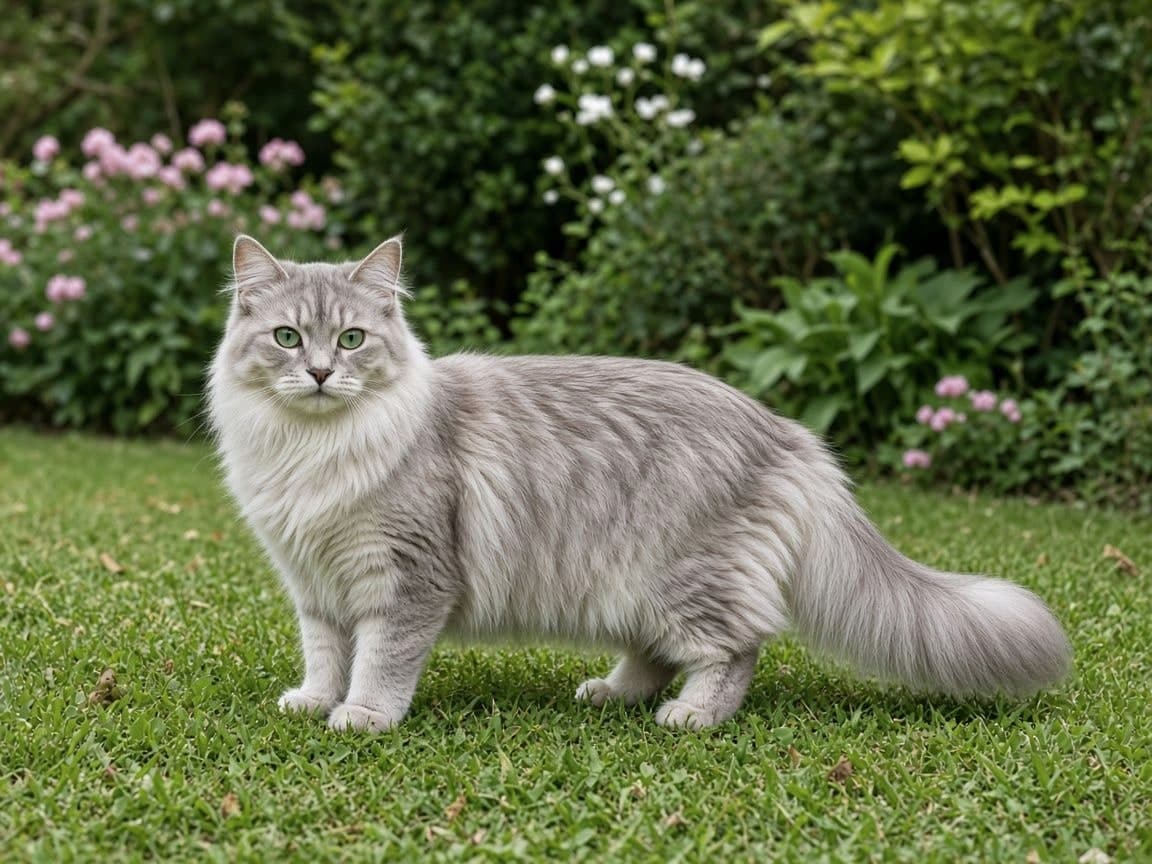
Tiffanie at a glance
- Size
- Medium
- Weight
- 3.5–5.5 kg
Typical for the breed, not a promise about any one cat. Not assessed yet: Typical lifespan.
Is the Tiffanie right for you?
Like every breed, the Tiffanie is not the right fit for every home. Based on the breed’s typical traits:
May suit you if…
- This would be your first cat and you are ready to learn.
- You have, or would like, another cat.
- You have a calm, cat-friendly dog and can introduce them slowly.
- You would like a coat that is fairly easy to look after.
Consider another breed if…
- The cat would regularly be alone for long working days.
- You cannot offer any safe outdoor space.
- You have young children at home.
How would the Tiffanie fit your lifestyle?
Choose a few details for a general, non-guaranteed view.
About the Tiffanie
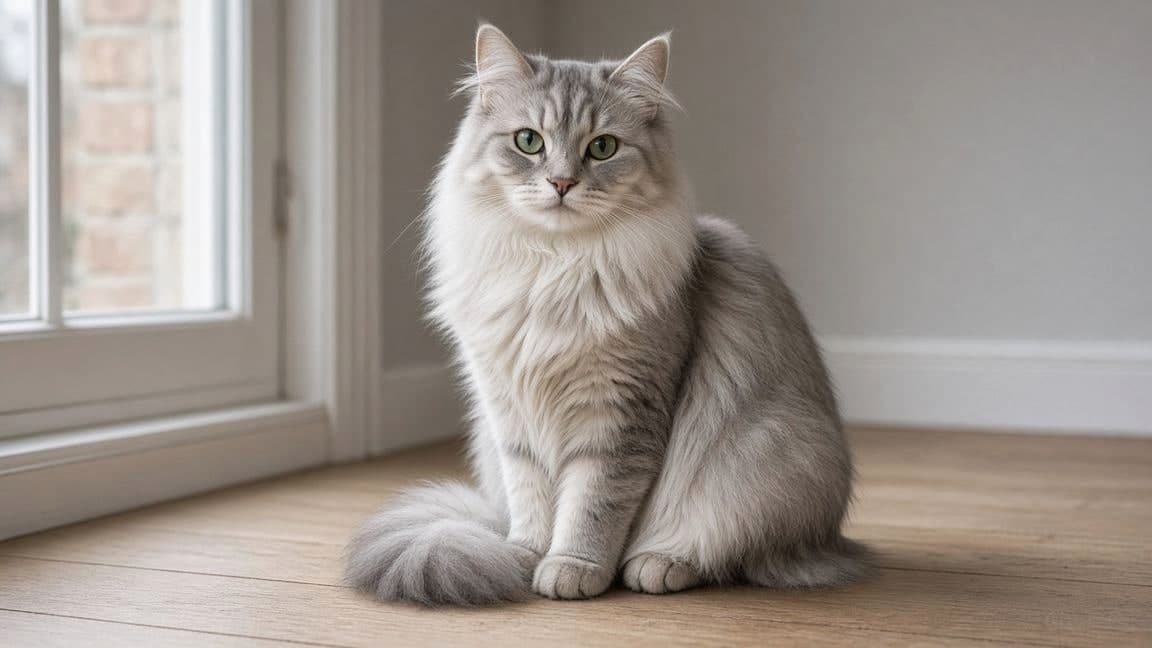
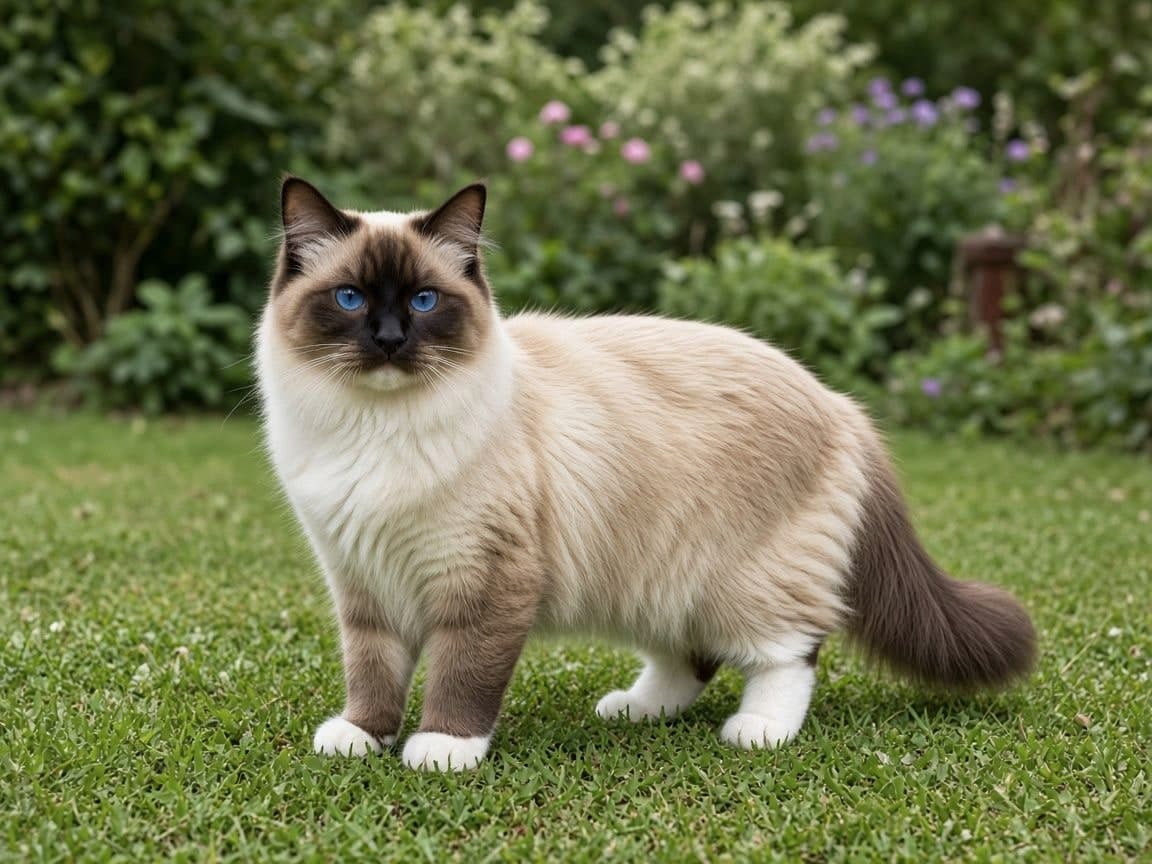
The Tiffanie is a medium-sized, solid and muscular cat with a fine, silky, semi-long coat that forms a ruff at the neck and a plume-like tail. It has the head and body type of the Burmese, with large eyes and wide-set ears. It is usually affectionate and playful, and more laid back than its Burmese ancestors.
Key characteristics
General breed tendencies, not a prediction for an individual cat.
- Size
Medium
A mid-sized cat.
- Coat length
Semi-long
A semi-long coat.
- Activity level
Moderate
Moderately active, with bursts of play.
- Grooming
Weekly
The coat usually needs brushing about once a week.
- Shedding
Low
Tends to shed little, though every cat sheds some hair.
- Vocal
Talks sometimes
Will talk to you, but is not usually loud.
- Good with children
Older children
Usually better with older, calmer children.
- Good with other cats
Usually sociable
Usually enjoys the company of other cats.
- Good with dogs
Often fine
Often gets on with a cat-friendly dog.
- Suits first-time owners
Often
Often suits first-time cat owners.
- Time alone
Prefers company
Prefers company and is best not left alone for long.
- Indoors and outdoors
Some outdoor space
Benefits from some safe outdoor space, such as a cat-proofed garden.
In the UK, the Tiffanie is one of the five varieties of the Asian group recognised by the GCCF: it is the semi-longhaired version, alongside the shorthaired Asian Self (including the Bombay), Smoke, Shaded (the Burmilla) and Tabby. The group began by accident when a Chinchilla Persian male and a Lilac Burmese female belonging to Baroness Miranda von Kirchberg mated, producing four kittens that became the foundation of the Burmilla. Breeders crossing Burmese and Chinchilla Persian types found that the short-coated kittens became Burmillas and the long-coated ones Tiffanies. All five Asian varieties had GCCF championship status by 2003.
The Tiffanie is sometimes confused with the Chantilly-Tiffany, a separate and now extinct semi-longhaired breed.
Tiffanie temperament
Purina UK describes the Tiffanie as a moderate mix of its ancestors: easy-going in a calm, peaceful home, and happy relaxing, playing with toys or sitting on laps. The GCCF describes the Asian group as affectionate, intelligent and inquisitive cats that want to be part of their owner's life, and notes that their gentleness appeals to older people looking for a devoted companion.
Asians are not particularly noisy, but they are chatty and will often answer when spoken to. Tiffanies appreciate company and rely heavily on their people.
Size and appearance
The Tiffanie is a medium-sized cat that is heavy for its size, with a broad, rounded chest, slender legs, neat oval paws and a short, blunt wedge-shaped head. Adults typically weigh about 3.5 to 5.5 kg; the GCCF notes that males in the Asian group can weigh more, up to about 7 kg.
The coat is medium to long, fine and silky, without a woolly undercoat. It lies flat along the spine, lengthens into frills along the lower body, and may form streamers from the ears and tufts at the ear tips. Tiffanies come in a wide range of colours and patterns, including self colours, smoke, shaded and tipped, and all tabby patterns. Eyes range from pale green through yellow to golden amber.
How active is the Tiffanie?
Purina UK notes that the Tiffanie is inclined to be lazy and is more likely to need encouragement to exercise than to calm down, though the GCCF describes the Asian group overall as lively and playful. A cat tree, toys and food-dispensing toys help keep it moving, along with space to climb, jump and run.
Tiffanie grooming
The GCCF rates grooming for the semi-longhaired Asian as weekly, and says the Tiffanie needs a little more attention than its shorthaired relatives. Purina UK recommends grooming every day, as the coat is particularly thick around the ruff and tail. Regular grooming keeps the coat free of tangles and mats and gets the cat used to being handled. Shedding is fairly low.
Indoors and outdoors
The Tiffanie is happy as an indoor cat as long as it has equipment for climbing and jumping and is encouraged to exercise. Purina UK says a secure outdoor space such as a cat run or cat-proofed balcony is also appreciated.
Tiffanies are not happy being left for long periods, even with another cat for company. Purina UK warns they are likely to find catteries or pet sitters stressful, which can lead to behaviour problems, so they may not suit people who are often away for weekends.
Living with a Tiffanie
In a quiet, peaceful home with older children, the Tiffanie can make an excellent family pet. Purina UK says it is likely to find busy, chaotic homes too much and will not appreciate the attention of very small children. The GCCF describes Asians as good family pets that get on well with children when properly introduced.
Whatever the breed, young children should be supervised around cats and shown how to stroke them gently and let them walk away.
Children
Usually better with older, calmer children.
Other cats
Usually enjoys the company of other cats.
Dogs
Often gets on with a cat-friendly dog.
Indoors and outdoors
Benefits from some safe outdoor space.
Being left alone
Prefers company and is best not left alone for long.
First-time owners
Often suits first-time cat owners.
Other cats and pets
Asians generally live contentedly with other cats, especially confident, lively breeds of a similar nature, but they can be wilful and problems sometimes arise if one wants to be top cat. Another cat of the same or a similar type can provide company. They usually get on well with dogs if properly introduced.
Tiffanie health
Not yet reviewed by a vet. This is general information, not veterinary advice: speak to your vet about your own cat’s health.
Purina UK describes the Tiffanie as a generally healthy breed. Lifespan estimates vary widely: Purina UK gives 7 to 12 years for the Tiffanie, while the GCCF gives an average of about 16 to 18 years for the Asian group. Asians mature sexually at a young age, so the GCCF suggests talking to your vet early about neutering.
Polycystic kidney disease (PKD)
An inherited condition in which cysts form in the kidneys, affecting how they work and possibly leading to kidney failure. Purina UK says the risk in the Tiffanie is lower than in some other breeds, and a DNA test is available. The GCCF notes PKD has been identified in the Asian's ancestral breeds.
Hypokalaemia
An inherited disease that has been found in the Asian group. A reliable DNA test exists, and since January 2018 the GCCF has required testing for all Asians registered for breeding.
Progressive retinal atrophy (PRA)
An inherited eye condition that the GCCF says has been identified in the Asian's ancestral breeds, though not so far in the Asian itself.
What health checks should you ask about?
Responsible breeders and rescues are happy to talk about health, and any pressure to decide quickly is a reason to walk away. Before taking a Tiffanie home, it is reasonable to ask about:
- Health testing of the parents. Ask which health tests the parents have had for conditions known in the breed, and to see the results.
- Veterinary and vaccination records. Kittens should have had a first vaccination and a vet check, with records you can take home.
- Microchip information. In England, cats must be microchipped and registered by 20 weeks old. Ask who the chip is registered to and how the transfer works.
- Registration paperwork. Registration papers, where they apply, record pedigree. They do not by themselves prove health or how a kitten was raised.
How much does a Tiffanie cost to own?
There are two costs: bringing a Tiffanie home, and looking after one well. Kitten prices depend on the breeder, health testing and demand; the adverts below show what sellers are asking today.
Ongoing costs are the ones new owners most often underestimate: food, insurance (which usually rises with age), routine vet care, vaccinations and parasite treatment, dental care, grooming, litter, scratching posts and toys, and a cattery or a sitter for holidays. Budget for the whole of the cat’s life, not just the first year.
Buying a Tiffanie
If you have decided the Tiffanie suits your life, take the same care choosing where your cat comes from. Meet the kitten in person, see it with its mother, and look at how the litter is raised.
- Check who you are dealing with: every Mypetzilla advert shows the seller type and what we have checked.
- Ask about health testing, vaccinations and the microchip before you commit.
- Take your time. Do not be rushed by deposits or "last one left" stories.
- Meet in person before paying anything, and keep conversations on Mypetzilla.
Adopting a Tiffanie
Tiffanies do come up for adoption, through rescue organisations, breed rescues and private rehoming, often because an owner’s circumstances have changed rather than any fault of the cat. An adult cat arrives as a known quantity: its size, coat and character are already on show.
Rescues will usually talk you through the cat’s history, any medical care, and the home it needs, including children, other animals and time alone. Be honest about your circumstances: a good rescue would rather place a cat once, well.
Tiffanies looking for homes
Live from Mypetzilla, updated as pets are listed.
There are no Tiffanie adverts at the moment.
Find Tiffanie adverts for sale and for adoption on Mypetzilla now.
Similar breeds you may want to consider
American Wirehair
Playful, gentle, intelligent, easygoing, loving, curious, independent and quiet.
View breed guide
Tiffanie FAQs
Is the Tiffanie good with children?
Usually better with older, calmer children. Individual cats vary with breeding, upbringing and health, so ask about the cat you are considering.
Can the Tiffanie be an indoor cat?
Benefits from some safe outdoor space. Indoor cats need daily play, places to climb and scratch, and a window to watch from.
How active is the Tiffanie?
Moderately active, with bursts of play. Short play sessions every day help any cat stay fit and settled.
Does the Tiffanie shed?
Tends to shed little.
How much grooming does the Tiffanie need?
Typically: about once a week.
Can the Tiffanie be left alone?
Prefers company and is best not left alone for long. Every cat needs company, play and someone to check on it each day.
Is the Tiffanie a talkative cat?
Talks sometimes. Individual cats vary with breeding, upbringing and health, so ask about the cat you are considering.
Does the Tiffanie get on with other cats?
Usually enjoys the company of other cats. Introduce cats slowly, with separate food, water, litter trays and resting places.
Is the Tiffanie good with dogs?
Often gets on with a cat-friendly dog. Individual cats vary with breeding, upbringing and health, so ask about the cat you are considering.
How big does the Tiffanie get?
Adults typically weigh 3.5–5.5 kg.