Serengeti at a glance
- Size
- Medium
- Weight
- 3.6–6.8 kg
Typical for the breed, not a promise about any one cat. Not assessed yet: Grooming, Shedding, Indoors and outdoors, Time alone, Owner experience, Children, Other cats, Living with dogs, Typical lifespan.
Is the Serengeti right for you?
Like every breed, the Serengeti is not the right fit for every home. Based on the breed’s typical traits:
May suit you if…
- You would enjoy an active, playful cat and have time to play every day.
- You would enjoy a chatty cat that talks to you.
Consider another breed if…
- You would find a loud, talkative cat hard to live with.
- You would like a calm, laid-back cat.
How would the Serengeti fit your lifestyle?
Choose a few details for a general, non-guaranteed view.
About the Serengeti
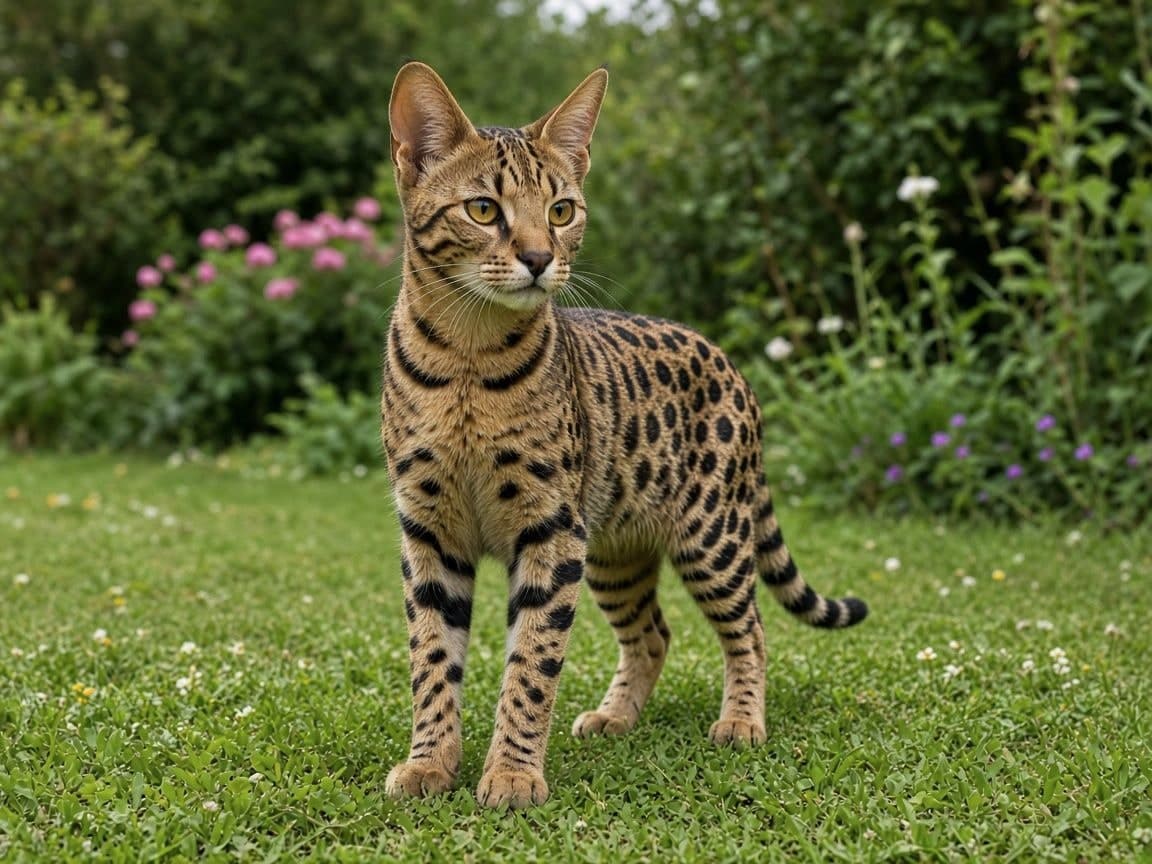
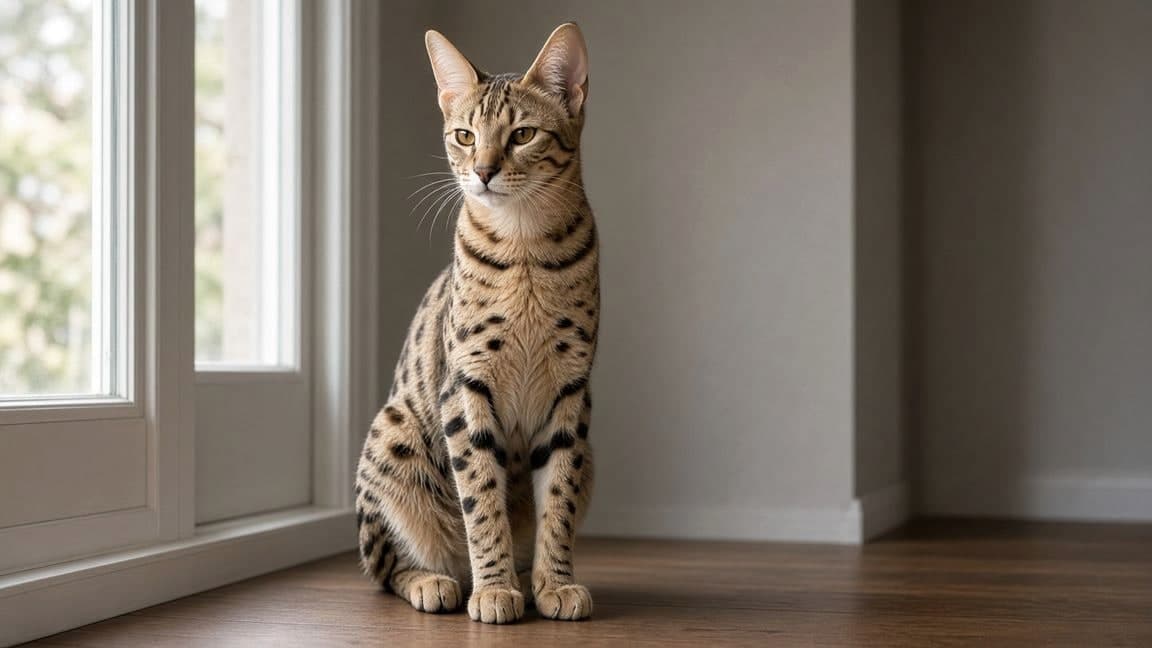
The Serengeti is a medium-sized, long-legged cat with a short, silky coat, bold spots and strikingly large ears. It has a graceful, upright, statuesque stance and a long neck. Serengetis are usually gentle, confident, outgoing and alert, and very active.
Key characteristics
General breed tendencies, not a prediction for an individual cat.
- Size
Medium
A mid-sized cat.
- Coat length
Short
A short coat.
- Activity level
Very active
Very active; needs plenty of play and things to climb.
- Grooming
Not assessed yet
Our sources do not say enough yet.
- Shedding
Not assessed yet
Our sources do not say enough yet.
- Vocal
Very talkative
Often very talkative, with a voice that carries.
- Good with children
Not assessed yet
Our sources do not say enough yet.
- Good with other cats
Not assessed yet
Our sources do not say enough yet.
- Good with dogs
Not assessed yet
Our sources do not say enough yet.
- Suits first-time owners
Not assessed yet
Our sources do not say enough yet.
- Time alone
Not assessed yet
Our sources do not say enough yet.
- Indoors and outdoors
Not assessed yet
Our sources do not say enough yet.
The breed was created by Karen Sausman, a conservation biologist and owner of Kingsmark Cattery in California, who set out to develop a domestic cat partly modelled on the African serval. Unlike the Savannah, the Serengeti has no serval blood: it was developed by crossing Bengals with Oriental Shorthairs. The Bengal itself was bred from crosses with the Asian leopard cat, although most Bengals in the UK are now more than five generations removed from that original cross.
Work on the breed began slowly in 1995, and Serengetis are now bred in small numbers in the United States, the United Kingdom, Europe, Australia and Russia. They are registered with TICA and can be shown there as a preliminary new breed. The Governing Council of the Cat Fancy (GCCF) does not currently recognise the Serengeti. It lists the breed among those that have not yet applied for recognition but would probably be accepted if enough information were provided.
Serengeti temperament
The ideal Serengeti has an open, self-assured and friendly temperament. Some may be shy for a few moments in a new place, but once they settle in with their owners they can become very attached, always wanting to be with you and help with whatever you are doing. They are often vocal, probably inherited from their Oriental ancestors, and will happily chat with you.
Size and appearance
Serengetis are medium-boned, strong and muscular, with long legs, and they are more upright in posture than the Oriental Shorthair they resemble. Males typically weigh around 4.5 to 6.8 kg and females around 3.6 to 5.4 kg. The large ears are rounded at the tips and set on top of the head, and the large, round eyes are usually gold to amber.
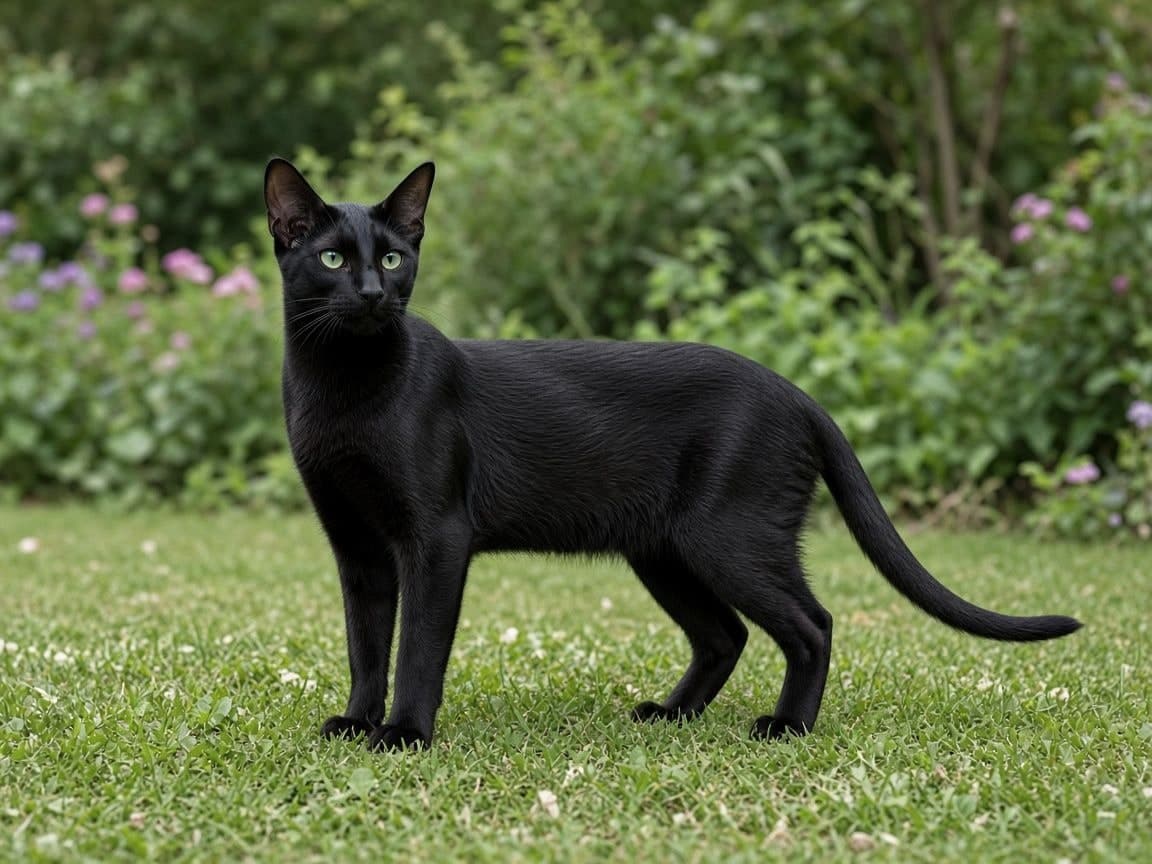
The coat is short, tight and silky. Serengetis come in yellow to gold with distinct, widely spaced black spots, in solid black, in cold grey with black spots, and in bright silver with black spots.
How active is the Serengeti?
These are extremely agile and very active cats. They love getting up high and enjoy running through the house at full speed, so plenty of climbing space and play are usually welcome.
Other cats and pets
If properly introduced, Serengetis usually get along well with other pets.
What health checks should you ask about?
Responsible breeders and rescues are happy to talk about health, and any pressure to decide quickly is a reason to walk away. Before taking a Serengeti home, it is reasonable to ask about:
- Health testing of the parents. Ask which health tests the parents have had for conditions known in the breed, and to see the results.
- Veterinary and vaccination records. Kittens should have had a first vaccination and a vet check, with records you can take home.
- Microchip information. In England, cats must be microchipped and registered by 20 weeks old. Ask who the chip is registered to and how the transfer works.
- Registration paperwork. Registration papers, where they apply, record pedigree. They do not by themselves prove health or how a kitten was raised.
How much does a Serengeti cost to own?
There are two costs: bringing a Serengeti home, and looking after one well. Kitten prices depend on the breeder, health testing and demand; the adverts below show what sellers are asking today.
Ongoing costs are the ones new owners most often underestimate: food, insurance (which usually rises with age), routine vet care, vaccinations and parasite treatment, dental care, grooming, litter, scratching posts and toys, and a cattery or a sitter for holidays. Budget for the whole of the cat’s life, not just the first year.
Buying a Serengeti
If you have decided the Serengeti suits your life, take the same care choosing where your cat comes from. Meet the kitten in person, see it with its mother, and look at how the litter is raised.
- Check who you are dealing with: every Mypetzilla advert shows the seller type and what we have checked.
- Ask about health testing, vaccinations and the microchip before you commit.
- Take your time. Do not be rushed by deposits or "last one left" stories.
- Meet in person before paying anything, and keep conversations on Mypetzilla.
Adopting a Serengeti
Serengetis do come up for adoption, through rescue organisations, breed rescues and private rehoming, often because an owner’s circumstances have changed rather than any fault of the cat. An adult cat arrives as a known quantity: its size, coat and character are already on show.
Rescues will usually talk you through the cat’s history, any medical care, and the home it needs, including children, other animals and time alone. Be honest about your circumstances: a good rescue would rather place a cat once, well.
Serengetis looking for homes
Live from Mypetzilla, updated as pets are listed.
Find Serengeti adverts for sale and for adoption on Mypetzilla now.
Similar breeds you may want to consider
Havana Brown
Lively, intelligent, sociable, talkative, playful, inquisitive, athletic and affectionate.
View breed guideOriental
Lively, intelligent, sociable, playful, talkative, inquisitive, athletic and elegant.
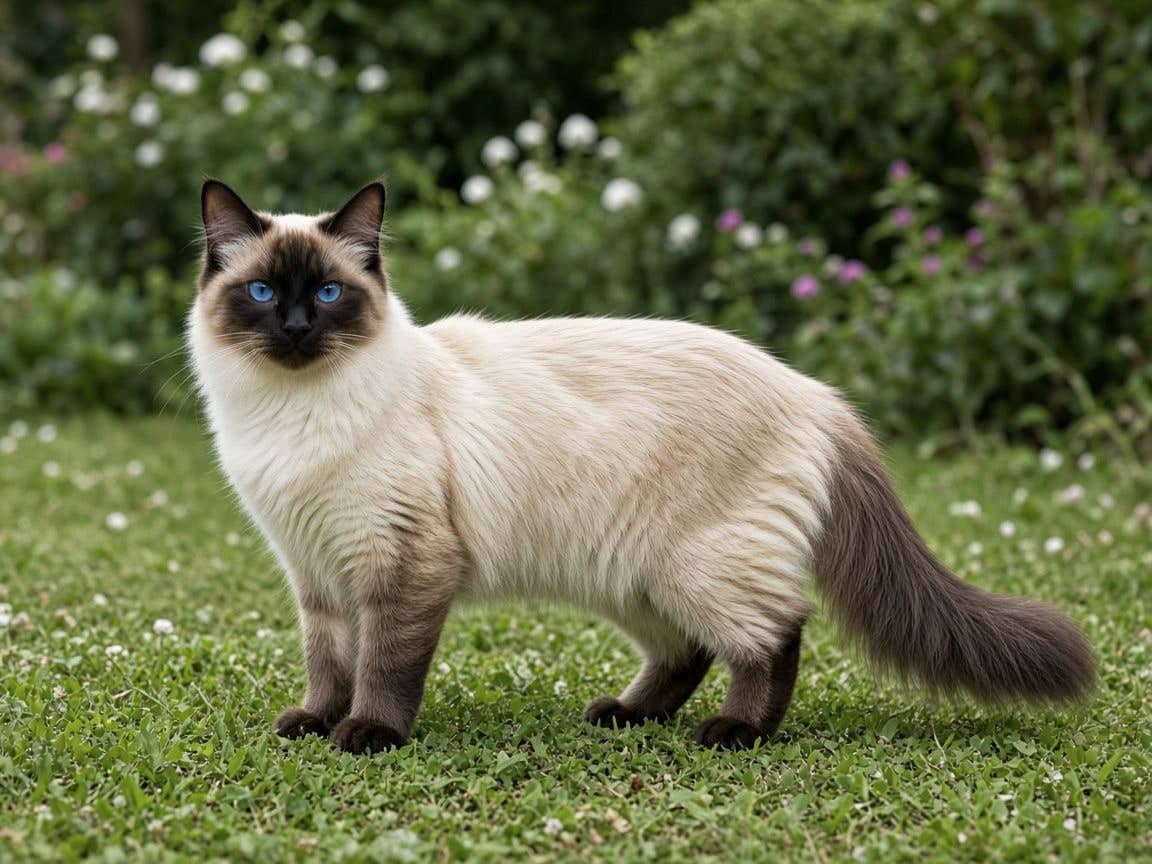
View breed guideBalinese
Affectionate, inquisitive, playful, curious, outgoing, intelligent, extrovert and demanding.
View breed guide
Serengeti FAQs
How active is the Serengeti?
Very active and usually keen to play. Short play sessions every day help any cat stay fit and settled.
Is the Serengeti a talkative cat?
Often very talkative. Individual cats vary with breeding, upbringing and health, so ask about the cat you are considering.
How big does the Serengeti get?
Adults typically weigh 3.6–6.8 kg.