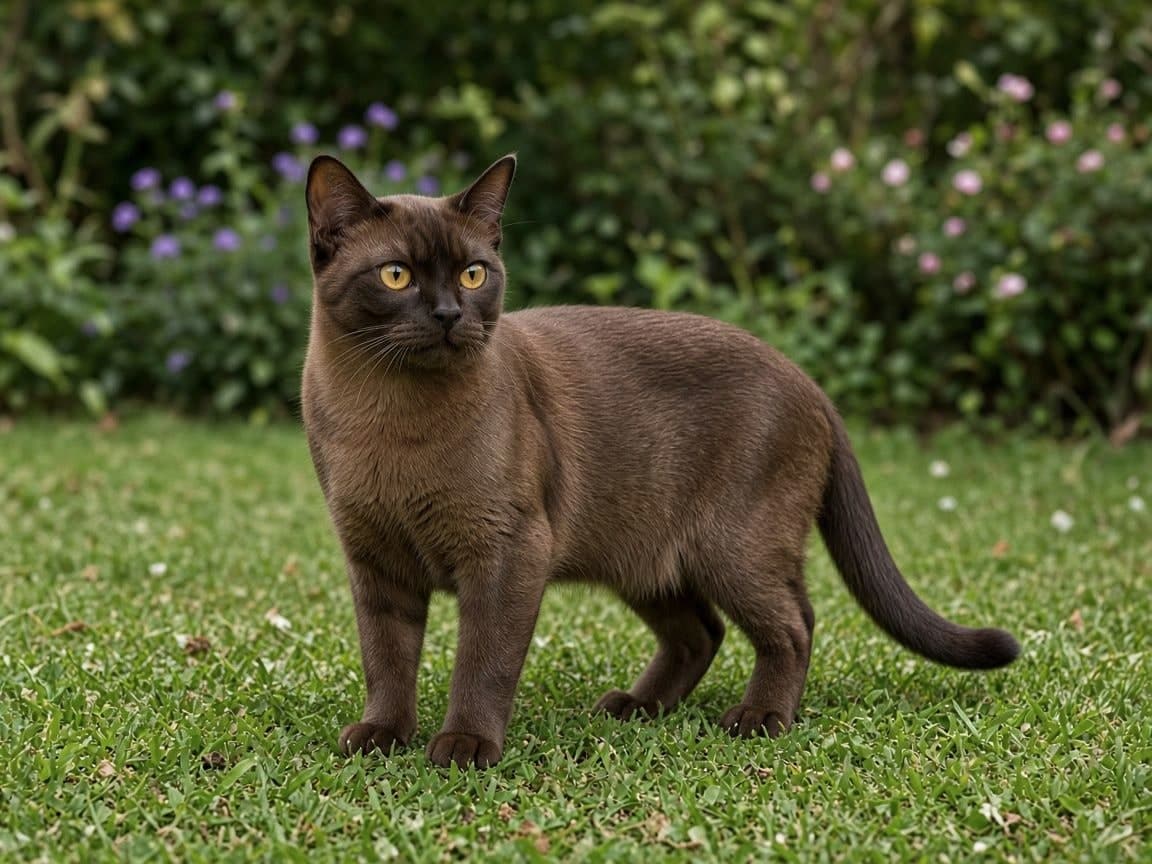
Burmese at a glance
- Weight
- 3.6–5.4 kg
- Life expectancy
- 10–17 years
Typical for the breed, not a promise about any one cat. Not assessed yet: Size.
Is the Burmese right for you?
Like every breed, the Burmese is not the right fit for every home. Based on the breed’s typical traits:
May suit you if…
- You have children and can supervise them with the cat.
- This would be your first cat and you are ready to learn.
- You have, or would like, another cat.
- You have a calm, cat-friendly dog and can introduce them slowly.
Consider another breed if…
- The cat would have to live indoors only.
- You would find a loud, talkative cat hard to live with.
- You would like a calm, laid-back cat.
How would the Burmese fit your lifestyle?
Choose a few details for a general, non-guaranteed view.
About the Burmese
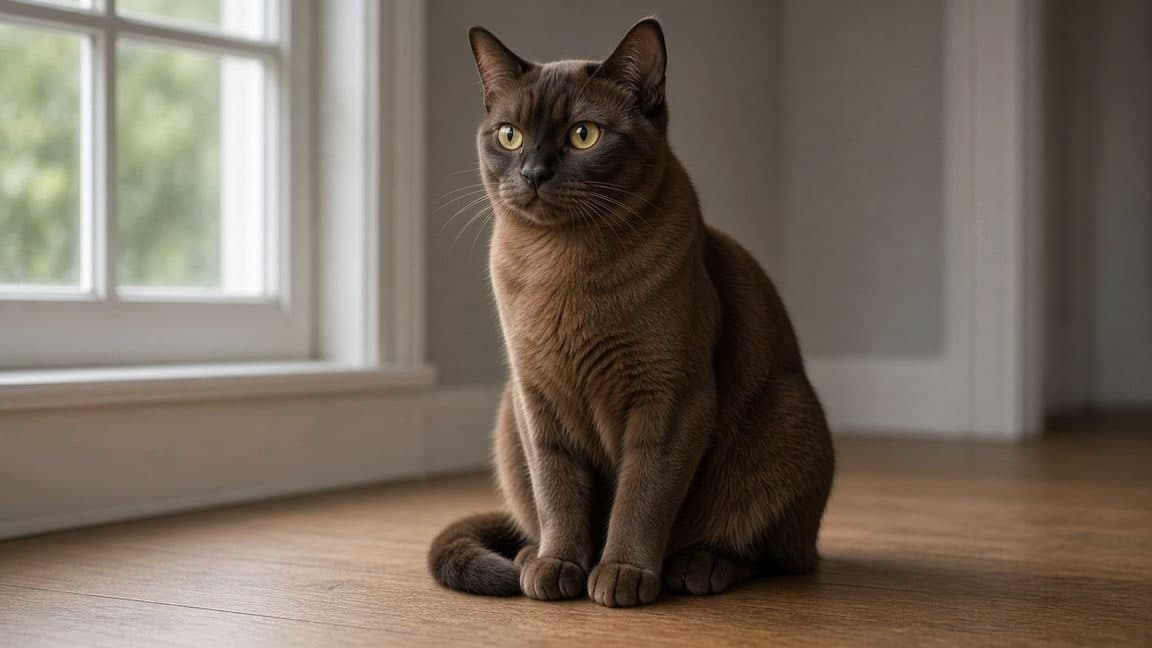
The Burmese is an elegant but solid, muscular cat with a short, satin-like coat, large golden eyes and a sweet expression. It feels much heavier than it looks when picked up. Playful, energetic and highly intelligent, it is often described as the extrovert of the cat world, and it typically adores human company.
Key characteristics
General breed tendencies, not a prediction for an individual cat.
- Size
Not assessed yet
Our sources do not say enough yet.
- Coat length
Short
A short coat.
- Activity level
Very active
Very active; needs plenty of play and things to climb.
- Grooming
Weekly
The coat usually needs brushing about once a week.
- Shedding
Low
Tends to shed little, though every cat sheds some hair.
- Vocal
Very talkative
Often very talkative, with a voice that carries.
- Good with children
Often good
Often good with children, with supervision.
- Good with other cats
Usually sociable
Usually enjoys the company of other cats.
- Good with dogs
Often fine
Often gets on with a cat-friendly dog.
- Suits first-time owners
Often
Often suits first-time cat owners.
- Time alone
A few hours
Usually copes with a few hours alone.
- Indoors and outdoors
Outdoor access
Usually happier with access outdoors.
Burmese-type cats are native to South East Asia, especially Burma (Myanmar), Thailand and Malaya. Some reached England in the 19th century but lost out in popularity to the more striking Seal Point Siamese and disappeared. In 1930 Dr Joseph Thompson took a female called Wong Mau from Burma to the United States, and the modern breed was developed from breeding experiments with her and her offspring.
Pure-bred Burmese came to the UK after the Second World War, when Mrs Lilian France imported cats from the United States. GCCF recognised the breed in 1952, and the Burmese Cat Club was founded in 1954. Purina notes that British Burmese have a more wedge-shaped head and slightly slanted eyes than the stockier American type.
Burmese temperament
Burmese are usually confident, sociable and cuddly, and they want to be part of everything their family does. They are mischievous and curious, and will explore any open doorway. They do not like to feel neglected and will let you know if they are not getting enough attention.
They are often talkative. GCCF describes a soft, sweet voice and a cat that enjoys a conversation; Purina says they can be as vocal as a Siamese, with a deep voice that can sound like a crying baby. GCCF warns that if you enjoy a quiet life, a Burmese is probably not for you.
Size and appearance
The Burmese is a medium-length, hard and muscular cat with slender legs and a tapering tail. Purina gives a weight range of about 3.6 to 5.4 kg. Males are larger than females; GCCF gives around 11 to 14 lbs for males and 6 to 9 lbs for females.
The coat is short, fine, close-lying and glossy, slightly darker on the ears, face and tail. GCCF recognises ten colours, including brown, blue, chocolate, lilac, red, cream and four tortie colours. Eyes are ideally golden yellow, though any shade from chartreuse to amber is accepted.
How active is the Burmese?
This is a very active, athletic and playful breed. Burmese can learn to retrieve toys and respond well to positive reinforcement and clicker training. They need plenty of games, toys and puzzles that recreate hunting, and room for cat trees and climbing. Without enough enrichment they can become stressed or destructive.
Burmese grooming
The Burmese is a clean, easily cared-for cat that sheds little. GCCF suggests a weekly groom with a rubber brush to remove loose hairs, and stroking with your hand helps keep the coat glossy. A weekly brush is also a chance to check for wounds or parasites; a greasy or scurfy coat can be an early sign of illness.
Indoors and outdoors
Purina says the Burmese is not really suited to a completely indoor life, but its curiosity can land it in serious trouble outdoors, including climbing into cars or delivery vans. It suits a larger home with a secure outdoor space, such as a covered run or cat-proofed fencing.
Burmese need people around much of the time. They can usually be left for a few hours, but struggle if left alone for long periods, so they do not suit homes where everyone is out all day or away often.
Living with a Burmese
GCCF describes the Burmese as very good with children, and Purina calls it a great family cat for a larger home with a secure garden and children old enough to respect a cat's space. Whatever the breed, young children should be supervised around cats and shown how to stroke them gently and let them walk away.
Children
Often good with children, with supervision.
Other cats
Usually enjoys the company of other cats.
Dogs
Often gets on with a cat-friendly dog.
Indoors and outdoors
Usually happier with access outdoors.
Being left alone
Usually copes with a few hours alone.
First-time owners
Often suits first-time cat owners.
Other cats and pets
GCCF says Burmese are very good with other cats and dogs. Purina notes that other resident cats can meet some of their need for company, but they still need people around.
Burmese health
Not yet reviewed by a vet. This is general information, not veterinary advice: speak to your vet about your own cat’s health.
Purina describes the Burmese as generally robust, but several inherited conditions are recognised in the breed. New owners should ask for proof of DNA testing when buying a kitten.
Hypokalaemia (hypokalaemic polymyopathy)
An inherited condition in which blood potassium levels drop, causing muscle weakness that can affect the neck and limbs. Signs usually first appear in kittens between two and six months old and can come and go; severe cases can be life-threatening. A DNA test is available, and GCCF strongly recommends that all Burmese used for breeding are tested.
Diabetes mellitus
A condition in which blood sugar levels are too high because the body does not produce enough insulin. GCCF notes a slight tendency in the breed that increases with age and weight, so older Burmese should not be allowed to gain too much weight.
Burmese head defect
A condition in which the face and skull do not form correctly. A DNA test is available.
Gangliosidosis
A storage disease affecting the nervous system. Purina notes it has a low prevalence in the breed, and a DNA test is available.
Orofacial pain syndrome
A condition that causes sudden pain in the face and mouth.
Pectus excavatum
A narrowing of the chest that can affect how the heart and chest work.
What health checks should you ask about?
Responsible breeders and rescues are happy to talk about health, and any pressure to decide quickly is a reason to walk away. Before taking a Burmese home, it is reasonable to ask about:
- Health testing of the parents. Ask which health tests the parents have had for conditions known in the breed, and to see the results.
- Veterinary and vaccination records. Kittens should have had a first vaccination and a vet check, with records you can take home.
- Microchip information. In England, cats must be microchipped and registered by 20 weeks old. Ask who the chip is registered to and how the transfer works.
- Registration paperwork. Registration papers, where they apply, record pedigree. They do not by themselves prove health or how a kitten was raised.
How much does a Burmese cost to own?
There are two costs: bringing a Burmese home, and looking after one well. Kitten prices depend on the breeder, health testing and demand; the adverts below show what sellers are asking today.
Ongoing costs are the ones new owners most often underestimate: food, insurance (which usually rises with age), routine vet care, vaccinations and parasite treatment, dental care, grooming, litter, scratching posts and toys, and a cattery or a sitter for holidays. Budget for the whole of the cat’s life, typically 10–17 years, not just the first year.
Buying a Burmese
If you have decided the Burmese suits your life, take the same care choosing where your cat comes from. Meet the kitten in person, see it with its mother, and look at how the litter is raised.
- Check who you are dealing with: every Mypetzilla advert shows the seller type and what we have checked.
- Ask about health testing, vaccinations and the microchip before you commit.
- Take your time. Do not be rushed by deposits or "last one left" stories.
- Meet in person before paying anything, and keep conversations on Mypetzilla.
Adopting a Burmese
Burmeses do come up for adoption, through rescue organisations, breed rescues and private rehoming, often because an owner’s circumstances have changed rather than any fault of the cat. An adult cat arrives as a known quantity: its size, coat and character are already on show.
Rescues will usually talk you through the cat’s history, any medical care, and the home it needs, including children, other animals and time alone. Be honest about your circumstances: a good rescue would rather place a cat once, well.
Burmeses looking for homes
Live from Mypetzilla, updated as pets are listed.
Find Burmese adverts for sale and for adoption on Mypetzilla now.
Similar breeds you may want to consider
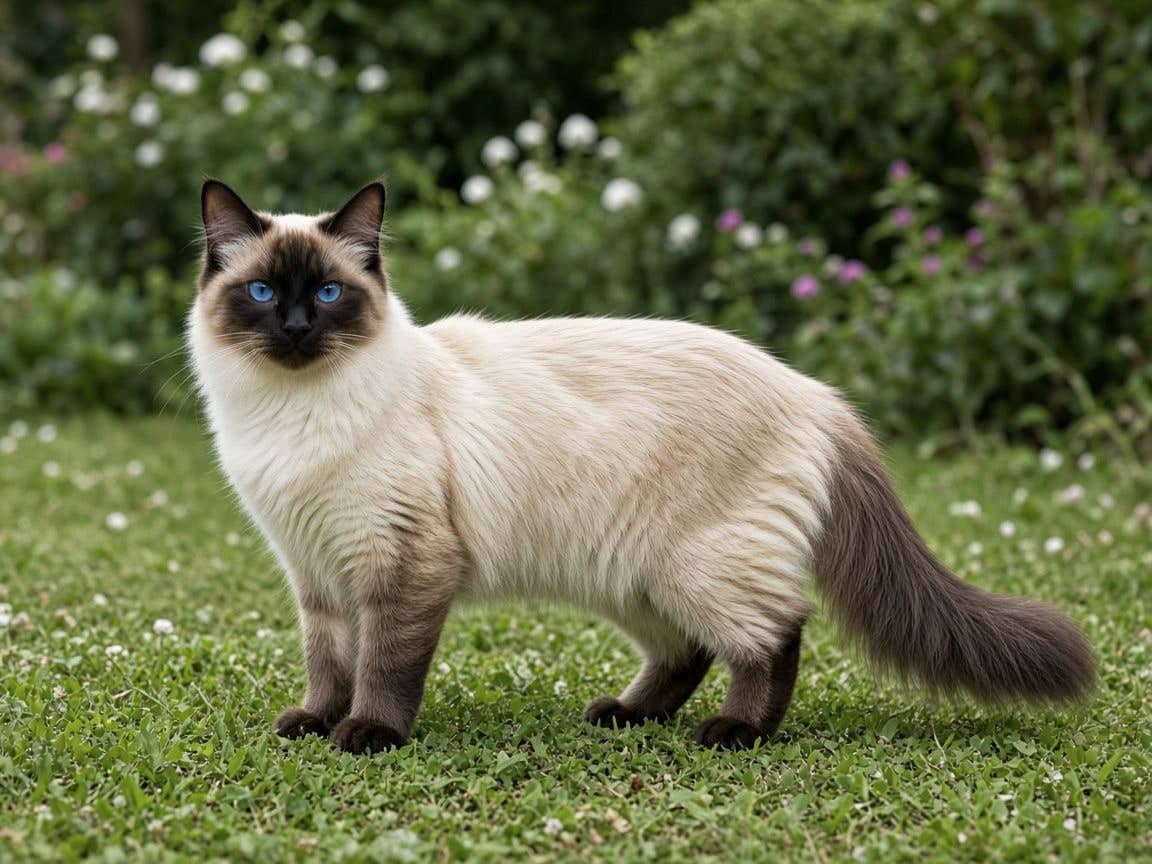
Balinese
Affectionate, inquisitive, playful, curious, outgoing, intelligent, extrovert and demanding.
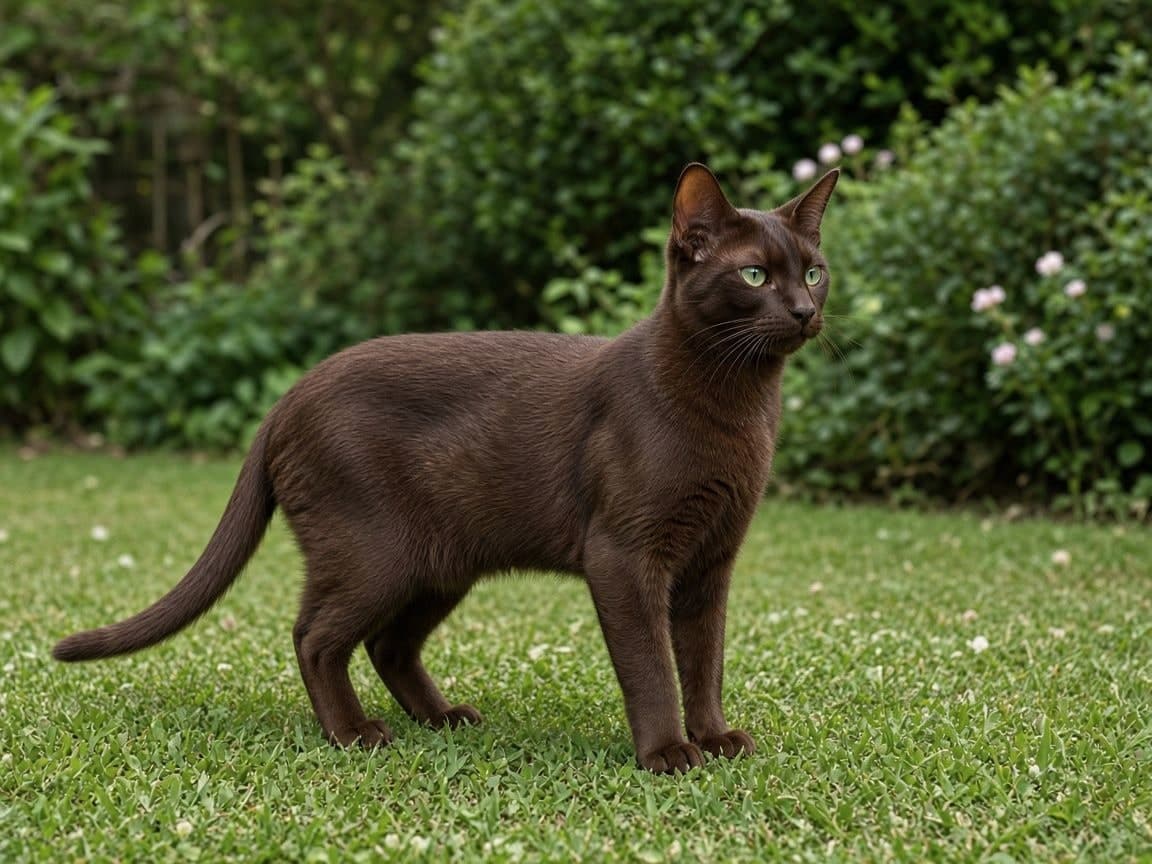
View breed guideHavana Brown
Lively, intelligent, sociable, talkative, playful, inquisitive, athletic and affectionate.
View breed guide
Burmese FAQs
Is the Burmese good with children?
Often good with children, with supervision. Individual cats vary with breeding, upbringing and health, so ask about the cat you are considering.
Can the Burmese be an indoor cat?
Usually happier with access outdoors. Indoor cats need daily play, places to climb and scratch, and a window to watch from.
How active is the Burmese?
Very active and usually keen to play. Short play sessions every day help any cat stay fit and settled.
Does the Burmese shed?
Tends to shed little.
How much grooming does the Burmese need?
Typically: about once a week.
Can the Burmese be left alone?
Usually copes with a few hours alone. Every cat needs company, play and someone to check on it each day.
Is the Burmese a talkative cat?
Often very talkative. Individual cats vary with breeding, upbringing and health, so ask about the cat you are considering.
Does the Burmese get on with other cats?
Usually enjoys the company of other cats. Introduce cats slowly, with separate food, water, litter trays and resting places.
Is the Burmese good with dogs?
Often gets on with a cat-friendly dog. Individual cats vary with breeding, upbringing and health, so ask about the cat you are considering.
How long does the Burmese live?
Typically 10–17 years. Lifespan varies with genetics, weight, care and luck.
How big does the Burmese get?
Adults typically weigh 3.6–5.4 kg.