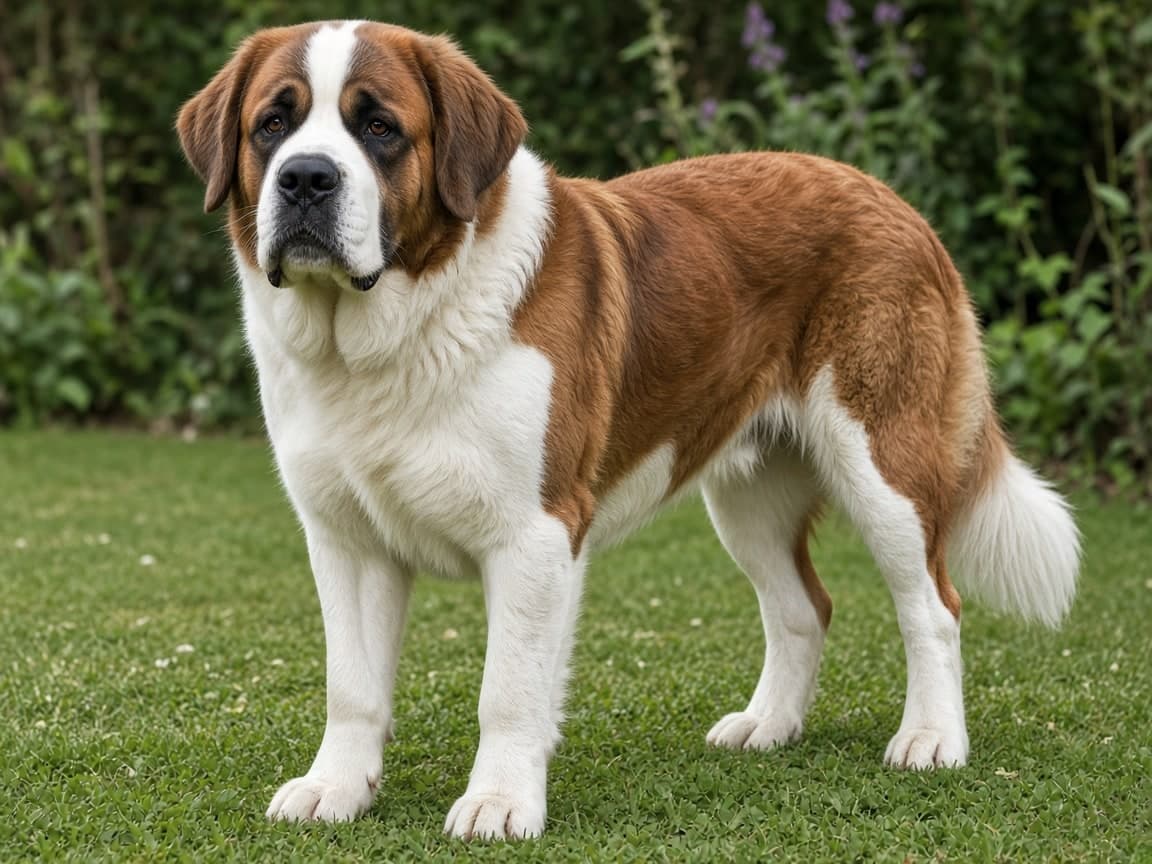
Saint Bernard at a glance
- Size
- Giant
- Height
- 70–75 cm
- Weight
- 54–81 kg
- Life expectancy
- 8–10 years
Typical for the breed, not a promise about any one dog.
Is the Saint Bernard right for you?
Like every breed, the Saint Bernard is not the right fit for every home. Based on the breed’s typical traits:
May suit you if…
- You can give around an hour of exercise a day.
- You have, or would like, another dog.
- You have a cat and can introduce them carefully.
- You would like a dog that tends to be quiet.
Consider another breed if…
- The dog would regularly be left alone for long working days.
- You live in a flat or a small home.
- You have young children at home.
- This would be your first dog.
How would the Saint Bernard fit your lifestyle?
Choose a few details for a general, non-guaranteed view.
About the Saint Bernard
The Saint Bernard is a true giant: a muscular dog with a massive head, gentle eyes and a thick coat, usually in white with orange, red or mahogany. It comes in smooth (short-haired) and rough (long-haired) coats. Often described as a gentle giant, it is typically calm, affectionate and fond of family life.
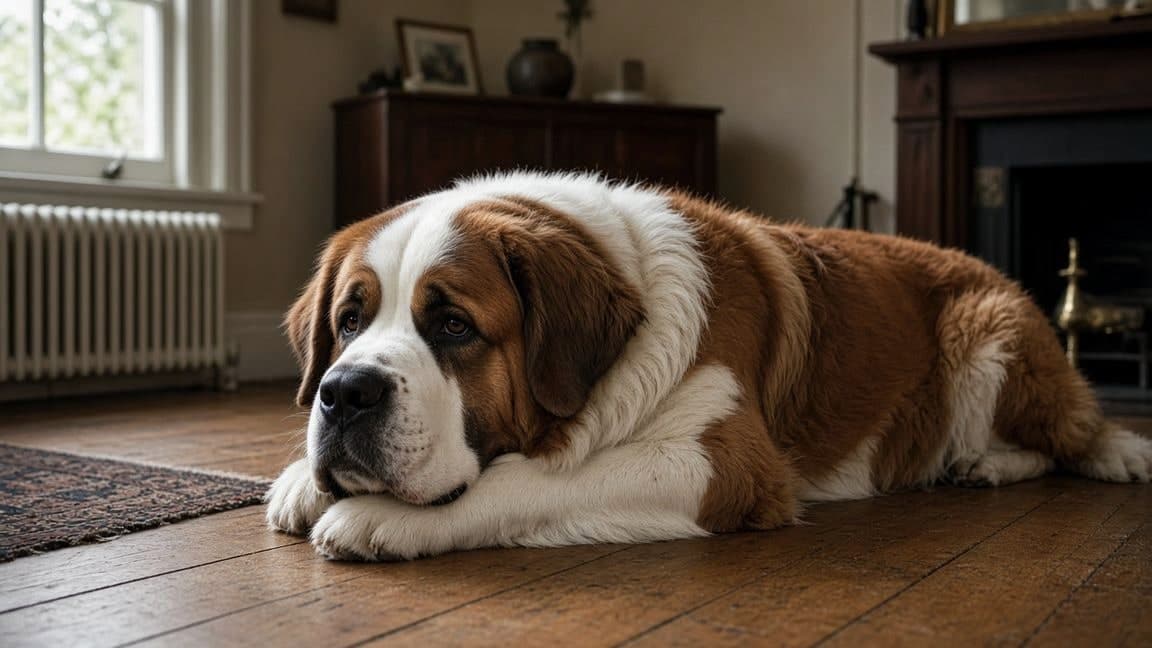
Key characteristics
General breed tendencies, not a prediction for an individual dog.
- Size
Giant
Among the largest dog breeds.
- Exercise
Moderate
Typically around an hour of exercise a day.
- Energy level
Moderate
Moderately energetic, with bursts of play.
- Grooming
Moderate
The coat usually needs brushing several times a week.
- Shedding
High
Tends to shed a lot, so expect hair around the home.
- Trainability
Moderate
Generally trainable with patience and consistency.
- Good with children
Older children
Usually better with older, calmer children.
- Good with other dogs
Usually sociable
Usually sociable with other dogs.
- Good with cats
Often fine
Often lives with cats when introduced carefully.
- Suits first-time owners
Experienced owners
Best with an experienced owner.
- Barking / vocality
Tends to be quiet
Usually a fairly quiet dog around the home.
- Time alone
Prefers company
Usually copes only with short periods alone.
The breed is the national dog of Switzerland and takes its name from the monk who founded a hospice for travellers crossing the Swiss Alps in the 10th century. The first dogs were Alpine Mastiffs used to guard property, but their rescue abilities were soon discovered, and by the 18th century they were finding lost and stranded travellers.
The monks introduced new blood to breed bigger dogs, possibly including the Newfoundland and Bloodhound, which made the dogs larger and longer-coated. Some monks worried long coats would ice up, so short-coated stock was also kept, which is why both coat types exist today. The name St Bernard was adopted in 1888. The popular image of a rescue dog carrying a cask of brandy is a myth, created by the Victorian artist Edwin Landseer.
Saint Bernard temperament
Saint Bernards are usually patient, affectionate, good-humoured and trustworthy, and they love being part of a family. They are intelligent, relaxed dogs that tend to get on with people of all ages.
They rarely bark, although they will alert you to visitors and will defend their family and belongings if they feel it necessary. They prefer a busy family home with plenty going on.
Size and appearance
This is a giant breed. Adults typically stand 70–75 cm at the shoulder and weigh around 54–81 kg, and some sources give higher figures. They can take up to three years to finish growing.
Breed standard colours are combinations of white with brown, red, orange or mahogany, including brindles and tricolour.
Their size affects everyday life: they need a large house and car, and can struggle in narrow hallways.
How much exercise does a Saint Bernard need?
Once fully grown, Saint Bernards usually need about an hour of exercise a day, made up of a fairly long walk and some shorter ones, plus play, brain games and off-lead time somewhere secure. Many can manage more.
Puppies should be exercised very gradually to protect their growing bones, and adults should build up exercise slowly too. Their warm coats mean they cope poorly with heat, so take extra care to keep them cool in summer. They can be good escape artists, so garden fences need to be sturdy.
Training a Saint Bernard
Saint Bernards are not obedience champions, but they are intelligent and can be taught good manners. Because they grow so big, training needs to start early and carry on throughout life, as they can pick up bad habits quickly.
- Use positive, reward-based training.
- Teach your puppy to walk nicely on a harness and lead early, before pulling becomes a problem.
- Train them not to jump up from a young age.
- Teach a reliable recall, as some people and dogs find a large dog approaching intimidating.
- Socialise them well as puppies so they grow into confident, happy adults.
Saint Bernard grooming
Saint Bernards shed heavily all year round. Brushing or combing at least three times a week helps keep on top of loose hair, and some owners use a professional groomer every few months.
They drool a lot. Their eyes and facial skin folds need regular gentle cleaning with a soft damp cloth, and their ears need checking and cleaning regularly.
Living with a Saint Bernard
Saint Bernards are often great with people of all ages and love family life. Their size is the main concern: they can easily knock over small children, especially when excited, so some sources suggest they are better suited to families with older children. Children should be taught to approach and play with dogs kindly. Whatever the breed, dogs and young children should never be left alone together, and an adult should supervise every interaction.
Children
Usually better with older, calmer children.
Other dogs
Usually sociable with other dogs.
Cats and small pets
Often lives with cats when introduced carefully.
Flats and smaller homes
Usually needs a roomy home.
Garden
A secure garden is strongly advised.
Being left alone
Usually copes only with short periods alone.
First-time owners
Best with an experienced owner.
Saint Bernard health
Not yet reviewed by a vet. This is general information, not veterinary advice: speak to your vet about your own dog’s health.
Saint Bernards are prone to a number of health problems linked to their size and appearance. The Royal Kennel Club places them in Breed Watch Category 3, meaning they have health concerns due to the way they look, including problems with skin folds, eyes, back legs and teeth or jaws. Knowing about these conditions helps you ask a breeder the right questions; it does not mean every dog will be affected.
Hip and elbow dysplasia
The hip or elbow joint does not fit together properly, eventually leading to arthritis. The Royal Kennel Club recommends hip and elbow testing under the BVA/KC schemes before breeding.
Eye conditions
Eyelids can turn inwards (entropion) or outwards (ectropion) because of excess skin around the eyes, which is painful. The Royal Kennel Club recommends eye testing under the BVA/KC/ISDS Eye Scheme.
Osteochondrosis dissecans (OCD)
A cartilage problem in the joints that causes pain and limping.
Cruciate ligament disease
Damage to ligaments in the knee that can make the joint wobbly and painful.
Gastric dilatation volvulus (GDV)
The stomach bloats and twists on itself. It is an emergency and can be fatal. Smaller, more frequent meals may help reduce the risk.
Dilated cardiomyopathy (DCM)
A disease of the heart muscle that weakens its pumping and can lead to heart failure.
Osteosarcoma
An aggressive bone cancer seen more often in the breed.
Skin and ear problems
The breed is prone to skin infections, especially around the lip folds, and to ear infections.
What health checks should you ask about?
Responsible breeders and rescues are happy to talk about health, and any pressure to decide quickly is a reason to walk away. Before taking a Saint Bernard home, it is reasonable to ask about:
- Health testing of the parents. Ask which health tests the parents have had for conditions known in the breed, and to see the results.
- Veterinary and vaccination records. Puppies should have had a first vaccination and a vet check, with records you can take home.
- Microchip information. In England, Scotland and Wales puppies must be microchipped and registered by eight weeks old. Ask who the chip is registered to and how the transfer works.
- Registration paperwork. Registration papers, where they apply, record pedigree. They do not by themselves prove health or how a puppy was raised.
How much does a Saint Bernard cost to own?
There are two costs: bringing a Saint Bernard home, and looking after one well. Puppy prices depend on the breeder, health testing and demand; the adverts below show what sellers are asking today.
Ongoing costs are the ones new owners most often underestimate: food, insurance (which usually rises with age), routine vet care, vaccinations and parasite treatment, dental care, grooming, training, bedding and equipment, and boarding or a sitter for holidays. Budget for the whole of the dog’s life, typically 8–10 years, not just the first year.
Buying a Saint Bernard
If you have decided the Saint Bernard suits your life, take the same care choosing where your dog comes from. Meet the puppy in person, see it with its mother, and look at how the litter is raised.
- Check who you are dealing with: every Mypetzilla advert shows the seller type and what we have checked.
- Ask about health testing, vaccinations and the microchip before you commit.
- Take your time. Do not be rushed by deposits or "last one left" stories.
- Meet in person before paying anything, and keep conversations on Mypetzilla.
Adopting a Saint Bernard
Saint Bernards do come up for adoption, through rescue organisations, breed rescues and private rehoming, often because an owner’s circumstances have changed rather than any fault of the dog. An adult dog arrives as a known quantity: its size, coat and character are already on show.
Rescues will usually talk you through the dog’s history, any medical care, and the home it needs, including children, other animals and time alone. Be honest about your circumstances: a good rescue would rather place a dog once, well.
Saint Bernards looking for homes
Live from Mypetzilla, updated as pets are listed.


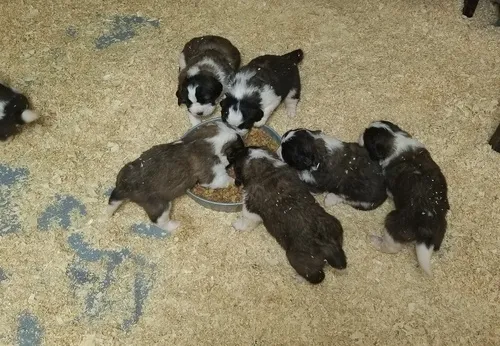
Find Saint Bernard adverts for sale and for adoption on Mypetzilla now.
Similar breeds you may want to consider
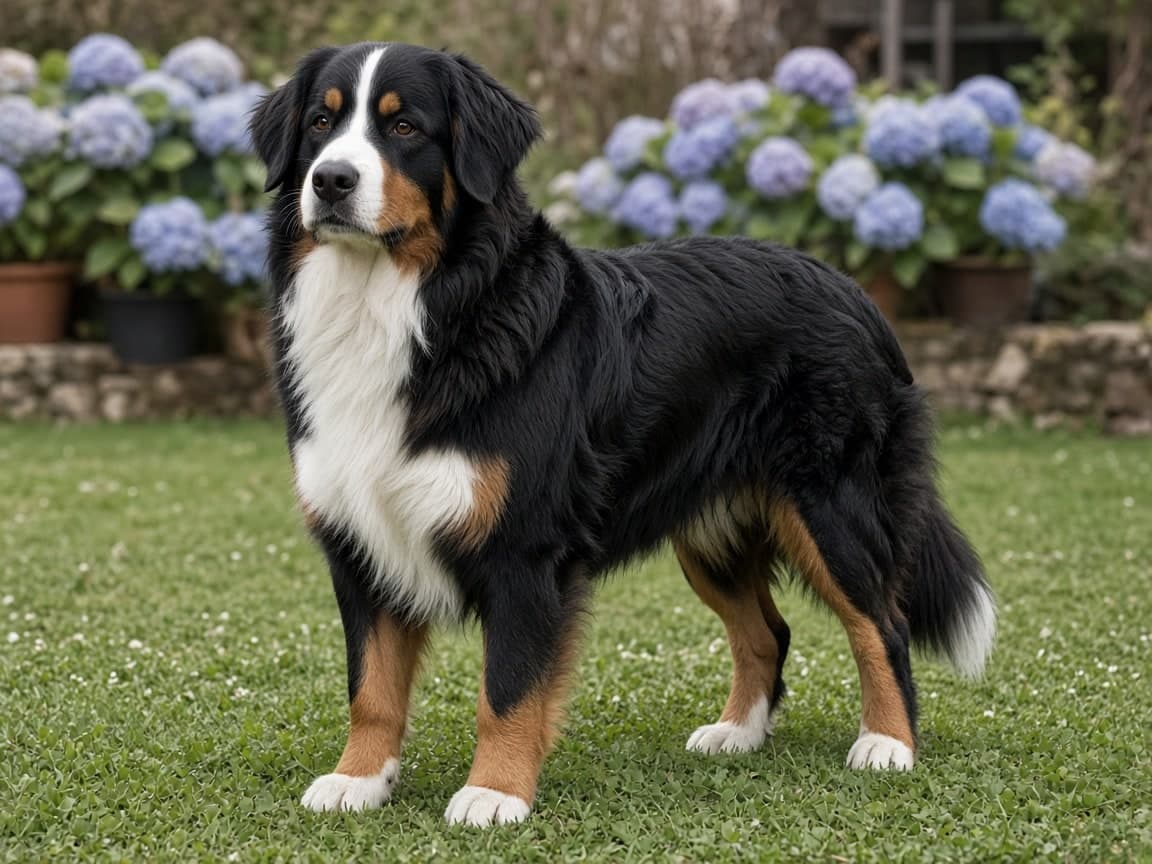
Bernese Mountain Dog
Gentle, loyal, good-natured, affectionate, patient, sensitive, friendly and calm.
View breed guide
Saint Bernard FAQs
Is the Saint Bernard good with children?
Usually better with older, calmer children. Individual dogs vary with breeding, upbringing and health, so ask about the dog you are considering.
Can the Saint Bernard live in a flat?
Usually needs a roomy home. Exercise and company matter more than floor space.
How much exercise does the Saint Bernard need?
Moderate: typically around an hour a day. Puppies and older dogs need less structured exercise.
Does the Saint Bernard shed?
Tends to shed a lot.
How much grooming does the Saint Bernard need?
Typically: several times a week.
Is the Saint Bernard easy to train?
Generally trainable with consistency. Kind, reward-based training works best.
Can the Saint Bernard be left alone?
Usually copes only with short periods alone. Build up time alone gradually.
Does the Saint Bernard bark a lot?
Tends to be quiet. Individual dogs vary with breeding, upbringing and health, so ask about the dog you are considering.
Is the Saint Bernard good with cats?
Often lives with cats when introduced carefully. Individual dogs vary with breeding, upbringing and health, so ask about the dog you are considering.
How long does the Saint Bernard live?
Typically 8–10 years. Lifespan varies with genetics, weight, care and luck.
How big does the Saint Bernard get?
Adults typically stand 70–75 cm at the shoulder and weigh 54–81 kg.