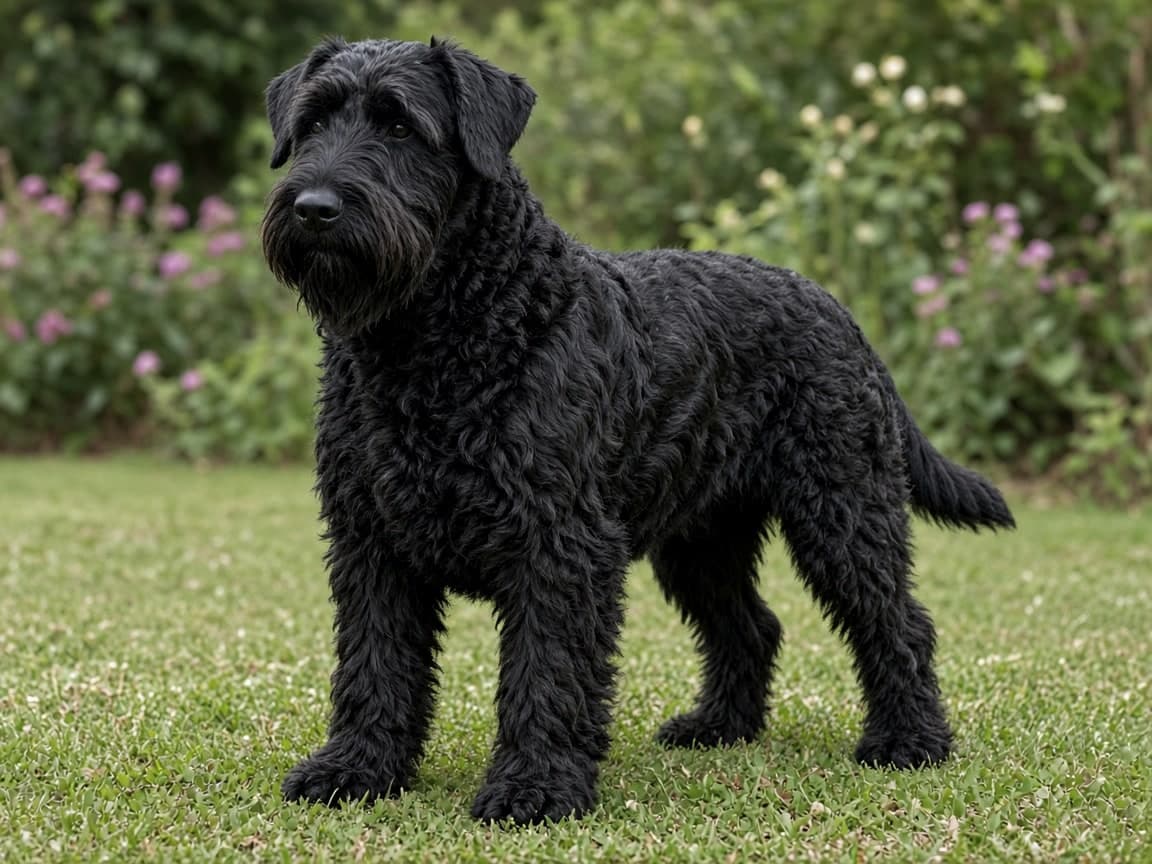
Russian Black Terrier at a glance
- Size
- Large
- Height
- 66–77 cm
- Weight
- 36–68 kg
- Life expectancy
- from 10 years
Typical for the breed, not a promise about any one dog. Not assessed yet: Shedding, Training.
Is the Russian Black Terrier right for you?
Like every breed, the Russian Black Terrier is not the right fit for every home. Based on the breed’s typical traits:
May suit you if…
- You enjoy long walks and an active, outdoor life.
Consider another breed if…
- The dog would regularly be left alone for long working days.
- You cannot offer well over an hour of exercise every day.
- You live in a flat or a small home.
- You have young children at home.
How would the Russian Black Terrier fit your lifestyle?
Choose a few details for a general, non-guaranteed view.
About the Russian Black Terrier
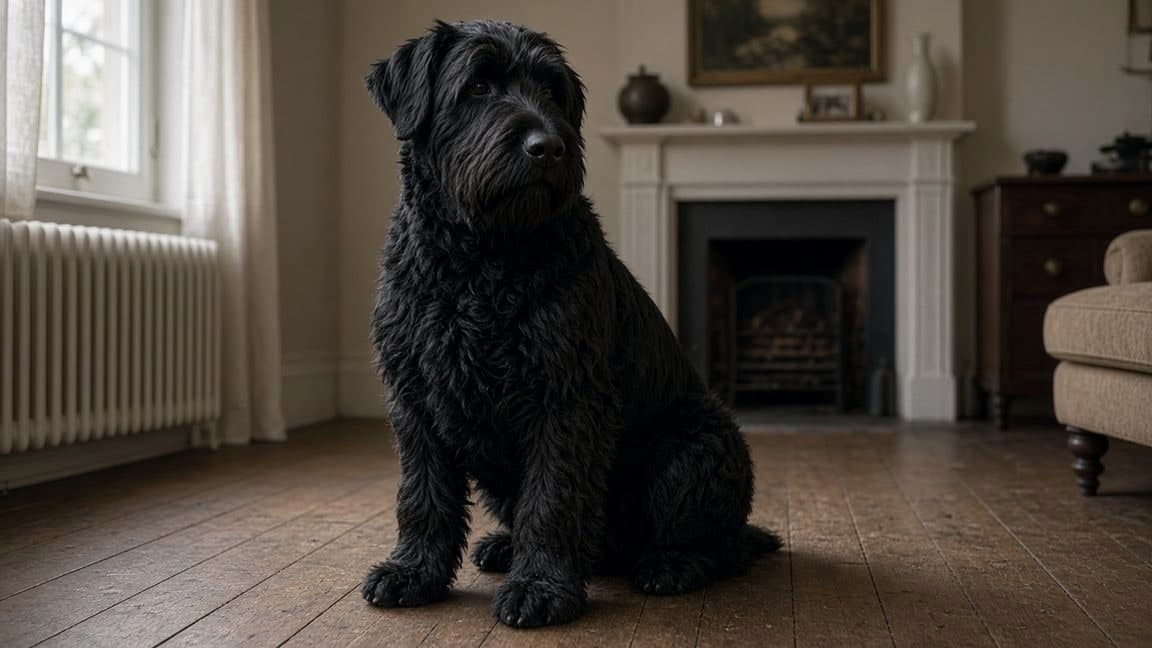
The Russian Black Terrier is a large, imposing dog with a strong, heavy-boned build and a square outline. Its weatherproof black coat is usually trimmed close on the body, with the legs, beard and eyebrows left long and full. It is typically confident, courageous and self-assured.
Key characteristics
General breed tendencies, not a prediction for an individual dog.
- Size
Large
A large dog.
- Exercise
Very high
Usually needs several hours of activity or work a day.
- Energy level
Moderate
Moderately energetic, with bursts of play.
- Grooming
Daily
The coat usually needs brushing every day.
- Shedding
Not assessed yet
Our sources do not say enough yet.
- Trainability
Not assessed yet
Our sources do not say enough yet.
- Good with children
Older children
Usually better with older, calmer children.
- Good with other dogs
Can be selective
Can be selective about other dogs.
- Good with cats
Varies
Varies with the individual dog.
- Suits first-time owners
Experienced owners
Best with an experienced owner.
- Barking / vocality
Can be vocal
Often quick to bark at visitors or unusual sounds.
- Time alone
Prefers company
Usually copes only with short periods alone.
Despite the name, it is a working dog rather than a true terrier. It was developed by the Russian army after the Second World War, when the country needed a guard and general service dog that could work independently and cope with Russia's varied terrain and extreme climate. Its duties included guarding and rounding up fugitives.
A mixture of breeds formed the foundation, with the Giant Schnauzer at the centre of the programme alongside breeds such as the Airedale Terrier and Rottweiler. Working ability mattered more than looks at first. The first examples were shown in Moscow in 1955, a breed standard followed in 1958, and the Fédération Cynologique Internationale adopted it in 1984. The Kennel Club first registered the breed in 1998.
Russian Black Terrier temperament
Russian Black Terriers usually have a strong work ethic and are naturally suspicious of strangers. They are often calm, but can react fiercely if they sense a real threat.
They take a long time to mature and need thorough socialisation with people and other animals to grow into sensible, pleasant adults. A frightened Russian Black Terrier may respond with aggression, so building confidence and trust from an early age is vital.
Their guarding instinct means busy city life, with constant comings and goings, can leave them stressed. A rural or quiet suburban home usually suits them better.
Size and appearance
This is a large breed. Males typically stand 68–77 cm at the shoulder and weigh 45–68 kg; females usually stand 66–72 cm and weigh 36–59 kg.
The coat is weatherproof, neither wiry nor soft. Breed standard colours are black, and black with grey hairs.
How much exercise does a Russian Black Terrier need?
Adults usually need more than two hours of exercise a day, with training, games and dog sports on top. This is a demanding breed, and caring for one is close to a full-time commitment.
Many enjoy activities such as agility, obedience and pulling a small cart.
Training a Russian Black Terrier
Russian Black Terriers are clever and intelligent, and can make decisions without their handler if circumstances push them to. That makes consistent, careful training essential.
- Use positive reinforcement and build a strong, trust-based bond.
- Socialise early and widely with people, children and other animals.
- Manage situations so your dog is never put in a position where it can make a mistake.
- Take care around members of the public, as a large black dog can easily frighten people.
- Get your puppy used to being groomed from day one.
Russian Black Terrier grooming
The coat needs combing through to the skin every day, and clipping into the traditional cut every six to eight weeks. A breeder should show you how, or you will need a professional groomer.
The beard and paws also need cleaning and checking after walks and meals.
Living with a Russian Black Terrier
This is not a breed usually recommended for homes with small children. It is better suited to homes without children, or with older, sensible teenagers, and to owners who can spend most of the day with their dog. Whatever the breed, dogs and young children should never be left alone together, and an adult should supervise every interaction.
Children
Usually better with older, calmer children.
Other dogs
Can be selective about other dogs.
Cats and small pets
Varies with the individual dog.
Flats and smaller homes
Usually needs a roomy home.
Garden
A garden is helpful.
Being left alone
Usually copes only with short periods alone.
First-time owners
Best with an experienced owner.
Russian Black Terrier health
Not yet reviewed by a vet. This is general information, not veterinary advice: speak to your vet about your own dog’s health.
Some inherited conditions are recognised in the Russian Black Terrier, and the Royal Kennel Club also asks breeders to prioritise genetic diversity. Knowing about these conditions helps you ask a breeder the right questions; it does not mean every dog will be affected.
Hip and elbow dysplasia
Conditions of the hip and elbow joints that the Royal Kennel Club counts as a significant concern in the breed. It recommends hip and elbow testing under the BVA/RKC schemes before breeding.
Hyperuricosuria (HUU)
Uric acid can build up in the urinary system, sometimes forming stones, which can lead to infections. A DNA test is available.
Juvenile laryngeal paralysis and polyneuropathy (JLPP)
A condition in which the nervous system deteriorates, affecting the nerves in the throat first, which can obstruct breathing. A DNA test is available.
Progressive retinal atrophy (prcd-PRA)
An inherited eye condition that the Royal Kennel Club lists as part of best-practice health testing for the breed.
What health checks should you ask about?
Responsible breeders and rescues are happy to talk about health, and any pressure to decide quickly is a reason to walk away. Before taking a Russian Black Terrier home, it is reasonable to ask about:
- Health testing of the parents. Ask which health tests the parents have had for conditions known in the breed, and to see the results.
- Veterinary and vaccination records. Puppies should have had a first vaccination and a vet check, with records you can take home.
- Microchip information. In England, Scotland and Wales puppies must be microchipped and registered by eight weeks old. Ask who the chip is registered to and how the transfer works.
- Registration paperwork. Registration papers, where they apply, record pedigree. They do not by themselves prove health or how a puppy was raised.
How much does a Russian Black Terrier cost to own?
There are two costs: bringing a Russian Black Terrier home, and looking after one well. Puppy prices depend on the breeder, health testing and demand; the adverts below show what sellers are asking today.
Ongoing costs are the ones new owners most often underestimate: food, insurance (which usually rises with age), routine vet care, vaccinations and parasite treatment, dental care, grooming, training, bedding and equipment, and boarding or a sitter for holidays. Budget for the whole of the dog’s life, typically from 10 years, not just the first year.
Buying a Russian Black Terrier
If you have decided the Russian Black Terrier suits your life, take the same care choosing where your dog comes from. Meet the puppy in person, see it with its mother, and look at how the litter is raised.
- Check who you are dealing with: every Mypetzilla advert shows the seller type and what we have checked.
- Ask about health testing, vaccinations and the microchip before you commit.
- Take your time. Do not be rushed by deposits or "last one left" stories.
- Meet in person before paying anything, and keep conversations on Mypetzilla.
Adopting a Russian Black Terrier
Russian Black Terriers do come up for adoption, through rescue organisations, breed rescues and private rehoming, often because an owner’s circumstances have changed rather than any fault of the dog. An adult dog arrives as a known quantity: its size, coat and character are already on show.
Rescues will usually talk you through the dog’s history, any medical care, and the home it needs, including children, other animals and time alone. Be honest about your circumstances: a good rescue would rather place a dog once, well.
Russian Black Terriers looking for homes
Live from Mypetzilla, updated as pets are listed.
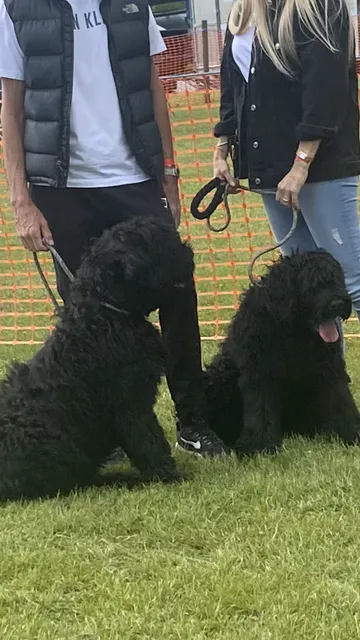
Find Russian Black Terrier adverts for sale and for adoption on Mypetzilla now.
Similar breeds you may want to consider
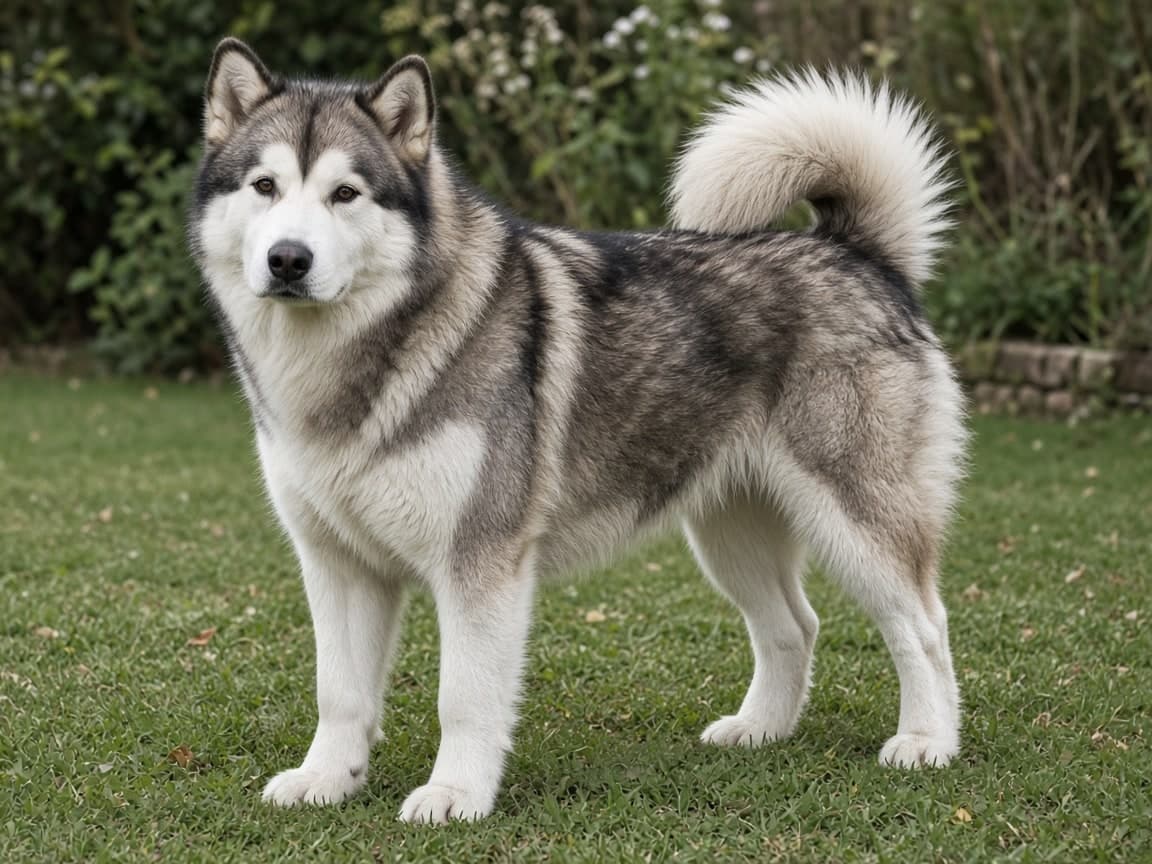
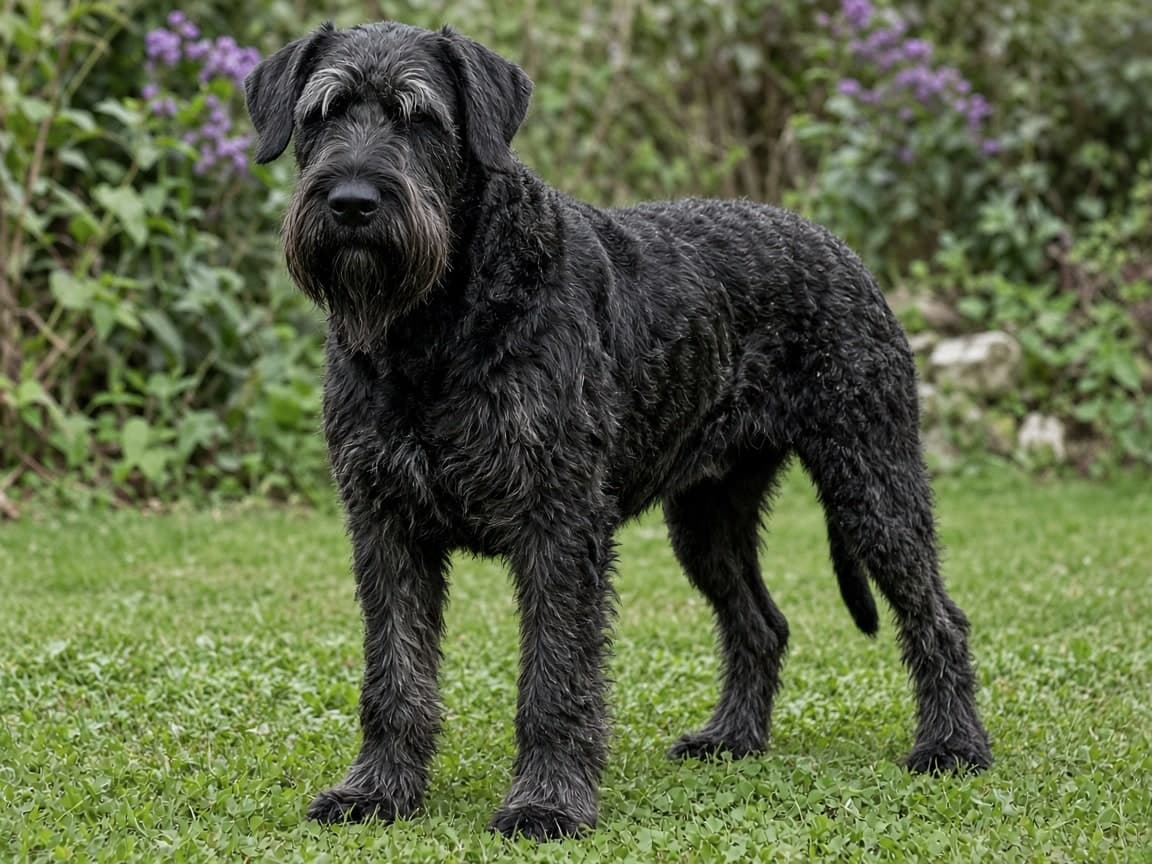
Alaskan Malamute
Affectionate, friendly, devoted, intelligent, mischievous and strong.
View breed guideGiant Schnauzer
Affectionate, loyal, alert, good-natured, strong-minded and energetic.
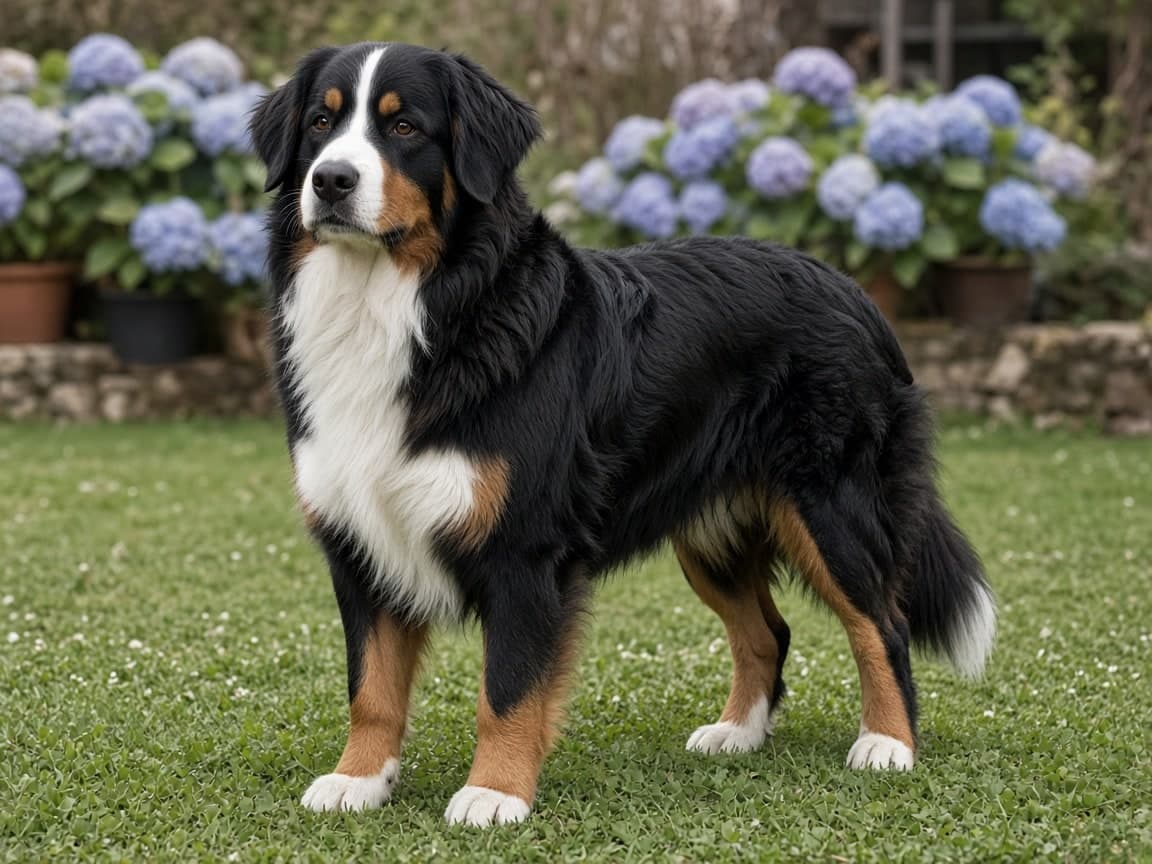
View breed guideBernese Mountain Dog
Gentle, loyal, good-natured, affectionate, patient, sensitive, friendly and calm.
View breed guide
Russian Black Terrier FAQs
Is the Russian Black Terrier good with children?
Usually better with older, calmer children. Individual dogs vary with breeding, upbringing and health, so ask about the dog you are considering.
Can the Russian Black Terrier live in a flat?
Usually needs a roomy home. Exercise and company matter more than floor space.
How much exercise does the Russian Black Terrier need?
Very high: usually needs several hours of activity or work each day. Puppies and older dogs need less structured exercise.
How much grooming does the Russian Black Terrier need?
Typically: daily.
Can the Russian Black Terrier be left alone?
Usually copes only with short periods alone. Build up time alone gradually.
Does the Russian Black Terrier bark a lot?
Can be vocal. Individual dogs vary with breeding, upbringing and health, so ask about the dog you are considering.
Is the Russian Black Terrier good with cats?
Varies with the individual dog. Individual dogs vary with breeding, upbringing and health, so ask about the dog you are considering.
How long does the Russian Black Terrier live?
Typically from 10 years. Lifespan varies with genetics, weight, care and luck.
How big does the Russian Black Terrier get?
Adults typically stand 66–77 cm at the shoulder and weigh 36–68 kg.