Poodle at a glance
- Life expectancy
- from 12 years
Typical for the breed, not a promise about any one dog. Not assessed yet: Size, Typical adult height, Typical adult weight, Energy, Barking, Home, Garden, Time alone, Owner experience.
Is the Poodle right for you?
Like every breed, the Poodle is not the right fit for every home. Based on the breed’s typical traits:
May suit you if…
- You have children and can supervise them with the dog.
- You would enjoy training a dog that is usually eager to learn.
- You can give around an hour of exercise a day.
- You have, or would like, another dog.
Consider another breed if…
- You cannot commit to daily grooming.
How would the Poodle fit your lifestyle?
Choose a few details for a general, non-guaranteed view.
About the Poodle
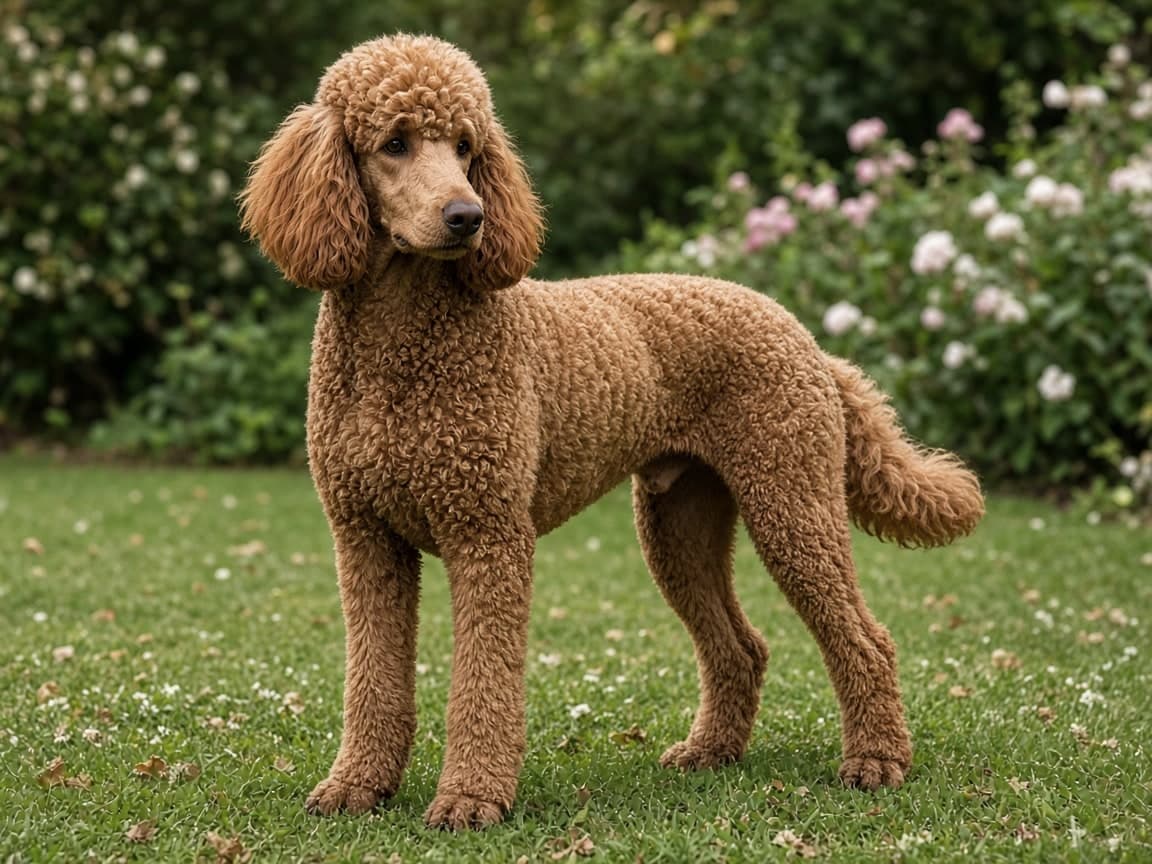
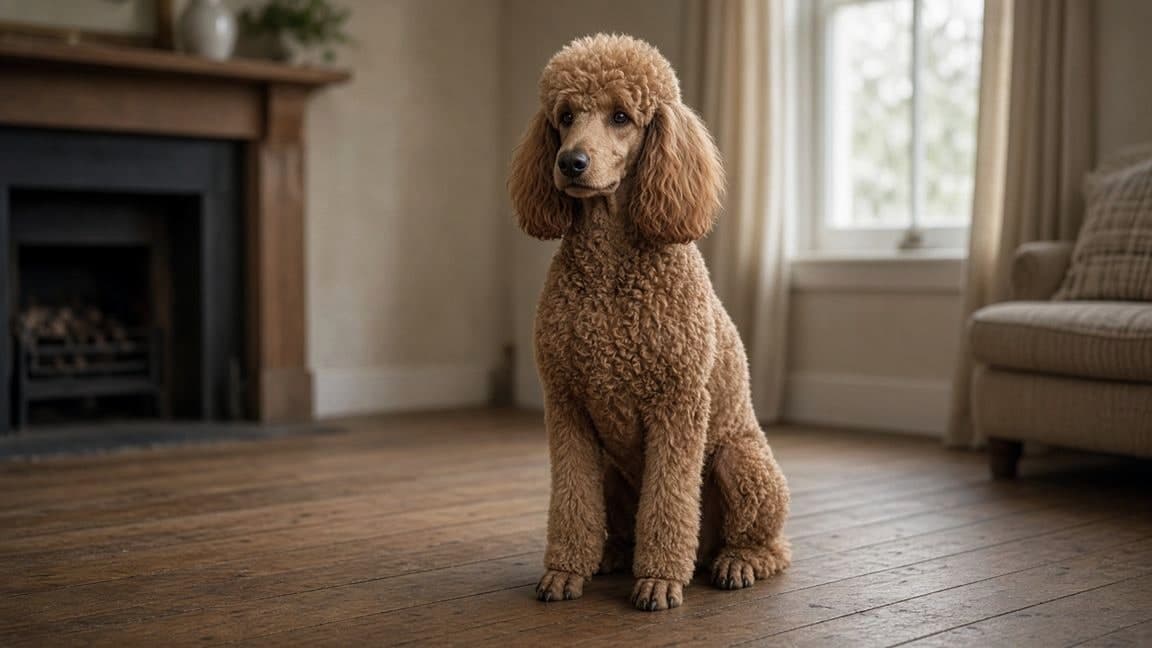
The Poodle is a glamorous, intelligent dog with a dense, curly coat and, beneath it, a lean, athletic and sporting body. Despite a reputation shaped by elaborate show trims, Poodles are typically clever, playful and adventurous dogs that love to join in whatever their owners are doing.
Key characteristics
General breed tendencies, not a prediction for an individual dog.
- Size
Not assessed yet
Our sources do not say enough yet.
- Exercise
Moderate
Typically around an hour of exercise a day.
- Energy level
Not assessed yet
Our sources do not say enough yet.
- Grooming
Daily
The coat usually needs brushing every day.
- Shedding
Low
Tends to shed little, though every dog sheds some hair.
- Trainability
High
Usually eager to learn and quick to pick things up.
- Good with children
Often good
Often good with children, with supervision.
- Good with other dogs
Usually sociable
Usually sociable with other dogs.
- Good with cats
Often fine
Often lives with cats when introduced carefully.
- Suits first-time owners
Not assessed yet
Our sources do not say enough yet.
- Barking / vocality
Not assessed yet
Our sources do not say enough yet.
- Time alone
Not assessed yet
Our sources do not say enough yet.
The Poodle originates in Germany, where it was bred as a water retriever for duck hunters, and its ancestors were the old water dogs of Europe. The traditional trim was practical rather than fashionable: the hindquarters were clipped to help the dog swim, while bands of hair, now called pom-poms, were left on the joints and tail tip to protect them from the cold.
The Royal Kennel Club recognises three varieties, divided by size, which all share one breed standard. The Standard is the oldest and original size. The Miniature and Toy are scaled-down versions, and their intelligence and trainability once made Poodles popular in European circus troupes. Today Poodles can be shown in other trims as well as the traditional lion trim.
Poodle temperament
Poodles are usually playful, high-spirited and fun-loving, and they love to learn and perform. They can be a bit of a show-off and a bit clownish, which is part of their charm. Standard Poodles in particular make good watchdogs.
With the right socialisation as puppies, Poodles generally get on well with other pets and with children. A bored Poodle can mean trouble, though, so they do best with owners who enjoy spending time training and playing with them.
Size and appearance
Size depends on the variety. Standard Poodles are the largest, standing 38 cm and over at the shoulder and typically weighing around 20–32 kg. Miniature and Toy Poodles are scaled-down versions of the same dog.
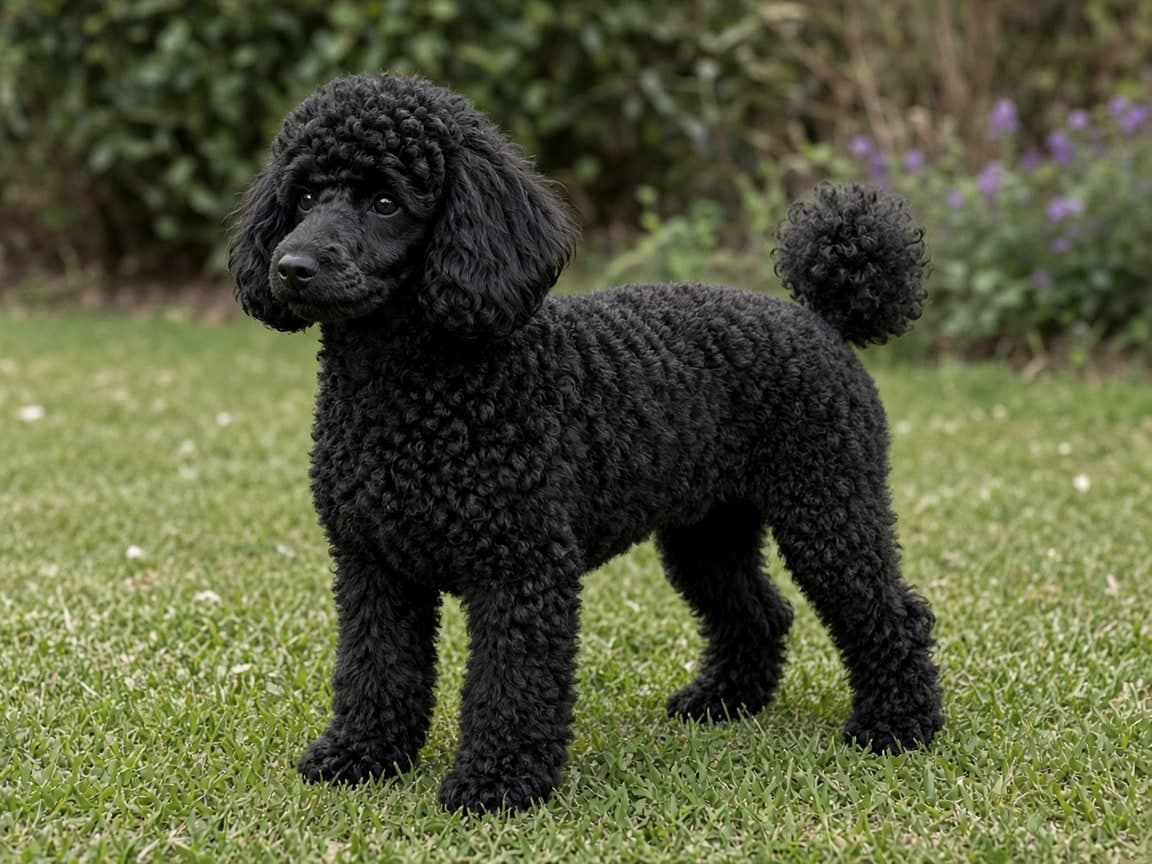
The coat is dense and curly. Breed standard colours are apricot, black, blue, brown, cream, red, silver and white. Parti-coloured and two-tone dogs, such as black and tan, are non-breed-standard colours.
How much exercise does a Poodle need?
Poodles typically need around an hour of exercise a day, and they love to run, swim and retrieve. Larger Standard Poodles may want more: Purina suggests one to two hours of walking and running for this variety, plus time for training or dog sports.
Mental exercise matters as much as walks, so keep their minds busy with training, games and puzzles.
Training a Poodle
Poodles are very intelligent, very obedient and quick to learn, and they respond well to training. They can excel at dog sports of all kinds.
- Use reward-based techniques and keep sessions quick, engaging and fun.
- Start training and socialisation young, so your Poodle grows into a confident, sociable adult.
- Vary exercises, games and puzzle-solving to stop them getting bored.
- Expect some clowning about and keep your sense of humour.
Poodle grooming
Poodles do not shed, and they are often, though not always, tolerated by people with allergies. The coat does take a lot of care. It needs daily brushing and combing to keep it soft and free of mats, and clipping and shaping by a professional groomer periodically throughout the year, often about every six weeks for a Standard Poodle. You can also learn to clip your Poodle yourself, for example in a simple all-over trim.
Living with a Poodle
Poodles can make excellent family pets and generally get on well with children when they have been well socialised as puppies. With larger varieties, the time, space and exercise they need may suit families with older children who can help with walking, training and grooming. Whatever the breed, dogs and young children should never be left alone together, and an adult should supervise every interaction.
Children
Often good with children, with supervision.
Other dogs
Usually sociable with other dogs.
Cats and small pets
Often lives with cats when introduced carefully.
Poodle health
Not yet reviewed by a vet. This is general information, not veterinary advice: speak to your vet about your own dog’s health.
Poodles can be prone to a number of inherited conditions, and the risks differ between varieties. Ask about the health of a puppy's parents and grandparents and check which BVA/KC screening tests they have had.
Progressive retinal atrophy (PRA)
A gradual deterioration of the retina that can start with night blindness and progress to total blindness. The Royal Kennel Club lists a DNA test for prcd-PRA for Standard and Miniature Poodles, and an rcd4 test for Standards. Imported Standard Poodles must be tested for both forms to be registered.
Other eye conditions
Cataracts, where the lens becomes cloudy, dry eye (keratoconjunctivitis sicca), entropion, where the eyelids turn inwards, and distichiasis, where extra eyelashes rub on the eye, can all occur. Eye testing under the BVA/KC/ISDS Eye Scheme is recommended for breeding dogs.
Hip dysplasia
Looseness of the hip joint due to poor development, which eventually leads to arthritis. Hip testing under the BVA/KC Hip Dysplasia Scheme is recommended for Standard and Miniature Poodles.
Von Willebrand's disease
A blood clotting disorder that can cause excessive bleeding. A DNA test (vWD1) is listed for Standard Poodles.
Osteochondrodysplasia (OC)
A DNA test for this condition is listed by the Royal Kennel Club for Miniature Poodles.
Gastric dilatation volvulus (GDV)
Often called bloat, the stomach twists and traps its contents and gas. It is an emergency and is seen mainly in large, deep-chested dogs such as Standard Poodles.
Other conditions
Hormone disorders such as Addison's disease, Cushing's syndrome and hypothyroidism are recorded in the breed, as are patellar luxation, Legg-Perthes disease, epilepsy, cardiomyopathy and intervertebral disc disease.
What health checks should you ask about?
Responsible breeders and rescues are happy to talk about health, and any pressure to decide quickly is a reason to walk away. Before taking a Poodle home, it is reasonable to ask about:
- Health testing of the parents. Ask which health tests the parents have had for conditions known in the breed, and to see the results.
- Veterinary and vaccination records. Puppies should have had a first vaccination and a vet check, with records you can take home.
- Microchip information. In England, Scotland and Wales puppies must be microchipped and registered by eight weeks old. Ask who the chip is registered to and how the transfer works.
- Registration paperwork. Registration papers, where they apply, record pedigree. They do not by themselves prove health or how a puppy was raised.
How much does a Poodle cost to own?
There are two costs: bringing a Poodle home, and looking after one well. Puppy prices depend on the breeder, health testing and demand; the adverts below show what sellers are asking today.
Ongoing costs are the ones new owners most often underestimate: food, insurance (which usually rises with age), routine vet care, vaccinations and parasite treatment, dental care, grooming, training, bedding and equipment, and boarding or a sitter for holidays. Budget for the whole of the dog’s life, typically from 12 years, not just the first year.
Buying a Poodle
If you have decided the Poodle suits your life, take the same care choosing where your dog comes from. Meet the puppy in person, see it with its mother, and look at how the litter is raised.
- Check who you are dealing with: every Mypetzilla advert shows the seller type and what we have checked.
- Ask about health testing, vaccinations and the microchip before you commit.
- Take your time. Do not be rushed by deposits or "last one left" stories.
- Meet in person before paying anything, and keep conversations on Mypetzilla.
Adopting a Poodle
Poodles do come up for adoption, through rescue organisations, breed rescues and private rehoming, often because an owner’s circumstances have changed rather than any fault of the dog. An adult dog arrives as a known quantity: its size, coat and character are already on show.
Rescues will usually talk you through the dog’s history, any medical care, and the home it needs, including children, other animals and time alone. Be honest about your circumstances: a good rescue would rather place a dog once, well.
Poodles looking for homes
Live from Mypetzilla, updated as pets are listed.
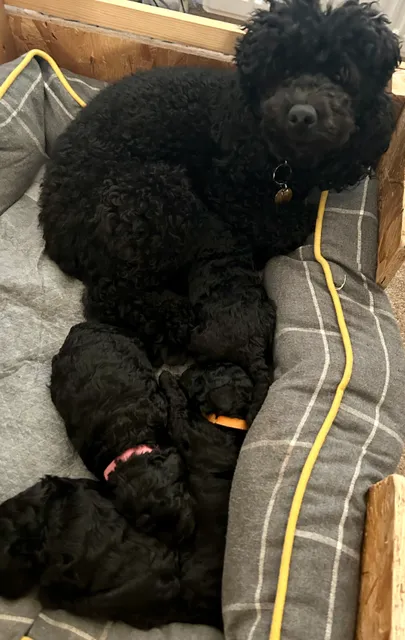
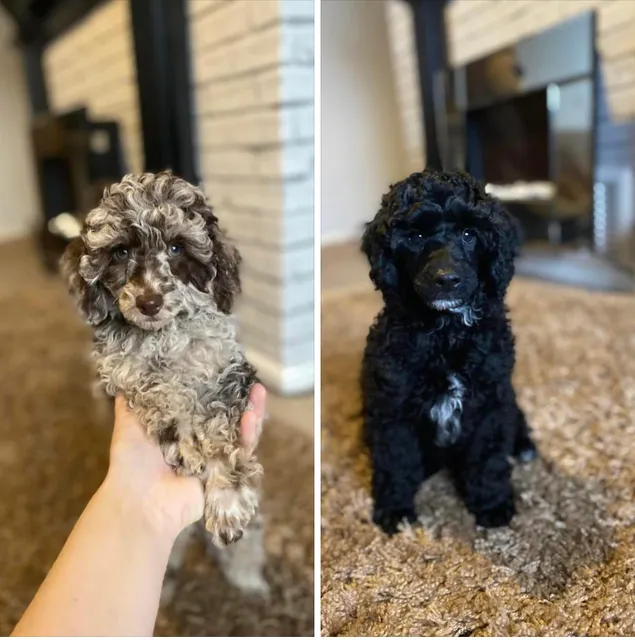
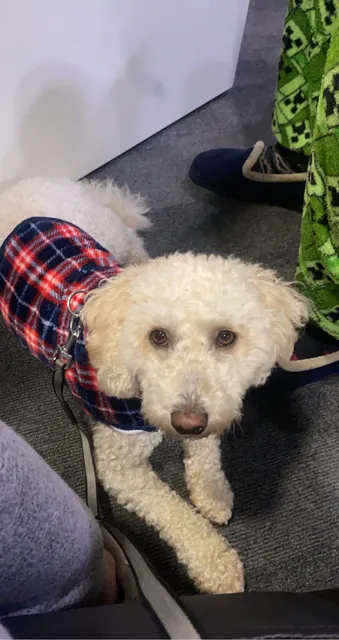
Find Poodle adverts for sale and for adoption on Mypetzilla now.
Similar breeds you may want to consider
Miniature Poodle
Intelligent, lively, sociable, affectionate, amusing, playful and adventurous.
View breed guide
Poodle FAQs
Is the Poodle good with children?
Often good with children, with supervision. Individual dogs vary with breeding, upbringing and health, so ask about the dog you are considering.
How much exercise does the Poodle need?
Moderate: typically around an hour a day. Puppies and older dogs need less structured exercise.
Does the Poodle shed?
Tends to shed little.
How much grooming does the Poodle need?
Typically: daily.
Is the Poodle easy to train?
Usually eager to learn. Kind, reward-based training works best.
Is the Poodle good with cats?
Often lives with cats when introduced carefully. Individual dogs vary with breeding, upbringing and health, so ask about the dog you are considering.
How long does the Poodle live?
Typically from 12 years. Lifespan varies with genetics, weight, care and luck.