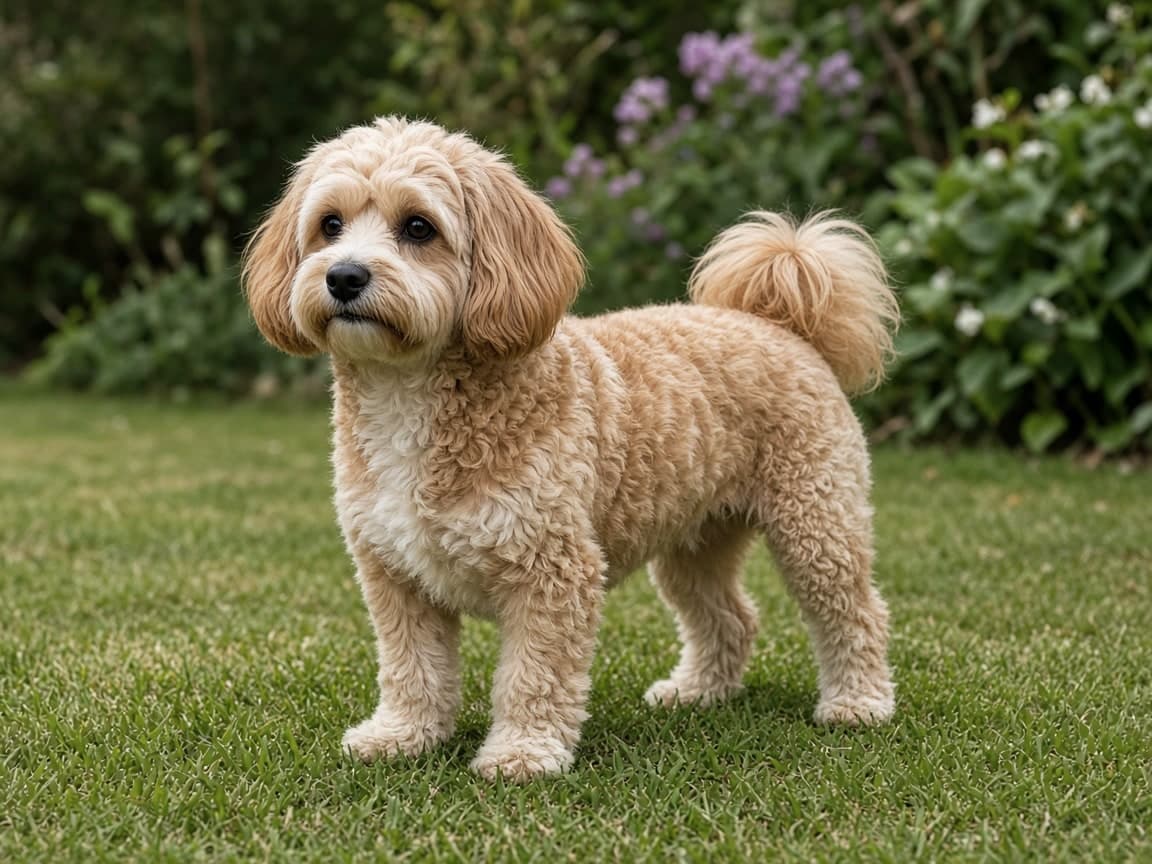
About the Poochon
The Poochon, sometimes called the Bichpoo, is a crossbreed rather than a pedigree breed: a cross between a Toy Poodle and a Bichon Frise. It belongs to the large family of poodle crosses known as "doodles" and "poos", with "poo" usually used for the smaller companion crosses that involve a Miniature or Toy Poodle.
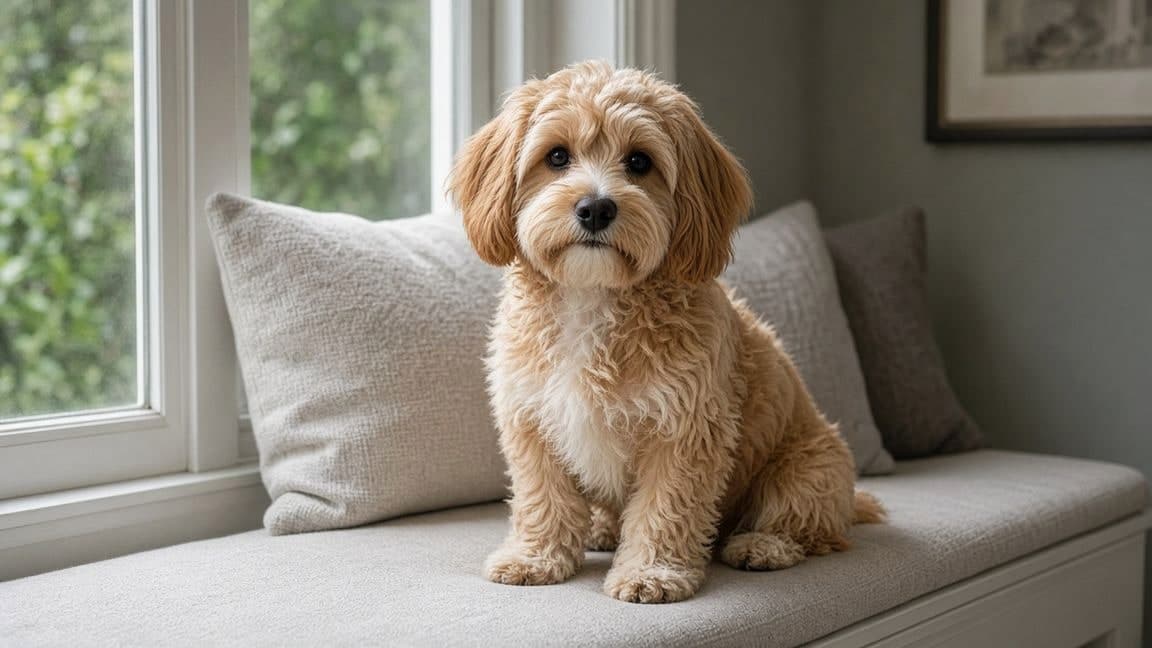
Poodle crosses like the Poochon are known for their curly, teddy-bear coats and big personalities. Because they are crossbreeds, you cannot look for a breeder registered with a kennel club, so it is important to know what to look for in a breeder. Much of what is written about the Poochon applies to poodle crosses in general, and individual dogs can vary.
Poochon temperament
Poodle crosses are typically intelligent, social and full of personality. Most owners describe them as incredibly sociable dogs who love being close to their people, happy to be cuddlers and playmates and to join in with whatever you are doing.
That closeness has a downside. They are often called "Velcro dogs" because they follow their owners everywhere, and it can be hard to teach them to be comfortable on their own. Separation anxiety can be common in poodle crosses.
They can also be vocal, barking at new people or dogs and reacting to sounds inside or outside the home, especially when left alone. Their friendly, sociable nature usually makes them good with other dogs and pets.
Size and appearance
As a poo cross involving a Toy Poodle, the Poochon is one of the smaller poodle crosses. Coats vary: some are curly and woolly, others wavy or silky soft. Apricot is one of the colours seen.
Training a Poochon
Poochons are intelligent and usually pick up tricks and games quickly. The two areas that most need early, patient work are being left alone and accepting grooming.
- Work on helping your dog feel comfortable on their own, because poodle crosses often find being left hard.
- Get your puppy used to brushing, clipping and handling from the start so grooming feels safe.
- Use treats or a chew and take grooming in small steps, with calm hands and a gentle voice.
- Use their quick learning for tricks and games to keep them busy.
Poochon grooming
Grooming is a big part of owning a Poochon. Poodle-type coats curl, shed very little and keep growing, which means dead hair and dirt get trapped and form mats and tangles.
Most poodle crosses need brushing several times a week at home, plus a visit to a professional groomer roughly every six to 10 weeks. Brush right down to the skin, not just the surface, and pay special attention to the ears, armpits, back legs, neck and tail, where mats form fastest. Brush thoroughly before a bath and dry the coat completely afterwards, because mats tighten when wet.
Expect a difficult stage between about six and 12 months, when the adult coat pushes out the puppy coat and matting can build up quickly. Poodle crosses are often described as hypoallergenic, but no dog is completely allergy-free.
Poochon health
Not yet reviewed by a vet. This is general information, not veterinary advice: speak to your vet about your own dog’s health.
Crossbreeds were once thought to be generally healthier than pedigree dogs, but all dogs can inherit health issues, and a cross does not guarantee healthy puppies. Choose a responsible breeder who makes sure both parents are healthy and free from hereditary diseases.
Matting and skin problems
If the coat is not kept up, severe matting can cause pain, discomfort and skin problems. Often the only remedy for a badly matted coat is a full clip, so regular home brushing between grooming appointments matters.
What health checks should you ask about?
Responsible breeders and rescues are happy to talk about health, and any pressure to decide quickly is a reason to walk away. Before taking a Poochon home, it is reasonable to ask about:
- Health testing of the parents. Ask which health tests the parents have had for conditions known in the breed, and to see the results.
- Veterinary and vaccination records. Puppies should have had a first vaccination and a vet check, with records you can take home.
- Microchip information. In England, Scotland and Wales puppies must be microchipped and registered by eight weeks old. Ask who the chip is registered to and how the transfer works.
- Registration paperwork. Registration papers, where they apply, record pedigree. They do not by themselves prove health or how a puppy was raised.
How much does a Poochon cost to own?
There are two costs: bringing a Poochon home, and looking after one well. Puppy prices depend on the breeder, health testing and demand; the adverts below show what sellers are asking today.
Ongoing costs are the ones new owners most often underestimate: food, insurance (which usually rises with age), routine vet care, vaccinations and parasite treatment, dental care, grooming, training, bedding and equipment, and boarding or a sitter for holidays. Budget for the whole of the dog’s life, not just the first year.
Buying a Poochon
If you have decided the Poochon suits your life, take the same care choosing where your dog comes from. Meet the puppy in person, see it with its mother, and look at how the litter is raised.
- Check who you are dealing with: every Mypetzilla advert shows the seller type and what we have checked.
- Ask about health testing, vaccinations and the microchip before you commit.
- Take your time. Do not be rushed by deposits or "last one left" stories.
- Meet in person before paying anything, and keep conversations on Mypetzilla.
Adopting a Poochon
Poochons do come up for adoption, through rescue organisations, breed rescues and private rehoming, often because an owner’s circumstances have changed rather than any fault of the dog. An adult dog arrives as a known quantity: its size, coat and character are already on show.
Rescues will usually talk you through the dog’s history, any medical care, and the home it needs, including children, other animals and time alone. Be honest about your circumstances: a good rescue would rather place a dog once, well.
Poochons looking for homes
Live from Mypetzilla, updated as pets are listed.
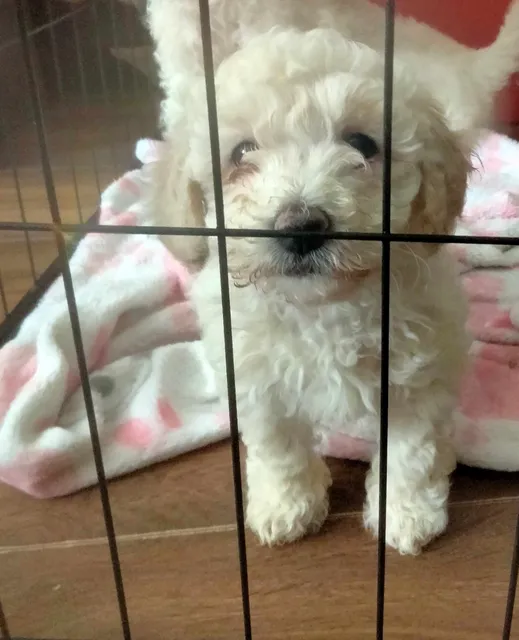
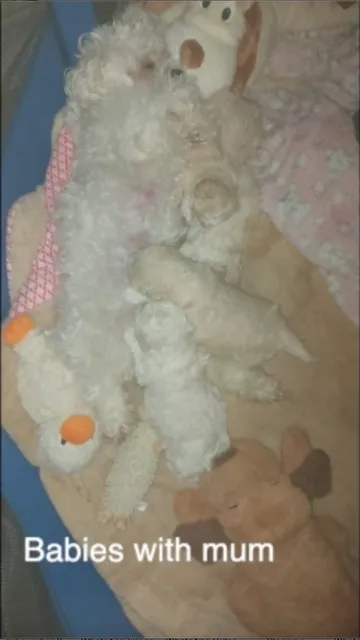
Find Poochon adverts for sale and for adoption on Mypetzilla now.