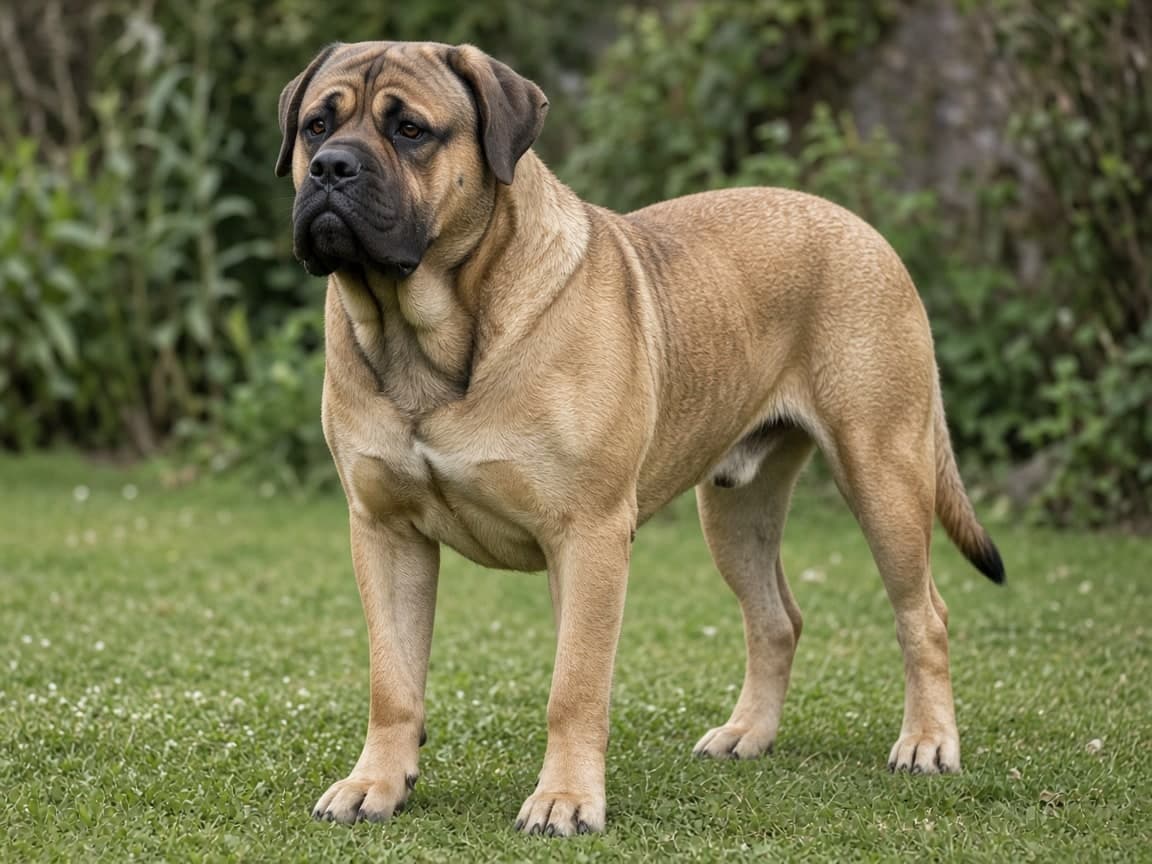
Mastiff at a glance
- Size
- Large
- Height
- 71–78 cm
- Weight
- 80–85 kg
- Life expectancy
- up to 10 years
Typical for the breed, not a promise about any one dog.
Is the Mastiff right for you?
Like every breed, the Mastiff is not the right fit for every home. Based on the breed’s typical traits:
May suit you if…
- You can give around an hour of exercise a day.
- You would like a dog that tends to be quiet.
- You would like a coat that is fairly easy to look after.
- You would like a dog that is usually calm at home.
Consider another breed if…
- The dog would regularly be left alone for long working days.
- You live in a flat or a small home.
- You have young children at home.
- You want a dog that picks up training quickly.
How would the Mastiff fit your lifestyle?
Choose a few details for a general, non-guaranteed view.
About the Mastiff
The Mastiff is a large, muscular and powerful dog with a broad head and body and a short coat. Despite its imposing build it is usually a calm, gentle and good-natured companion that is devoted to its own family.
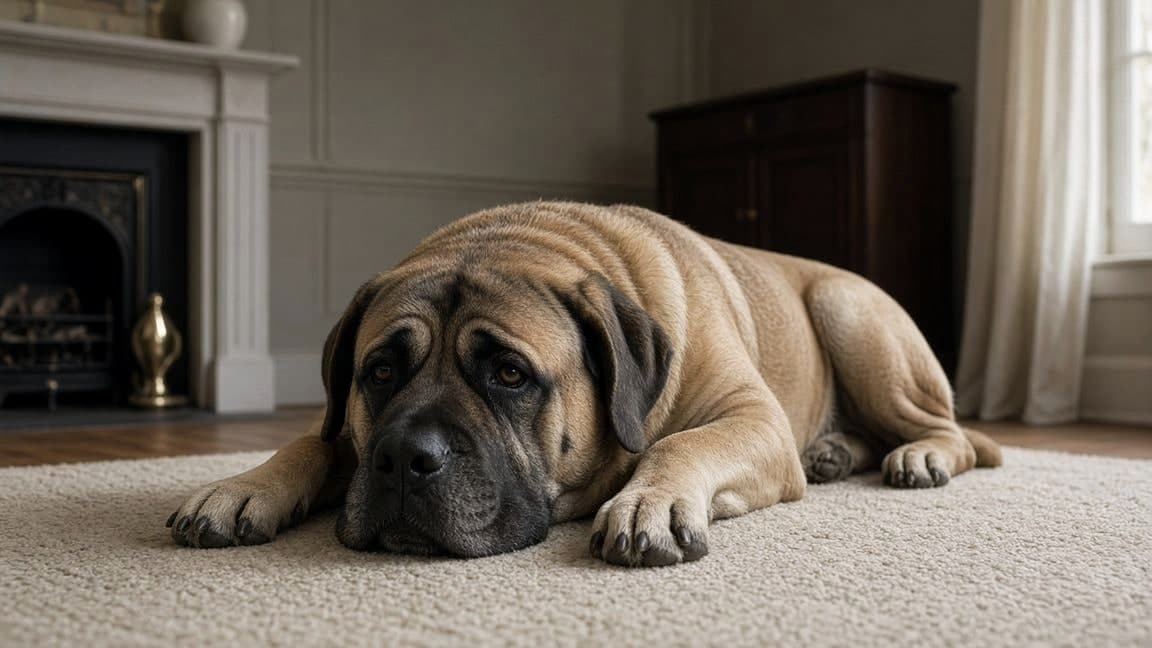
Key characteristics
General breed tendencies, not a prediction for an individual dog.
- Size
Large
A large dog.
- Exercise
Moderate
Typically around an hour of exercise a day.
- Energy level
Usually calm
Tends to be calm and settled around the home.
- Grooming
Weekly
The coat usually needs brushing about once a week.
- Shedding
Moderate
Sheds a moderate amount, varying by dog and season.
- Trainability
Independent
Can be independent-minded; patient training helps.
- Good with children
Older children
Usually better with older, calmer children.
- Good with other dogs
Can be selective
Can be selective about other dogs.
- Good with cats
Varies
Varies with the individual dog.
- Suits first-time owners
Some experience helps
Some dog experience helps.
- Barking / vocality
Tends to be quiet
Usually a fairly quiet dog around the home.
- Time alone
Prefers company
Usually copes only with short periods alone.
Mastiff-type dogs have lived in Britain since ancient times, prized for their size, strength and courage. The breed, once called the Old English Mastiff, was used as a guard dog, a gamekeeper's dog and a hunter of wolves, and was also used for bear and bull baiting and in fighting pits until these were outlawed in 1835.
That ban put the breed's future at risk. Many Mastiffs were exported to North America between the wars, and by the end of the Second World War very few remained in Britain. Dogs bred in North America were later sent back to help revive the breed. The Royal Kennel Club lists the Mastiff as a vulnerable native breed, and it is still uncommon today.
Mastiff temperament
Mastiffs are typically calm, noble and loving with their own people, and many seem to think they are lap dogs. They are often described as gentle giants.
They are naturally protective of their family and their territory, and are usually indifferent to or suspicious of strangers, both human and canine. They are generally quiet dogs, but will bark to alert and may physically protect their home. Early socialisation helps them grow into confident, sociable adults.
Size and appearance
The Mastiff is a very big dog. Adults typically stand around 71–78 cm at the shoulder and weigh around 80–85 kg.
The coat is short, and coarser around the neck and shoulders. Breed standard colours are apricot fawn, brindle and fawn. Expect some drool.
How much exercise does a Mastiff need?
Adult Mastiffs usually need around an hour of exercise a day. They can be quite lazy and enjoy a good snooze in a warm spot.
Puppies should not be over-exercised, because their bones and joints are still developing and the breed is prone to skeletal problems. Because of their size, most exercise is likely to be on lead, with access to quiet open spaces.
Training a Mastiff
Mastiffs are often not very interested in training and are slow to mature, so training takes patience over several years. Reward-based methods work best.
- Start socialisation young, especially with strangers and other dogs.
- Teach them to walk well on a lead and harness while they are still small enough to manage.
- Work on a reliable recall, but expect most walks to be on lead for the safety of others.
- Be patient and consistent: this is a slow-maturing breed.
Mastiff grooming
The short coat needs little effort. A brush once a week is usually enough. The facial wrinkles need cleaning every day.
Mastiffs do shed, and they drool.
Living with a Mastiff
Mastiffs are devoted to their families, but their size and power mean they are not ideal with small children, and they can misread the playful behaviour of visiting children. They typically suit homes without children or with older, very sensible children.
Whatever the breed, dogs and young children should never be left alone together, and an adult should supervise every interaction.
Children
Usually better with older, calmer children.
Other dogs
Can be selective about other dogs.
Cats and small pets
Varies with the individual dog.
Flats and smaller homes
Usually needs a roomy home.
Garden
A garden is helpful.
Being left alone
Usually copes only with short periods alone.
First-time owners
Some dog experience helps.
Mastiff health
Not yet reviewed by a vet. This is general information, not veterinary advice: speak to your vet about your own dog’s health.
The Royal Kennel Club places the Mastiff in Breed Watch Category 3, meaning it can be affected by conformational concerns, and several health problems are recognised in the breed. Knowing about them helps you ask a breeder the right questions; it does not mean every Mastiff will be affected.
Hip and elbow dysplasia
The hip or elbow joints do not develop correctly, leading to degenerative joint disease. The Royal Kennel Club recommends hip and elbow testing under the BVA/KC schemes before breeding.
Eye conditions
Mastiffs can have inherited eye disorders, including progressive retinal atrophy, a gradual loss of vision. The Royal Kennel Club recommends eye testing under the BVA/KC/ISDS Eye Scheme.
Entropion and ectropion
Excess skin around the face can make the eyelids roll inwards or droop outwards, irritating the eye.
Cherry eye
The gland of the third eyelid pops out at the corner of the eye. It usually appears in younger dogs.
Gastric dilatation volvulus (bloat)
In large, deep-chested dogs the stomach can fill with gas and twist, often after eating. It needs urgent veterinary attention.
Dilated cardiomyopathy
The heart muscle weakens and pumps blood less effectively. The onset can be sudden.
Wobbler syndrome
Instability or deformity of the bones in the neck compresses the spinal cord, causing a wobbly gait and weakness in the hind legs.
Back and knee problems
Mastiffs can develop degenerative disc disease, which causes back pain, and cruciate ligament problems in the knee.
Hypothyroidism
Low levels of thyroid hormone, usually caused by the immune system attacking the thyroid.
Epilepsy
Mastiffs can be more prone to seizures caused by epilepsy.
Cancer
The breed can be more prone to some cancers, including bone tumours.
Atopy and panosteitis
Atopy is an allergy that causes itching and skin damage. Panosteitis is a painful inflammatory bone disease.
What health checks should you ask about?
Responsible breeders and rescues are happy to talk about health, and any pressure to decide quickly is a reason to walk away. Before taking a Mastiff home, it is reasonable to ask about:
- Health testing of the parents. Ask which health tests the parents have had for conditions known in the breed, and to see the results.
- Veterinary and vaccination records. Puppies should have had a first vaccination and a vet check, with records you can take home.
- Microchip information. In England, Scotland and Wales puppies must be microchipped and registered by eight weeks old. Ask who the chip is registered to and how the transfer works.
- Registration paperwork. Registration papers, where they apply, record pedigree. They do not by themselves prove health or how a puppy was raised.
How much does a Mastiff cost to own?
There are two costs: bringing a Mastiff home, and looking after one well. Puppy prices depend on the breeder, health testing and demand; the adverts below show what sellers are asking today.
Ongoing costs are the ones new owners most often underestimate: food, insurance (which usually rises with age), routine vet care, vaccinations and parasite treatment, dental care, grooming, training, bedding and equipment, and boarding or a sitter for holidays. Budget for the whole of the dog’s life, typically up to 10 years, not just the first year.
Buying a Mastiff
If you have decided the Mastiff suits your life, take the same care choosing where your dog comes from. Meet the puppy in person, see it with its mother, and look at how the litter is raised.
- Check who you are dealing with: every Mypetzilla advert shows the seller type and what we have checked.
- Ask about health testing, vaccinations and the microchip before you commit.
- Take your time. Do not be rushed by deposits or "last one left" stories.
- Meet in person before paying anything, and keep conversations on Mypetzilla.
Adopting a Mastiff
Mastiffs do come up for adoption, through rescue organisations, breed rescues and private rehoming, often because an owner’s circumstances have changed rather than any fault of the dog. An adult dog arrives as a known quantity: its size, coat and character are already on show.
Rescues will usually talk you through the dog’s history, any medical care, and the home it needs, including children, other animals and time alone. Be honest about your circumstances: a good rescue would rather place a dog once, well.
Mastiffs looking for homes
Live from Mypetzilla, updated as pets are listed.
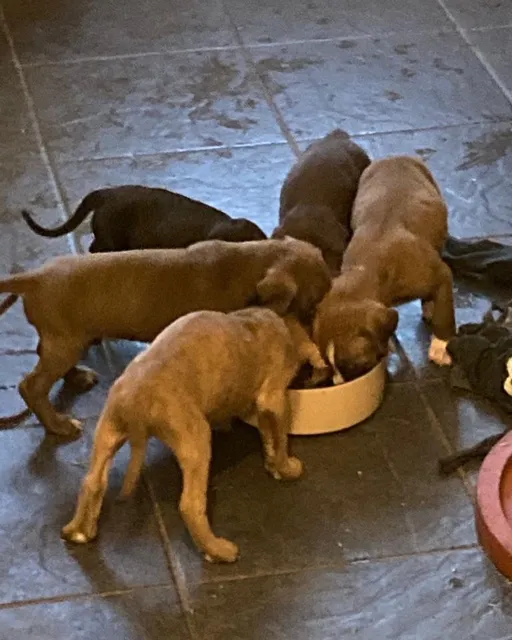
Find Mastiff adverts for sale and for adoption on Mypetzilla now.
Similar breeds you may want to consider
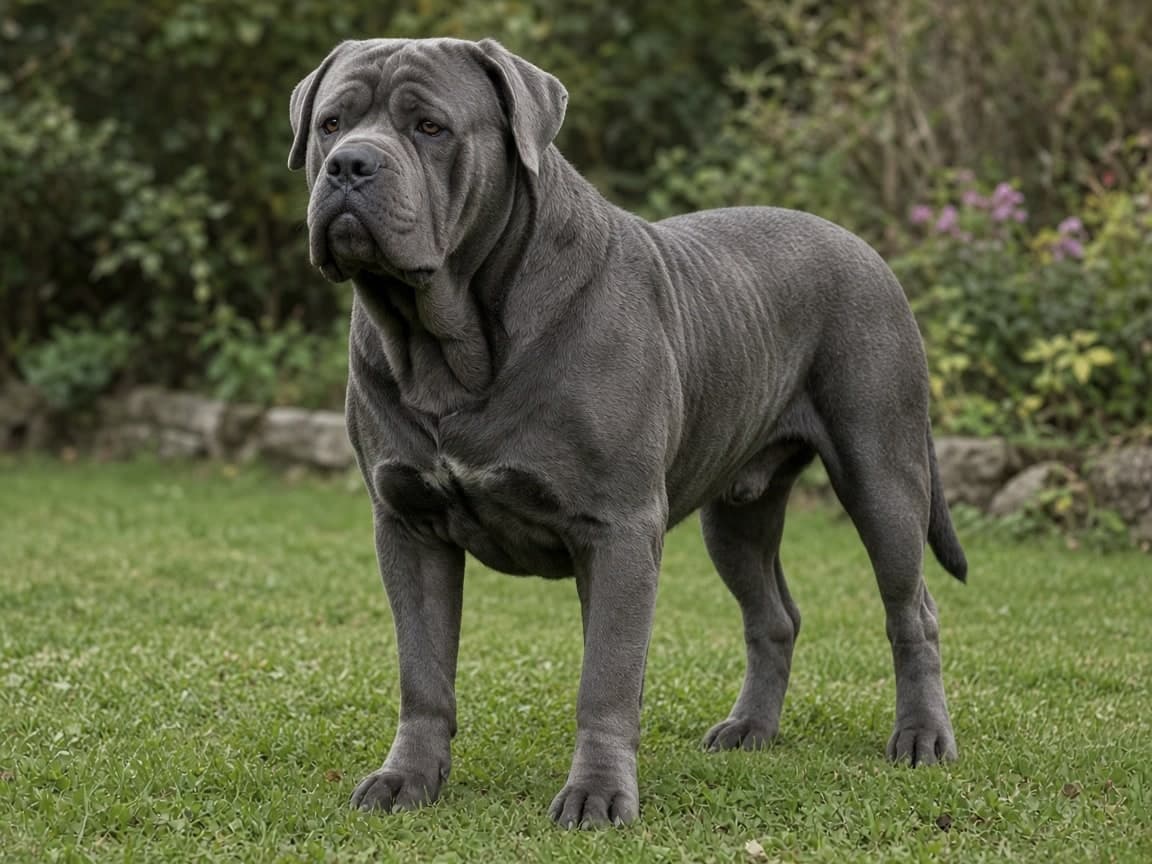
Neapolitan Mastiff
Majestic, loyal, devoted, even-tempered, vigilant, watchful, affectionate and sensitive.
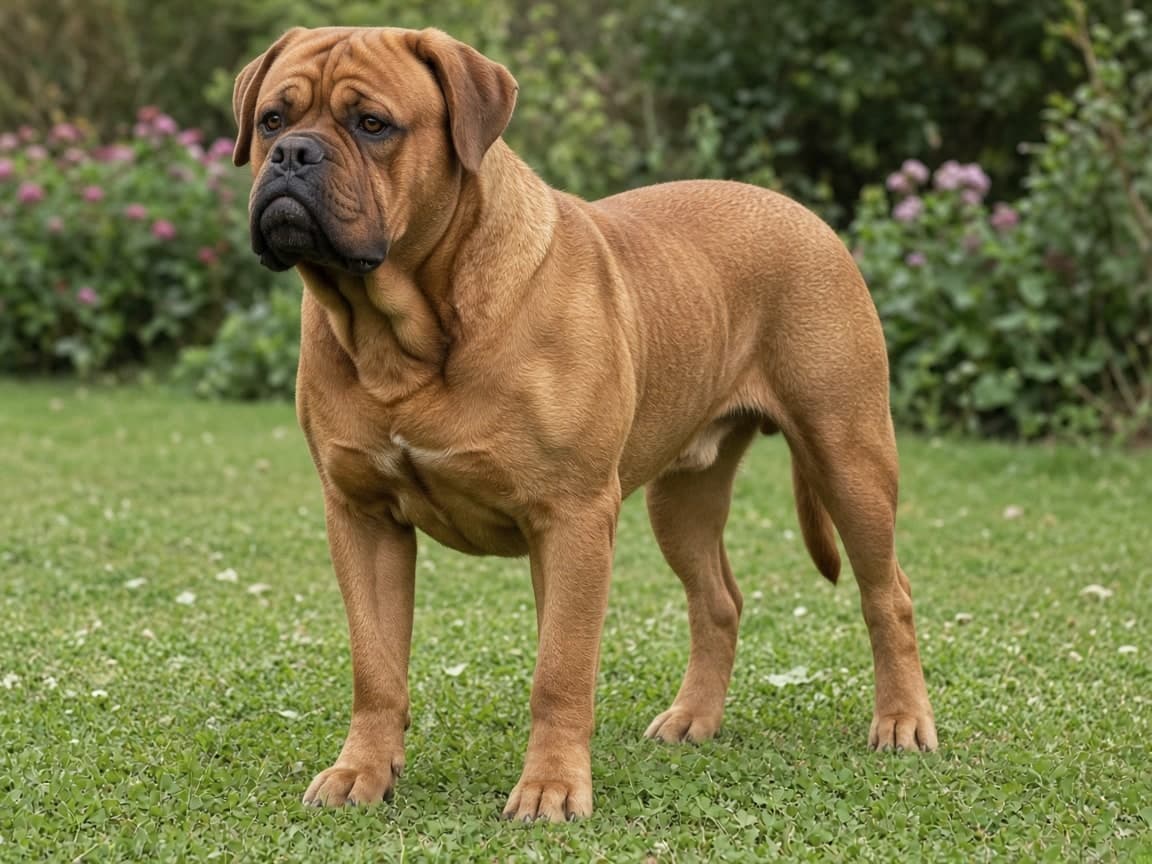
View breed guideDogue De Bordeaux
Loyal, affectionate, devoted, gentle, intelligent, sensitive and protective.
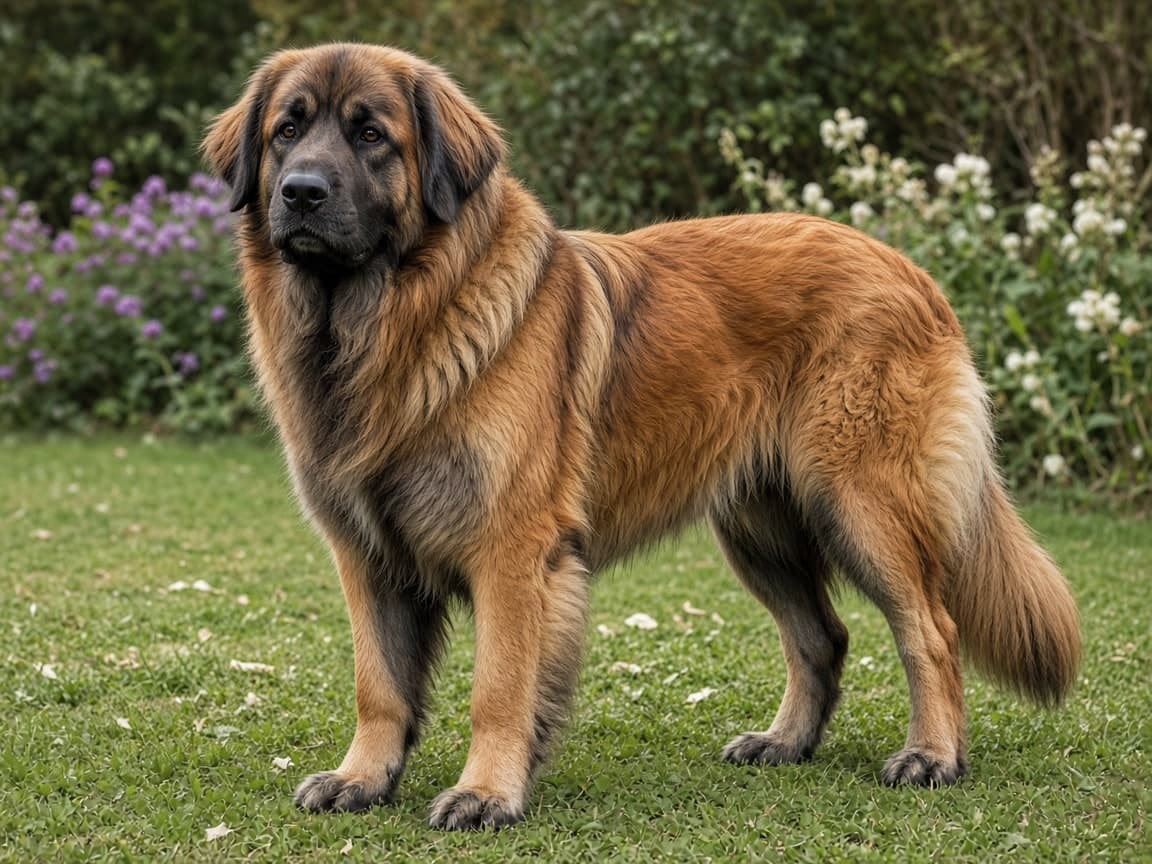
View breed guideLeonberger
Gentle, affectionate, calm, good-natured, easy-going, placid, loyal and playful.
View breed guide
Mastiff FAQs
Is the Mastiff good with children?
Usually better with older, calmer children. Individual dogs vary with breeding, upbringing and health, so ask about the dog you are considering.
Can the Mastiff live in a flat?
Usually needs a roomy home. Exercise and company matter more than floor space.
How much exercise does the Mastiff need?
Moderate: typically around an hour a day. Puppies and older dogs need less structured exercise.
Does the Mastiff shed?
Moderate shedding.
How much grooming does the Mastiff need?
Typically: about once a week.
Is the Mastiff easy to train?
Can be independent-minded; patient training helps. Kind, reward-based training works best.
Can the Mastiff be left alone?
Usually copes only with short periods alone. Build up time alone gradually.
Does the Mastiff bark a lot?
Tends to be quiet. Individual dogs vary with breeding, upbringing and health, so ask about the dog you are considering.
Is the Mastiff good with cats?
Varies with the individual dog. Individual dogs vary with breeding, upbringing and health, so ask about the dog you are considering.
How long does the Mastiff live?
Typically up to 10 years. Lifespan varies with genetics, weight, care and luck.
How big does the Mastiff get?
Adults typically stand 71–78 cm at the shoulder and weigh 80–85 kg.