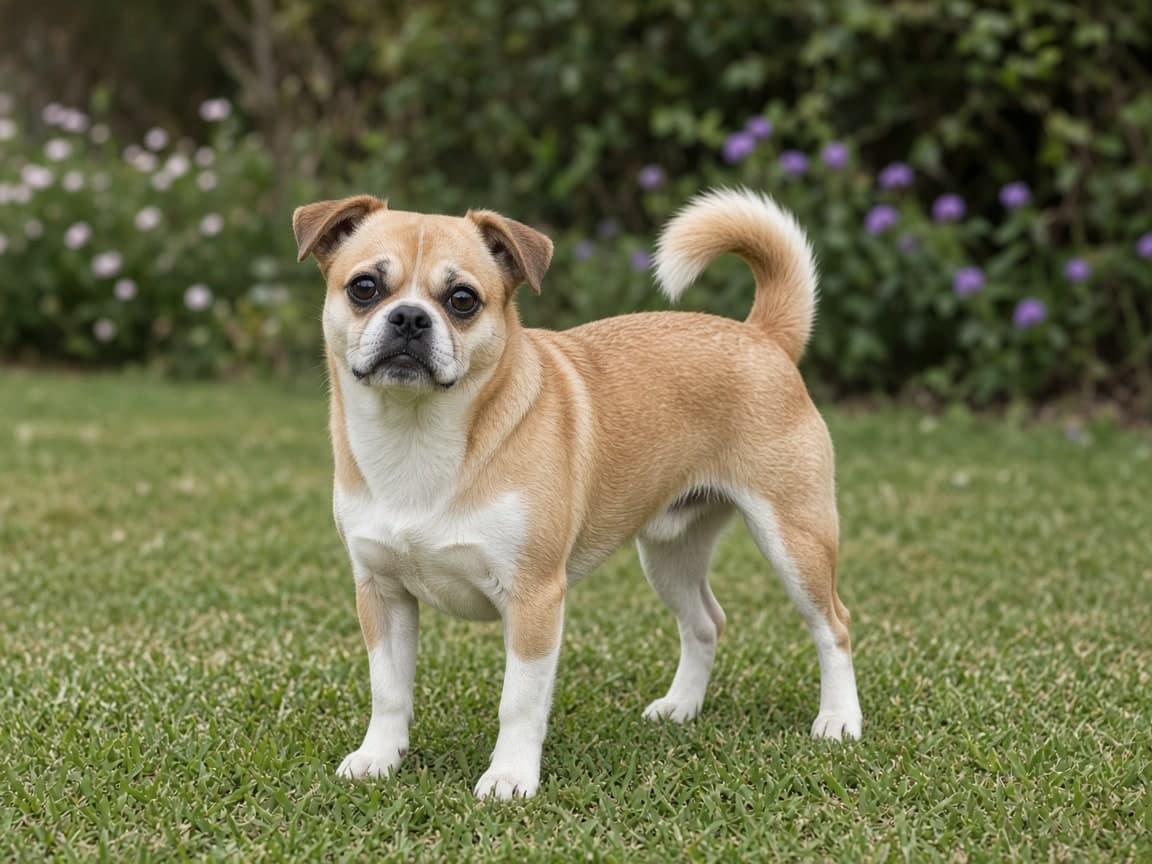
About the Jug
The Jug is a crossbreed, not a pedigree breed: one parent is a Pug and the other a Jack Russell Terrier. The Jack Russell has a more moderate head shape than the flat-faced Pug, so Jugs usually have a noticeably longer muzzle and more open nostrils than a purebred Pug, and most do not have the Pug's nasal skin fold.
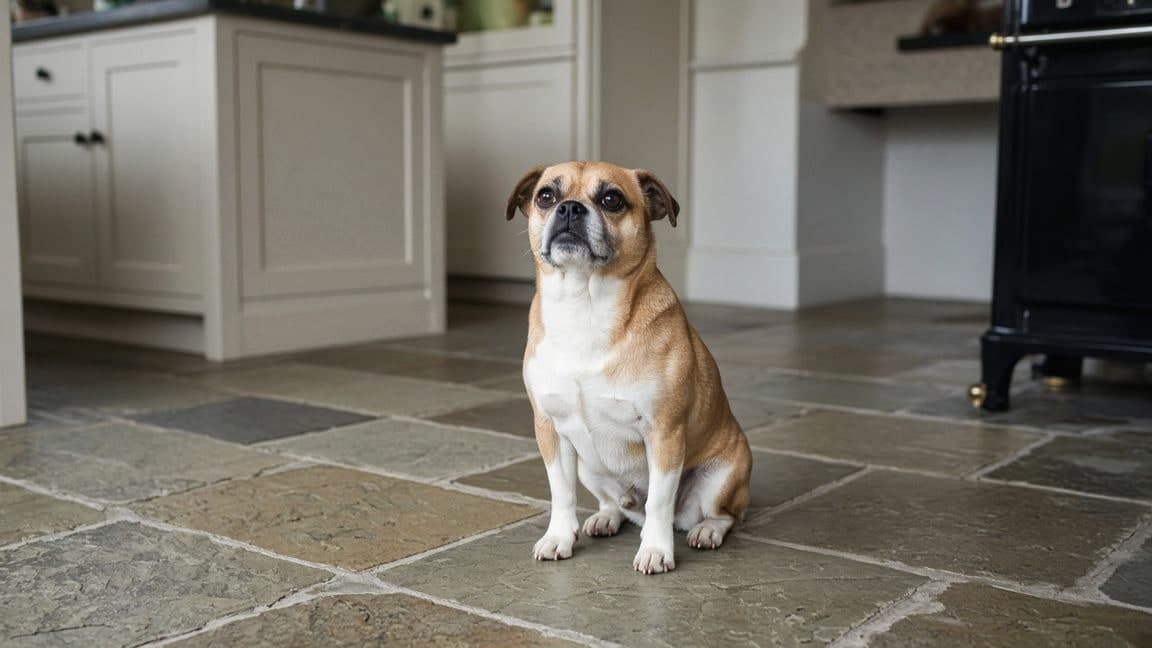
Crossing the Pug with a longer-nosed breed such as the Jack Russell is one way of moving away from the Pug's extreme flat face while keeping the qualities owners love. Most of what is reliably known about them comes from a 2026 study by the Royal Veterinary College, which examined 51 pet Jugs in the UK alongside Pugs and Puggles. Most of the Jugs in that study were first-generation crosses, and the researchers note that dogs from later generations may vary more, so individual Jugs can differ a good deal.
Jug temperament
In the Royal Veterinary College study, Jugs had behaviour profiles broadly similar to purebred Pugs, and their owners reported an equally close relationship with their dogs. Jugs and Pugs both scored higher than Puggles for attachment and attention-seeking, so a Jug is likely to want to be close to its people.
No meaningful differences were found between the three types for excitability, aggression, fear or separation-related behaviour.
How much exercise does a Jug need?
Jugs appear to need more exercise than some owners expect. In the study, none of the Jug owners said their dog's exercise needs were lower than they had expected, and about a third said they were higher.
Very few Jug owners reported problems with exercise or with coping in the heat, and none said their dog had a breathing problem. Most Jugs in the study were at an ideal body condition, with only one dog assessed as severely overweight.
Jug health
Not yet reviewed by a vet. This is general information, not veterinary advice: speak to your vet about your own dog’s health.
Compared with purebred Pugs, Jugs in the study had far fewer conformation-related health problems, and their owners were much more likely to rate their quality of life as excellent. Crossbreeding did not remove every problem, though, and the findings come from one study of UK dogs, so they describe what is typical rather than a guarantee for any individual Jug.
Brachycephalic Obstructive Airway Syndrome (BOAS)
BOAS is a breathing disorder caused by the shortened airway of flat-faced dogs. Every Jug in the study was graded as unaffected on the Respiratory Function Grading Scheme, compared with none of the purebred Pugs. A longer muzzle was strongly linked to a lower risk of airway disease. The grading scheme has not been formally validated for crossbreeds, and some airway features such as the soft palate were not examined.
Skin fold dermatitis
Inflammation of the skin in facial folds. Only around one in six Jugs had a nasal fold, and just one Jug in the study had nasal fold dermatitis.
Eye problems
Flat-faced dogs are prone to eye problems linked to the shape of the face and eyelids, such as corneal ulcers and inward or outward turning eyelids. Owners reported eye problems in only a small number of Jugs, far fewer than in Pugs.
Patellar luxation
The kneecap can slip out of place. It was found in three of the 51 Jugs examined, fewer than in Pugs.
Dental problems
Crossbreeding did not remove dental issues. On examination, crowded teeth and missing or loose teeth were common in Jugs, and dental problems were among the most frequently reported health issues across all the dogs in the study.
What health checks should you ask about?
Responsible breeders and rescues are happy to talk about health, and any pressure to decide quickly is a reason to walk away. Before taking a Jug home, it is reasonable to ask about:
- Health testing of the parents. Ask which health tests the parents have had for conditions known in the breed, and to see the results.
- Veterinary and vaccination records. Puppies should have had a first vaccination and a vet check, with records you can take home.
- Microchip information. In England, Scotland and Wales puppies must be microchipped and registered by eight weeks old. Ask who the chip is registered to and how the transfer works.
- Registration paperwork. Registration papers, where they apply, record pedigree. They do not by themselves prove health or how a puppy was raised.
How much does a Jug cost to own?
There are two costs: bringing a Jug home, and looking after one well. Puppy prices depend on the breeder, health testing and demand; the adverts below show what sellers are asking today.
Ongoing costs are the ones new owners most often underestimate: food, insurance (which usually rises with age), routine vet care, vaccinations and parasite treatment, dental care, grooming, training, bedding and equipment, and boarding or a sitter for holidays. Budget for the whole of the dog’s life, not just the first year.
Buying a Jug
If you have decided the Jug suits your life, take the same care choosing where your dog comes from. Meet the puppy in person, see it with its mother, and look at how the litter is raised.
- Check who you are dealing with: every Mypetzilla advert shows the seller type and what we have checked.
- Ask about health testing, vaccinations and the microchip before you commit.
- Take your time. Do not be rushed by deposits or "last one left" stories.
- Meet in person before paying anything, and keep conversations on Mypetzilla.
Adopting a Jug
Jugs do come up for adoption, through rescue organisations, breed rescues and private rehoming, often because an owner’s circumstances have changed rather than any fault of the dog. An adult dog arrives as a known quantity: its size, coat and character are already on show.
Rescues will usually talk you through the dog’s history, any medical care, and the home it needs, including children, other animals and time alone. Be honest about your circumstances: a good rescue would rather place a dog once, well.
Jugs looking for homes
Live from Mypetzilla, updated as pets are listed.
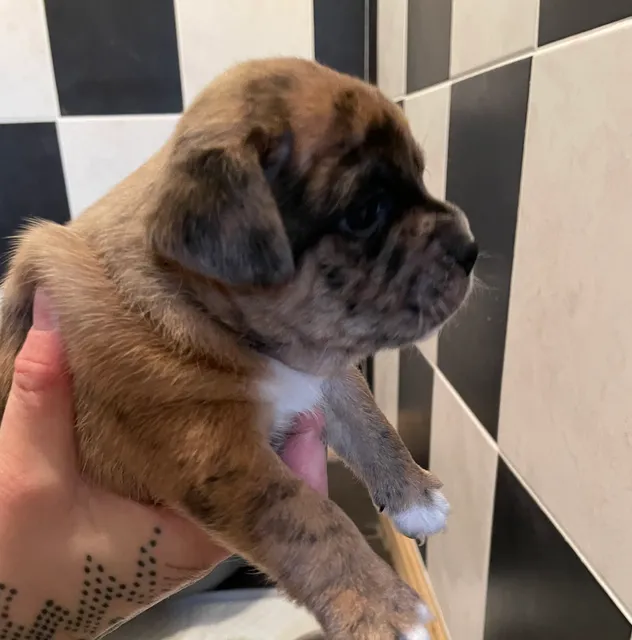

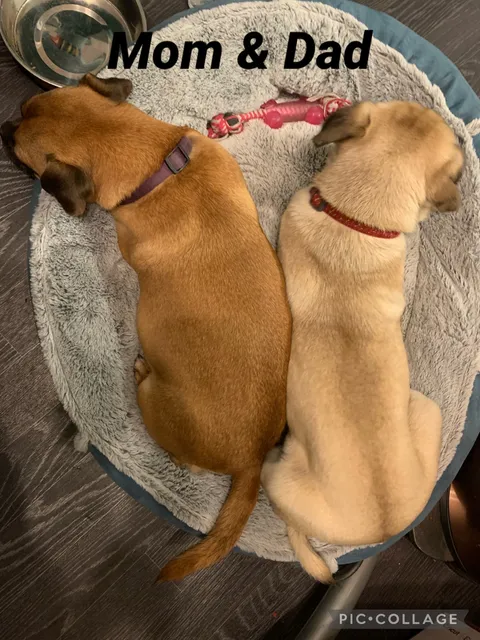
Find Jug adverts for sale and for adoption on Mypetzilla now.