Peterbald at a glance
- Size
- Medium
- Weight
- 2.3–4.5 kg
- Life expectancy
- from 12 years
Typical for the breed, not a promise about any one cat. Not assessed yet: Grooming, Shedding, Indoors and outdoors, Time alone, Owner experience.
Is the Peterbald right for you?
Like every breed, the Peterbald is not the right fit for every home. Based on the breed’s typical traits:
May suit you if…
- You have children and can supervise them with the cat.
- You have, or would like, another cat.
- You have a calm, cat-friendly dog and can introduce them slowly.
- You would enjoy an active, playful cat and have time to play every day.
Consider another breed if…
- You cannot keep the cat warm, out of strong sun and bathed regularly.
- You would find a loud, talkative cat hard to live with.
- You would like a calm, laid-back cat.
How would the Peterbald fit your lifestyle?
Choose a few details for a general, non-guaranteed view.
About the Peterbald
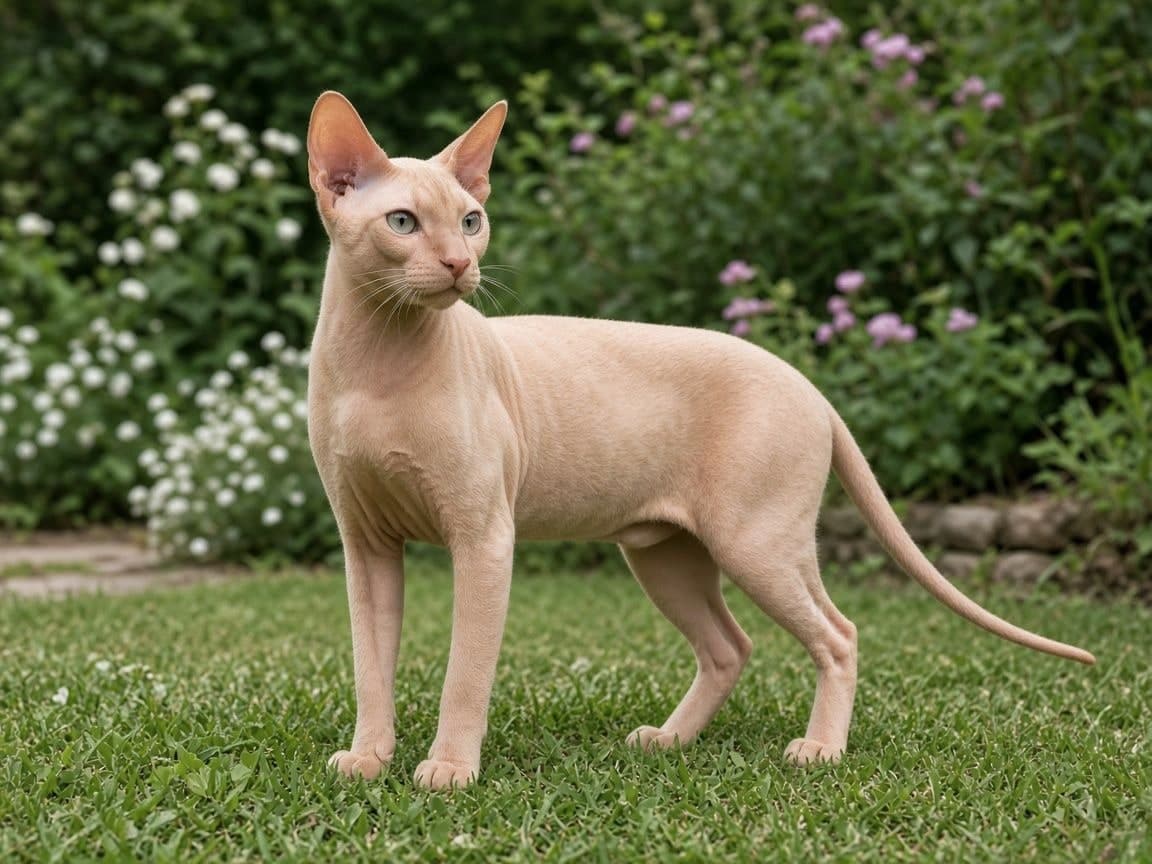
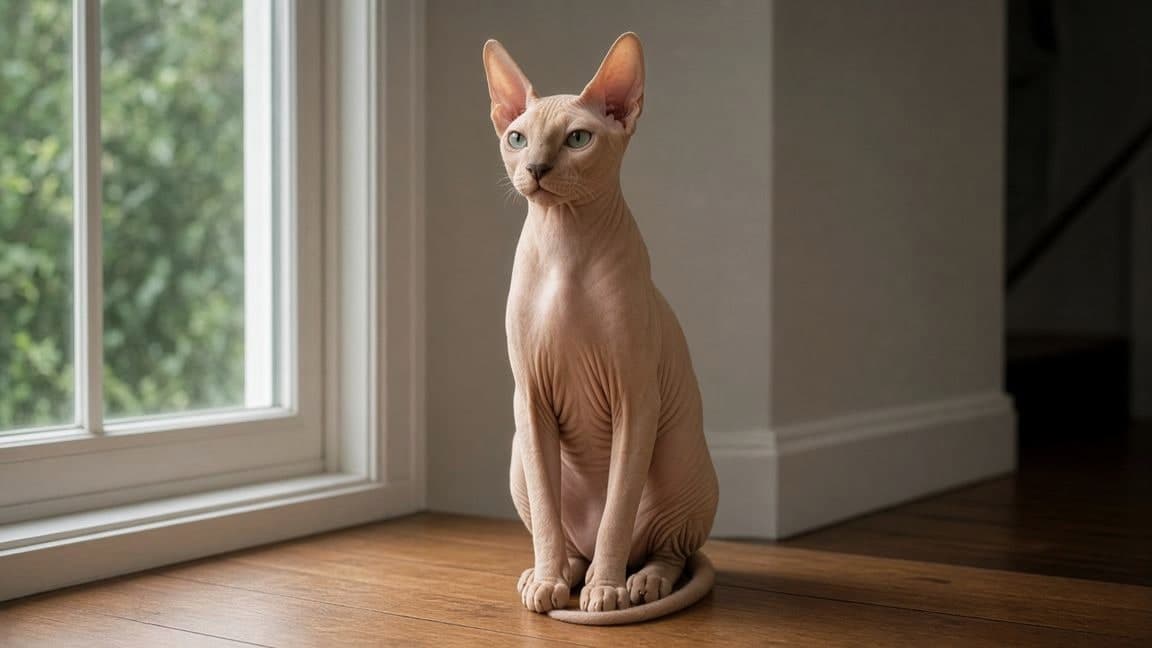
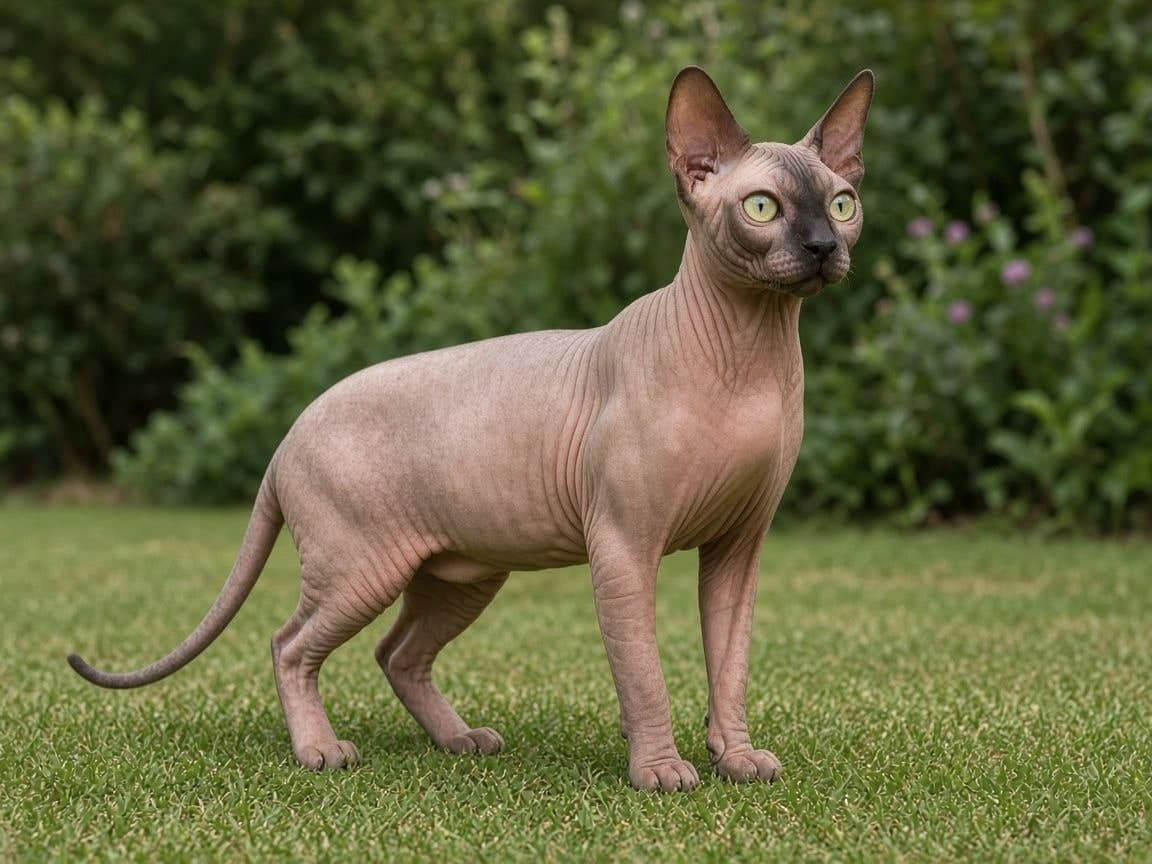
The Peterbald is a medium-sized, elegant cat with a long, lean, muscular body, a wedge-shaped head and very large ears. Its most unusual feature is its coat, which can be totally hairless, feel like the skin of a peach, or be a short velvet or wiry coat. Peterbalds are typically very affectionate, social and active cats that want to spend as much time as possible with their people.
Key characteristics
General breed tendencies, not a prediction for an individual cat.
- Size
Medium
A mid-sized cat.
- Coat length
Hairless
Little or no coat, so skin care and warmth matter.
- Activity level
Very active
Very active; needs plenty of play and things to climb.
- Grooming
Not assessed yet
Our sources do not say enough yet.
- Shedding
Not assessed yet
Our sources do not say enough yet.
- Vocal
Very talkative
Often very talkative, with a voice that carries.
- Good with children
Often good
Often good with children, with supervision.
- Good with other cats
Usually sociable
Usually enjoys the company of other cats.
- Good with dogs
Often fine
Often gets on with a cat-friendly dog.
- Suits first-time owners
Not assessed yet
Our sources do not say enough yet.
- Time alone
Not assessed yet
Our sources do not say enough yet.
- Indoors and outdoors
Not assessed yet
Our sources do not say enough yet.
The breed began in St Petersburg, Russia, in the early 1990s, when breeders mated an Oriental Shorthair with a Don Sphynx, a Russian cat carrying a dominant gene for hair loss. One of the kittens became the foundation sire of the breed. The International Cat Association (TICA), a US-based registry, accepted the Peterbald for championship in 2005, and the breed remains very rare.
The Peterbald is not recognised by the Governing Council of the Cat Fancy (GCCF), the main UK cat registry. GCCF says it has no intention of recognising further hairless breeds and that there are reported health problems associated with hairlessness. Cats Protection says hairlessness can lead to health problems, a poorer quality of life and higher vet bills, and encourages people choosing a cat to look elsewhere. International Cat Care's position is that breeding for hairlessness should be actively discouraged because it can impair a cat's normal function and quality of life. TICA, by contrast, says no breed-specific health issues have been reported to date.
Peterbald temperament
Peterbalds are usually loving, loyal and highly social. Owners often compare their devotion to a dog's: they tend to follow their favourite people around, wait by the door and sit beside them at meals. Many are highly vocal and will talk back to their owners.
They are typically friendly with visitors and enjoy being the centre of attention, and they will spend as many hours on a lap as you allow.
Size and appearance
The Peterbald is medium-sized, with long, straight legs, small oval paws with long toes, and a long, whippy tail. TICA gives a typical weight of 5 to 7 lb for females and 7 to 10 lb for males, roughly 2.3 to 4.5 kg.
Coat types range from fully hairless, through a peach-like or suede texture and a soft downy coat, to a wiry coat. Some cats have an ordinary coat and do not carry the hair-loss trait. A kitten's coat can change during its first two years, and whiskers are often curled or missing. Peterbalds come in all colours, including pointed patterns.
How active is the Peterbald?
Peterbalds are typically athletic, intelligent and quick-moving. They enjoy being challenged and many will play fetch for long periods, then settle down happily once they have tired themselves out. A tall scratching post helps meet their need to scratch.
Peterbald grooming
Hairless Peterbalds do not need brushing, but they are not low maintenance. GCCF describes their skin care as high maintenance, and Cats Protection says hairless cats need routine skin care and protection from sun, heat and cold. TICA suggests bathing hairless cats every other week, taking care not to over-wash, and brushing coated cats once a week with a fine-toothed comb.
Regular nail trimming, ear cleaning and tooth brushing are also recommended. Hairless cats are not hypoallergenic: they still produce the protein that causes most cat allergies.
Indoors and outdoors
Because they lack the protection of fur, hairless cats are prone to sunburn and struggle to regulate their body temperature. Cats Protection advises keeping them out of the sun, providing cool spots in warm weather and extra warmth, such as blankets, in cooler weather. TICA notes they may need an extra layer in winter and sunscreen in summer.
International Cat Care warns that keeping vulnerable cats indoors to protect them can bring its own welfare problems, including stress.
Living with a Peterbald
TICA describes the Peterbald as getting along well with children and as a good breed for families.
Whatever the breed, young children should be supervised around cats and shown how to stroke them gently and let them walk away.
Children
Often good with children, with supervision.
Other cats
Usually enjoys the company of other cats.
Dogs
Often gets on with a cat-friendly dog.
Other cats and pets
Peterbalds typically live in harmony with other cats and with dogs.
Peterbald health
Not yet reviewed by a vet. This is general information, not veterinary advice: speak to your vet about your own cat’s health.
TICA says no health issues have been reported in the Peterbald so far. However, GCCF says there are reported health problems associated with hairlessness, and Cats Protection says hairless cats have a shorter life expectancy, possibly because of an increased risk of disease. TICA gives a life expectancy of 12 to 15 years or more. Regular vet checks are advised for hairless cats.
Skin problems
Without fur, hairless cats can suffer from skin conditions. Grooming bare skin can leave it irritated, inflamed or infected, and the skin should be checked regularly.
Sunburn
Hairless cats burn easily, so sun exposure needs to be limited.
Poor temperature regulation
Hairless cats cannot regulate their body temperature well, so they get cold easily in cooler weather and can overheat in warm weather.
What health checks should you ask about?
Responsible breeders and rescues are happy to talk about health, and any pressure to decide quickly is a reason to walk away. Before taking a Peterbald home, it is reasonable to ask about:
- Health testing of the parents. Ask which health tests the parents have had for conditions known in the breed, and to see the results.
- Veterinary and vaccination records. Kittens should have had a first vaccination and a vet check, with records you can take home.
- Microchip information. In England, cats must be microchipped and registered by 20 weeks old. Ask who the chip is registered to and how the transfer works.
- Registration paperwork. Registration papers, where they apply, record pedigree. They do not by themselves prove health or how a kitten was raised.
How much does a Peterbald cost to own?
There are two costs: bringing a Peterbald home, and looking after one well. Kitten prices depend on the breeder, health testing and demand; the adverts below show what sellers are asking today.
Ongoing costs are the ones new owners most often underestimate: food, insurance (which usually rises with age), routine vet care, vaccinations and parasite treatment, dental care, grooming, litter, scratching posts and toys, and a cattery or a sitter for holidays. Budget for the whole of the cat’s life, typically from 12 years, not just the first year.
Buying a Peterbald
If you have decided the Peterbald suits your life, take the same care choosing where your cat comes from. Meet the kitten in person, see it with its mother, and look at how the litter is raised.
- Check who you are dealing with: every Mypetzilla advert shows the seller type and what we have checked.
- Ask about health testing, vaccinations and the microchip before you commit.
- Take your time. Do not be rushed by deposits or "last one left" stories.
- Meet in person before paying anything, and keep conversations on Mypetzilla.
Adopting a Peterbald
Peterbalds do come up for adoption, through rescue organisations, breed rescues and private rehoming, often because an owner’s circumstances have changed rather than any fault of the cat. An adult cat arrives as a known quantity: its size, coat and character are already on show.
Rescues will usually talk you through the cat’s history, any medical care, and the home it needs, including children, other animals and time alone. Be honest about your circumstances: a good rescue would rather place a cat once, well.
Peterbalds looking for homes
Live from Mypetzilla, updated as pets are listed.
Find Peterbald adverts for sale and for adoption on Mypetzilla now.
Similar breeds you may want to consider
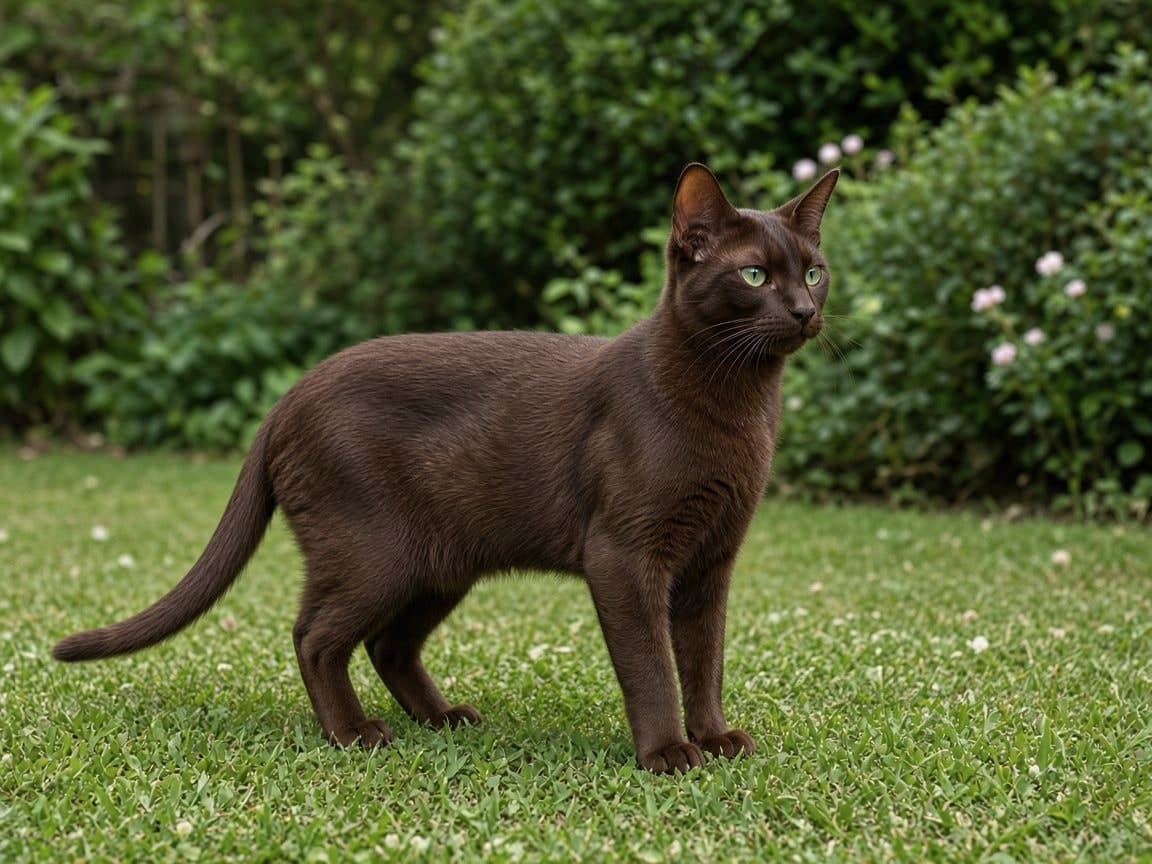
Havana Brown
Lively, intelligent, sociable, talkative, playful, inquisitive, athletic and affectionate.
View breed guideSphynx
Affectionate, sociable, intelligent, lively, curious, outgoing, energetic and playful.
View breed guideBalinese
Affectionate, inquisitive, playful, curious, outgoing, intelligent, extrovert and demanding.
View breed guide
Peterbald FAQs
Is the Peterbald good with children?
Often good with children, with supervision. Individual cats vary with breeding, upbringing and health, so ask about the cat you are considering.
How active is the Peterbald?
Very active and usually keen to play. Short play sessions every day help any cat stay fit and settled.
Is the Peterbald a talkative cat?
Often very talkative. Individual cats vary with breeding, upbringing and health, so ask about the cat you are considering.
Does the Peterbald get on with other cats?
Usually enjoys the company of other cats. Introduce cats slowly, with separate food, water, litter trays and resting places.
Is the Peterbald good with dogs?
Often gets on with a cat-friendly dog. Individual cats vary with breeding, upbringing and health, so ask about the cat you are considering.
How long does the Peterbald live?
Typically from 12 years. Lifespan varies with genetics, weight, care and luck.
How big does the Peterbald get?
Adults typically weigh 2.3–4.5 kg.