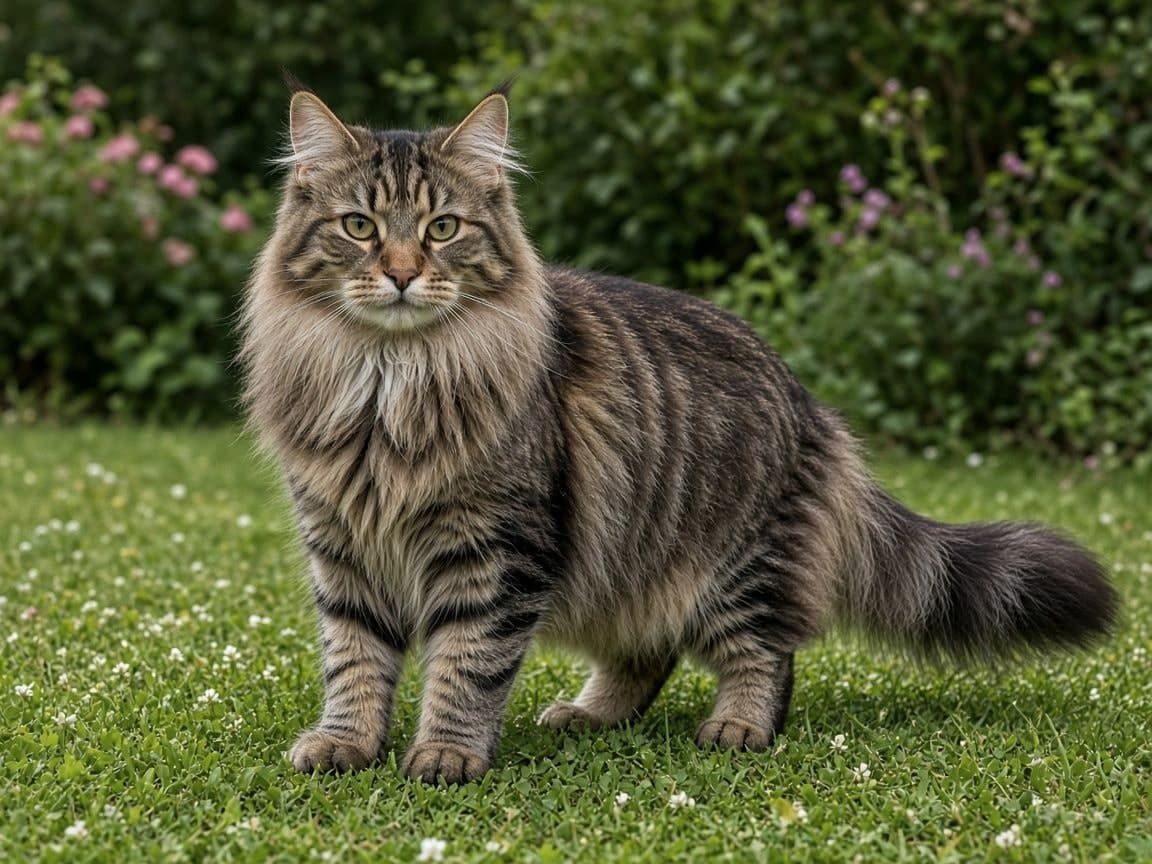
Norwegian Forest Cat at a glance
- Size
- Large
- Weight
- 5.8–10 kg
- Life expectancy
- 14–16 years
Typical for the breed, not a promise about any one cat.
Is the Norwegian Forest Cat right for you?
Like every breed, the Norwegian Forest Cat is not the right fit for every home. Based on the breed’s typical traits:
May suit you if…
- This would be your first cat and you are ready to learn.
- You have, or would like, another cat.
- You have a calm, cat-friendly dog and can introduce them slowly.
- You are out at work for part of the day.
Consider another breed if…
- The cat would have to live indoors only.
- You have young children at home.
- You would find a lot of cat hair hard to live with.
How would the Norwegian Forest Cat fit your lifestyle?
Choose a few details for a general, non-guaranteed view.
About the Norwegian Forest Cat
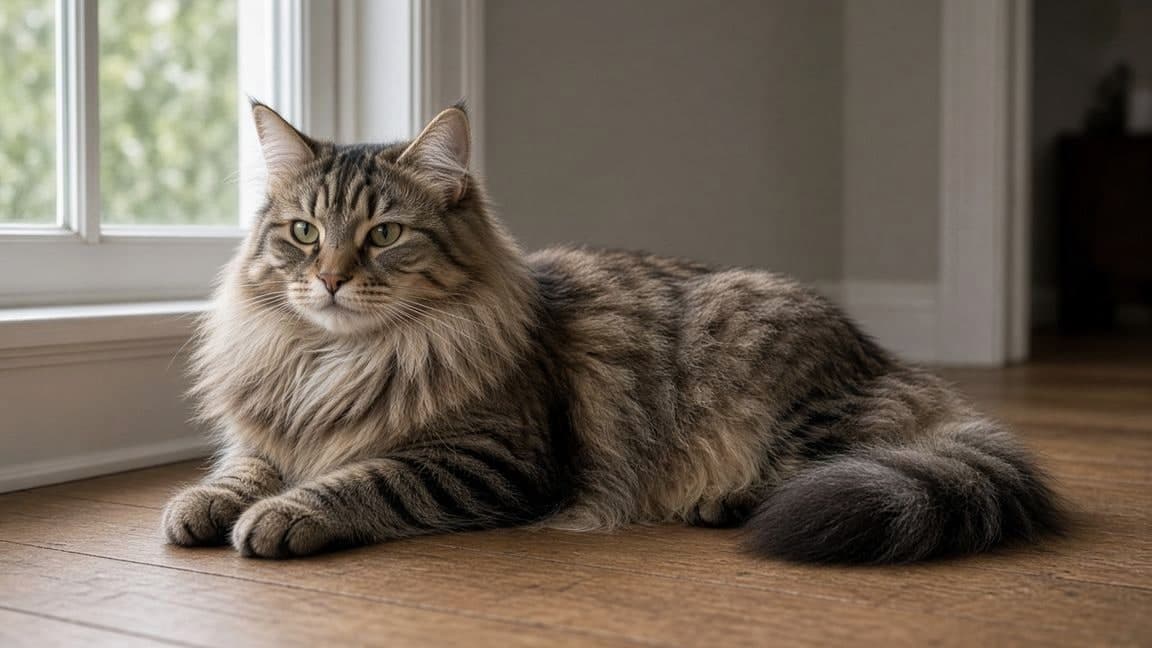
The Norwegian Forest Cat is a large, heavy-boned but elegant cat with a wild, rugged look, a long bushy tail, tufted ears and a thick semi-long coat. It is typically gentle, friendly and playful, enjoys being part of family life and is not demanding of attention. It is known in Norway as the Skogkatt or Norsk Skogkatt, and many owners call it the Wegie.
Key characteristics
General breed tendencies, not a prediction for an individual cat.
- Size
Large
Among the largest cat breeds.
- Coat length
Semi-long
A semi-long coat.
- Activity level
Lively
Lively and playful; needs daily play.
- Grooming
Weekly
The coat usually needs brushing about once a week.
- Shedding
High
Tends to shed a lot, so expect hair around the home.
- Vocal
Talks sometimes
Will talk to you, but is not usually loud.
- Good with children
Older children
Usually better with older, calmer children.
- Good with other cats
Usually sociable
Usually enjoys the company of other cats.
- Good with dogs
Often fine
Often gets on with a cat-friendly dog.
- Suits first-time owners
Often
Often suits first-time cat owners.
- Time alone
Copes alone
Often copes well alone during the day.
- Indoors and outdoors
Outdoor access
Usually happier with access outdoors.
This is an ancient natural breed that developed over hundreds of years in Norway's harsh climate. These cats very likely sailed with the Vikings to keep their ships free of vermin, and the breed appears in Viking legend. By the early 20th century it had become rare in its homeland because of crossbreeding with free-roaming shorthaired cats. Norwegian enthusiasts began working to save it in 1938, King Olav V named it the official cat of Norway in the 1950s, and an official breeding programme began in the 1970s. In the UK it gained preliminary recognition from the GCCF in 1989 and championship status in 1997, and it is now among the ten breeds most often registered with the GCCF.
Norwegian Forest Cat temperament
Norwegian Forest Cats are usually gentle and friendly, intelligent and independent. They enjoy human company and affection, but are happy to entertain themselves when no one is home and are not usually lap cats, partly because they can overheat.
They can be reserved with strangers. Purina notes they are slow to mature and can be shy, so may not suit a very boisterous home. They have a quiet voice except at dinnertime.
Size and appearance
This is a large, muscular cat with a solid bone structure, a long body, a deep chest and a powerful neck. Purina gives an adult weight range of about 5.8 to 10 kg, while the GCCF gives lighter figures, with males usually heavier than females. The breed is slow to mature and may not be fully grown until four or five years old. The large ears have lynx-like tufts, and the eyes may be any colour.
The semi-long coat has a dense, woolly undercoat under a smooth, water-repellent top coat of long, coarser guard hairs. In full winter coat the cat has a full ruff and fluffy breeches, and the coat is shorter in summer. Most colours are accepted with any amount of white, but not chocolate, lilac, apricot, caramel, cinnamon, fawn or the Siamese pattern.
How active is the Norwegian Forest Cat?
Norwegian Forest Cats typically have a lot of energy and enjoy interactive games. They are keen climbers and happily come down trees head first.
Provide plenty of toys and a strong climbing frame built to take the weight of a large cat. Food-dispensing toys that mimic parts of the hunt give them something to do and also help with their tendency to put on weight. They are said to have a liking for fishing, so protect any aquarium or garden pond.
Norwegian Forest Cat grooming
Although semi-longhaired, the coat is fairly low maintenance and does not need as much daily care as some longhaired breeds. A general groom once a week is usually enough for an adult, while kittens and elderly cats may need daily grooming.
Shedding is usually heavy, especially in spring. Brushing well during the spring moult removes dead coat and helps prevent knots, and the thicker winter coat also needs more attention.
Indoors and outdoors
Norwegian Forest Cats love the outdoors and are well suited to time outside, though they also enjoy a quiet home life. Purina advises a secure cat-proof fence around any outdoor space they can reach, or an enclosed run.
They usually cope well when left alone during the day, as long as they have toys and climbing opportunities. Purina notes that they suit a relaxed home.
Living with a Norwegian Forest Cat
The GCCF describes the Norwegian Forest Cat as family friendly and tolerant of respectful children. Purina is more cautious, saying it suits a quiet, patient family best and may not suit a very boisterous household or one with a constant stream of guests.
Whatever the breed, young children should be supervised around cats and shown how to stroke them gently and let them walk away.
Children
Usually better with older, calmer children.
Other cats
Usually enjoys the company of other cats.
Dogs
Often gets on with a cat-friendly dog.
Indoors and outdoors
Usually happier with access outdoors.
Being left alone
Often copes well alone during the day.
First-time owners
Often suits first-time cat owners.
Other cats and pets
Norwegian Forest Cats are usually tolerant of other cats and of dogs that are used to cats.
Norwegian Forest Cat health
Not yet reviewed by a vet. This is general information, not veterinary advice: speak to your vet about your own cat’s health.
The GCCF describes the Norwegian Forest Cat as a generally robust and healthy breed, but some conditions are recognised in it. Purina notes a tendency to gain weight.
Glycogen storage disease type IV
An inherited disorder in which affected kittens are stillborn or die soon after birth, although some develop normally until four or five months old. Both parents must carry the gene for a kitten to be affected. A DNA test can detect affected and carrier cats, and the breed's GCCF advisory committee recommends testing breeding cats where the disease may be present in a line.
Hypertrophic cardiomyopathy (HCM)
Purina lists this disease, in which the heart muscle becomes abnormally thick and cannot beat effectively.
Pyruvate kinase deficiency
A disease that causes anaemia through the loss of red blood cells. A DNA test is available.
Feline urinary syndrome
The GCCF says there is some anecdotal evidence that the breed is susceptible to this urinary condition, and that care should be taken with diet.
What health checks should you ask about?
Responsible breeders and rescues are happy to talk about health, and any pressure to decide quickly is a reason to walk away. Before taking a Norwegian Forest Cat home, it is reasonable to ask about:
- Health testing of the parents. Ask which health tests the parents have had for conditions known in the breed, and to see the results.
- Veterinary and vaccination records. Kittens should have had a first vaccination and a vet check, with records you can take home.
- Microchip information. In England, cats must be microchipped and registered by 20 weeks old. Ask who the chip is registered to and how the transfer works.
- Registration paperwork. Registration papers, where they apply, record pedigree. They do not by themselves prove health or how a kitten was raised.
How much does a Norwegian Forest Cat cost to own?
There are two costs: bringing a Norwegian Forest Cat home, and looking after one well. Kitten prices depend on the breeder, health testing and demand; the adverts below show what sellers are asking today.
Ongoing costs are the ones new owners most often underestimate: food, insurance (which usually rises with age), routine vet care, vaccinations and parasite treatment, dental care, grooming, litter, scratching posts and toys, and a cattery or a sitter for holidays. Budget for the whole of the cat’s life, typically 14–16 years, not just the first year.
Buying a Norwegian Forest Cat
If you have decided the Norwegian Forest Cat suits your life, take the same care choosing where your cat comes from. Meet the kitten in person, see it with its mother, and look at how the litter is raised.
- Check who you are dealing with: every Mypetzilla advert shows the seller type and what we have checked.
- Ask about health testing, vaccinations and the microchip before you commit.
- Take your time. Do not be rushed by deposits or "last one left" stories.
- Meet in person before paying anything, and keep conversations on Mypetzilla.
Adopting a Norwegian Forest Cat
Norwegian Forest Cats do come up for adoption, through rescue organisations, breed rescues and private rehoming, often because an owner’s circumstances have changed rather than any fault of the cat. An adult cat arrives as a known quantity: its size, coat and character are already on show.
Rescues will usually talk you through the cat’s history, any medical care, and the home it needs, including children, other animals and time alone. Be honest about your circumstances: a good rescue would rather place a cat once, well.
Norwegian Forest Cats looking for homes
Live from Mypetzilla, updated as pets are listed.
Find Norwegian Forest Cat adverts for sale and for adoption on Mypetzilla now.
Similar breeds you may want to consider
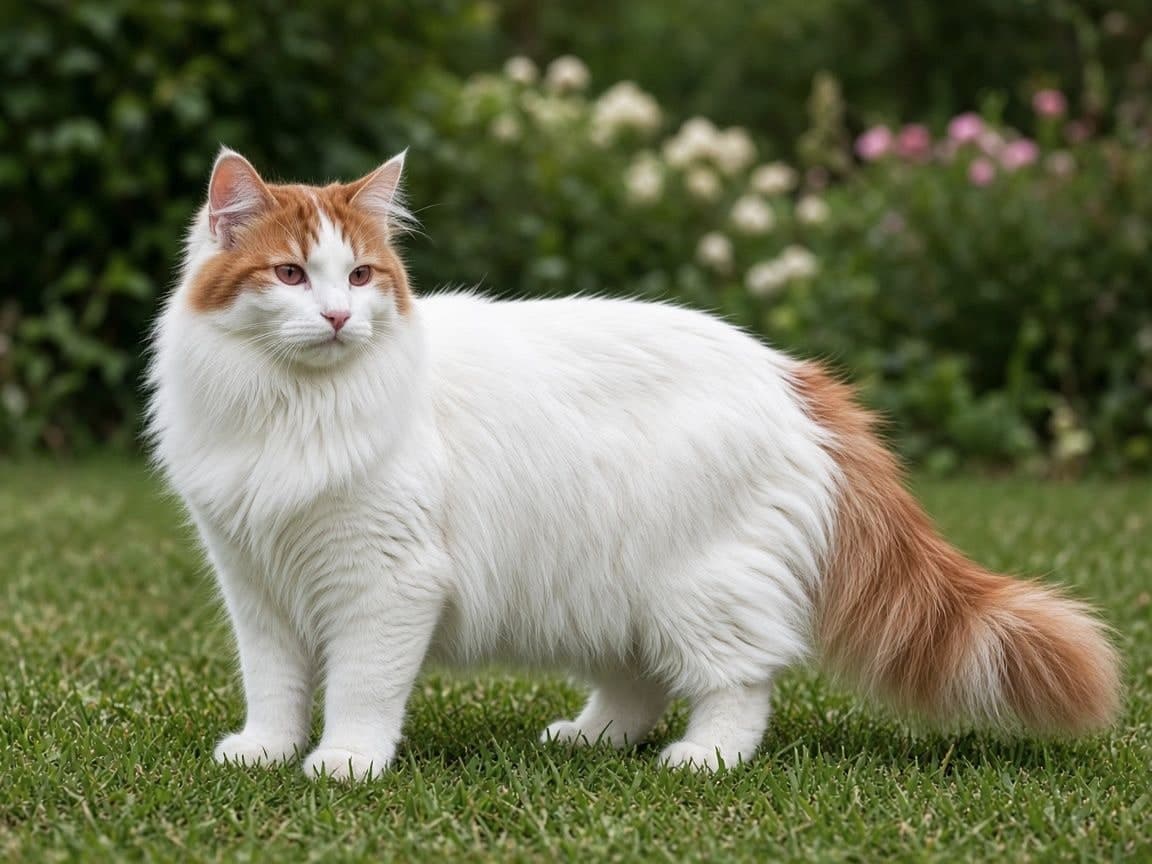
Turkish Van
Intelligent, affectionate, loyal, loving, active, playful, agile and characterful.
View breed guide
Norwegian Forest Cat FAQs
Is the Norwegian Forest Cat good with children?
Usually better with older, calmer children. Individual cats vary with breeding, upbringing and health, so ask about the cat you are considering.
Can the Norwegian Forest Cat be an indoor cat?
Usually happier with access outdoors. Indoor cats need daily play, places to climb and scratch, and a window to watch from.
How active is the Norwegian Forest Cat?
Lively and playful. Short play sessions every day help any cat stay fit and settled.
Does the Norwegian Forest Cat shed?
Tends to shed a lot.
How much grooming does the Norwegian Forest Cat need?
Typically: about once a week.
Can the Norwegian Forest Cat be left alone?
Often copes well alone during the day. Every cat needs company, play and someone to check on it each day.
Is the Norwegian Forest Cat a talkative cat?
Talks sometimes. Individual cats vary with breeding, upbringing and health, so ask about the cat you are considering.
Does the Norwegian Forest Cat get on with other cats?
Usually enjoys the company of other cats. Introduce cats slowly, with separate food, water, litter trays and resting places.
Is the Norwegian Forest Cat good with dogs?
Often gets on with a cat-friendly dog. Individual cats vary with breeding, upbringing and health, so ask about the cat you are considering.
How long does the Norwegian Forest Cat live?
Typically 14–16 years. Lifespan varies with genetics, weight, care and luck.
How big does the Norwegian Forest Cat get?
Adults typically weigh 5.8–10 kg.