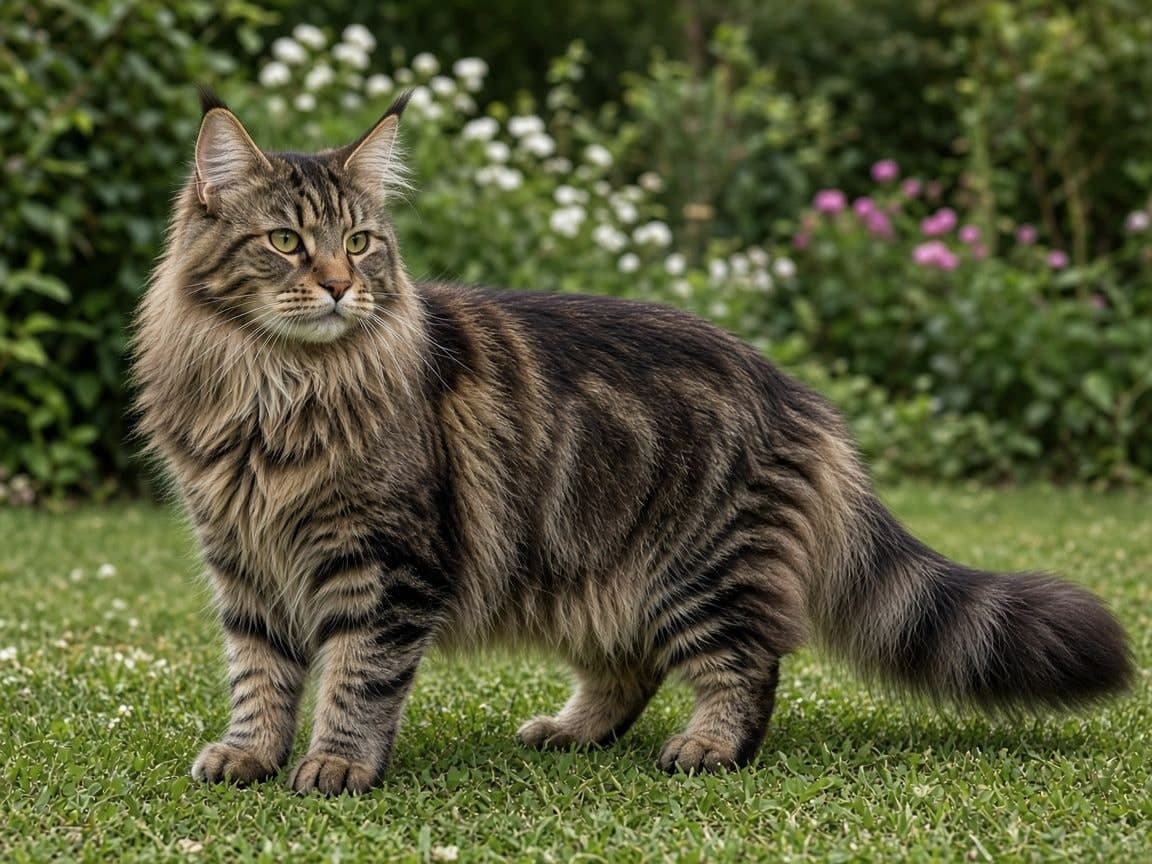
Maine Coon at a glance
- Size
- Large
- Weight
- 4.8–8.2 kg
- Life expectancy
- 9–15 years
Typical for the breed, not a promise about any one cat.
Is the Maine Coon right for you?
Like every breed, the Maine Coon is not the right fit for every home. Based on the breed’s typical traits:
May suit you if…
- You have children and can supervise them with the cat.
- This would be your first cat and you are ready to learn.
- You have, or would like, another cat.
- You have a calm, cat-friendly dog and can introduce them slowly.
Consider another breed if…
- The cat would have to live indoors only.
- You would find a lot of cat hair hard to live with.
How would the Maine Coon fit your lifestyle?
Choose a few details for a general, non-guaranteed view.
About the Maine Coon
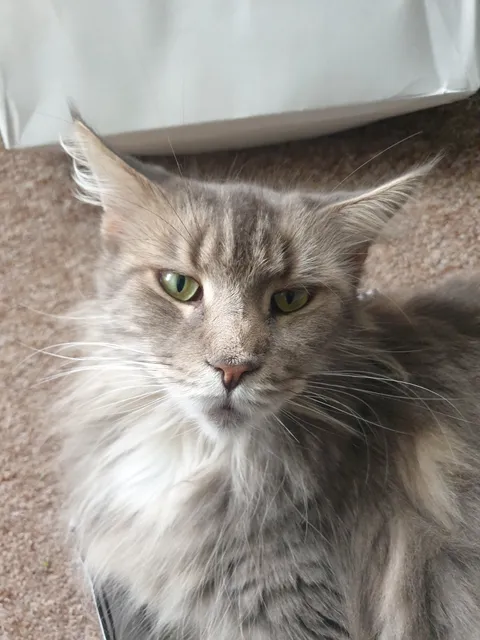
The Maine Coon is a large semi-longhaired cat with a long, rectangular body, substantial bone and a flowing, weather-resistant coat. It has large, tufted ears, tufted paws and a long, bushy tail. Despite its rugged, capable look, it is typically gentle, friendly and playful, which is why it is often known as the gentle giant. It is the largest domestic breed recognised by the GCCF.
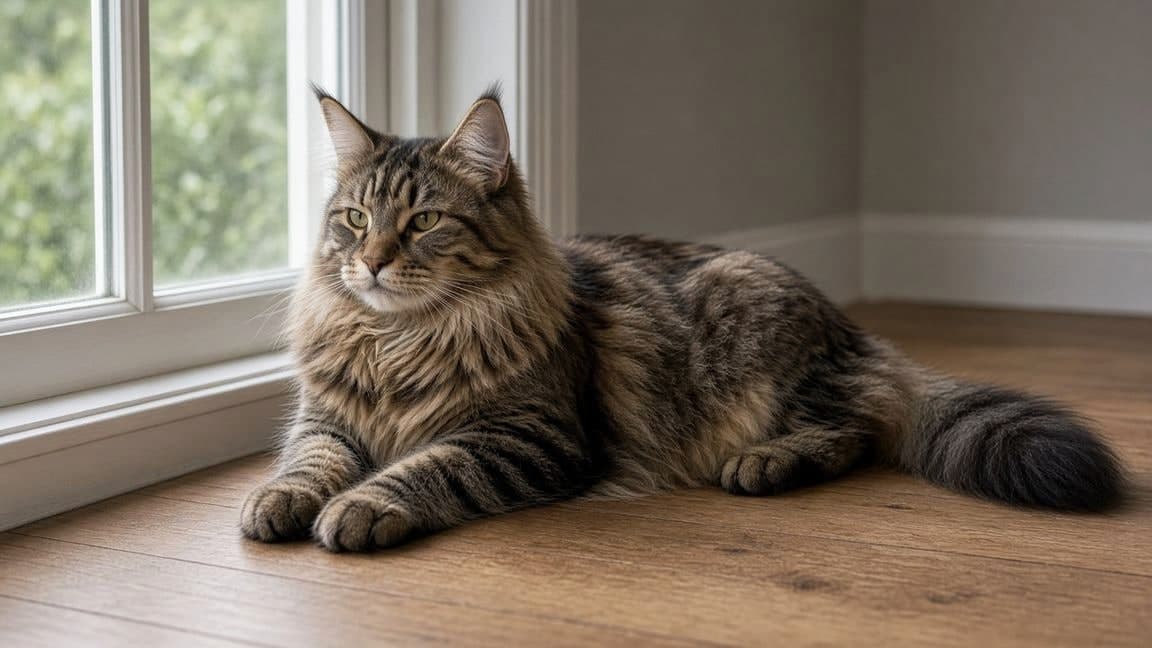
Key characteristics
General breed tendencies, not a prediction for an individual cat.
- Size
Large
Among the largest cat breeds.
- Coat length
Semi-long
A semi-long coat.
- Activity level
Lively
Lively and playful; needs daily play.
- Grooming
Weekly
The coat usually needs brushing about once a week.
- Shedding
High
Tends to shed a lot, so expect hair around the home.
- Vocal
Talks sometimes
Will talk to you, but is not usually loud.
- Good with children
Often good
Often good with children, with supervision.
- Good with other cats
Usually sociable
Usually enjoys the company of other cats.
- Good with dogs
Often fine
Often gets on with a cat-friendly dog.
- Suits first-time owners
Often
Often suits first-time cat owners.
- Time alone
Copes alone
Often copes well alone during the day.
- Indoors and outdoors
Outdoor access
Usually happier with access outdoors.
The breed evolved as a sturdy working cat on farms in New England, valued for hunting vermin, with a body and coat suited to the harsh Maine winters. Purina describes its likely ancestors as long-haired ships' cats brought to Maine by European seafarers, which then mated with local shorthaired cats. It is the official cat of the state of Maine.
Its popularity fell in the early 20th century, and in 1959 the US Cat Fanciers' Association declared it extinct. Enthusiasts in rural areas kept the breed going, and it gained championship status in the United States in 1976. The first Maine Coons arrived in the UK in 1984, and the GCCF granted championship status in 1993. It is now one of the most popular breeds registered with the GCCF.
Maine Coon temperament
Maine Coons are usually affectionate, tactile and friendly cats that enjoy human company and like being involved in whatever their family is doing. They tend to form strong bonds with their people and keep their playful ways throughout life.
They are known for a quiet chirping voice, although many will yowl when they want food. They are said to be very intelligent, and some learn to fetch, walk on a lead or open doors.
Size and appearance
This is a large, muscular breed, and Purina gives an adult weight range of about 4.8 to 8.2 kg. Maine Coons are slow to mature and can take up to four years to reach their full size. The eyes may be green, gold or copper; white cats may have blue or odd-coloured eyes.
The coat has an undercoat covered by a substantial, glossy top coat. It is shorter on the head and shoulders and longer down the back, flanks and tail, with shaggy breeches, belly fur and a frontal ruff that is heavier in males. Most colours are accepted, including solids, tortoiseshells, classic and mackerel tabbies, smokes, shadeds and bicolours, but not chocolate, lilac or colourpointed.
How active is the Maine Coon?
Maine Coons are typically high-energy cats and need plenty of room to play and to use their natural hunting instincts. Games with their owner that mimic hunting are especially valuable.
They also like to climb, jump and look out from high places, so a very strong climbing frame that can take their weight is a good idea, along with a range of toys.
Maine Coon grooming
The long, thick coat needs regular grooming to keep it in good condition and prevent knots and mats. The GCCF suggests weekly grooming, while Purina recommends brushing every day, so expect frequent sessions. Maine Coons usually look after their coats well themselves, but frequent grooming also helps to reduce shedding.
Shedding is usually heavy, especially in spring, when extra care is needed to remove the old coat. The large ears should be checked regularly to make sure they are clean.
Indoors and outdoors
Purina describes the Maine Coon as very much an outdoor cat that needs plenty of exploring opportunities and is likely to be unhappy confined indoors. If you are worried about roaming or theft, Purina suggests cat-fencing the garden or providing a very large outdoor run with enrichment that is regularly changed, while recognising that this does not fully replace free roaming. Think about this need before taking on a Maine Coon.
Indoors, they need space, toys and sturdy climbing furniture. Purina says they can usually cope with a busy household and can be left alone all day, though they enjoy, and often crave, human company.
Living with a Maine Coon
Maine Coons often make excellent family cats. They are usually calm and robust enough for normal family life and tolerant with children, though each cat's personality depends on its breeding and early experiences. Children need to learn to respect a large cat with sharp claws and teeth.
Whatever the breed, young children should be supervised around cats and shown how to stroke them gently and let them walk away.
Children
Often good with children, with supervision.
Other cats
Usually enjoys the company of other cats.
Dogs
Often gets on with a cat-friendly dog.
Indoors and outdoors
Usually happier with access outdoors.
Being left alone
Often copes well alone during the day.
First-time owners
Often suits first-time cat owners.
Other cats and pets
Maine Coons like company and usually bond well with another cat or the family dog. Purina notes they tend to get on with everyone, including well-behaved dogs.
Maine Coon health
Not yet reviewed by a vet. This is general information, not veterinary advice: speak to your vet about your own cat’s health.
The GCCF describes the Maine Coon as a generally healthy breed, but it names some inherited conditions and Purina lists a few more. Maine Coons can also tend to put on weight, so their diet needs care.
Hypertrophic cardiomyopathy (HCM)
A thickening of the heart muscle that reduces how much blood the heart can pump with each beat and can lead to heart failure. There is a DNA test for the Maine Coon form, and breeding cats can also have an ultrasound scan of the heart.
Hip dysplasia
The hip joint does not develop normally. There is no simple gene test, but breeding cats can be X-rayed to assess their hips before they are used for breeding.
Pyruvate kinase deficiency
A disease that causes anaemia through the loss of red blood cells. A DNA test is available.
Spinal muscular atrophy
A disease that causes loss of nerves and muscle weakness. A DNA test is available.
What health checks should you ask about?
Responsible breeders and rescues are happy to talk about health, and any pressure to decide quickly is a reason to walk away. Before taking a Maine Coon home, it is reasonable to ask about:
- Health testing of the parents. Ask which health tests the parents have had for conditions known in the breed, and to see the results.
- Veterinary and vaccination records. Kittens should have had a first vaccination and a vet check, with records you can take home.
- Microchip information. In England, cats must be microchipped and registered by 20 weeks old. Ask who the chip is registered to and how the transfer works.
- Registration paperwork. Registration papers, where they apply, record pedigree. They do not by themselves prove health or how a kitten was raised.
How much does a Maine Coon cost to own?
There are two costs: bringing a Maine Coon home, and looking after one well. Kitten prices depend on the breeder, health testing and demand; the adverts below show what sellers are asking today.
Ongoing costs are the ones new owners most often underestimate: food, insurance (which usually rises with age), routine vet care, vaccinations and parasite treatment, dental care, grooming, litter, scratching posts and toys, and a cattery or a sitter for holidays. Budget for the whole of the cat’s life, typically 9–15 years, not just the first year.
Buying a Maine Coon
If you have decided the Maine Coon suits your life, take the same care choosing where your cat comes from. Meet the kitten in person, see it with its mother, and look at how the litter is raised.
- Check who you are dealing with: every Mypetzilla advert shows the seller type and what we have checked.
- Ask about health testing, vaccinations and the microchip before you commit.
- Take your time. Do not be rushed by deposits or "last one left" stories.
- Meet in person before paying anything, and keep conversations on Mypetzilla.
Adopting a Maine Coon
Maine Coons do come up for adoption, through rescue organisations, breed rescues and private rehoming, often because an owner’s circumstances have changed rather than any fault of the cat. An adult cat arrives as a known quantity: its size, coat and character are already on show.
Rescues will usually talk you through the cat’s history, any medical care, and the home it needs, including children, other animals and time alone. Be honest about your circumstances: a good rescue would rather place a cat once, well.
Maine Coons looking for homes
Live from Mypetzilla, updated as pets are listed.
London, E16
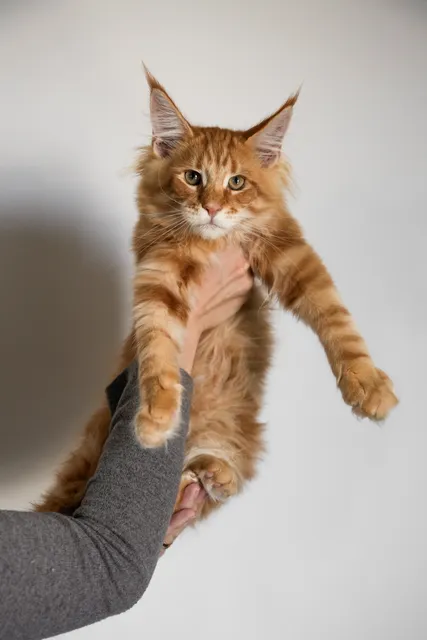
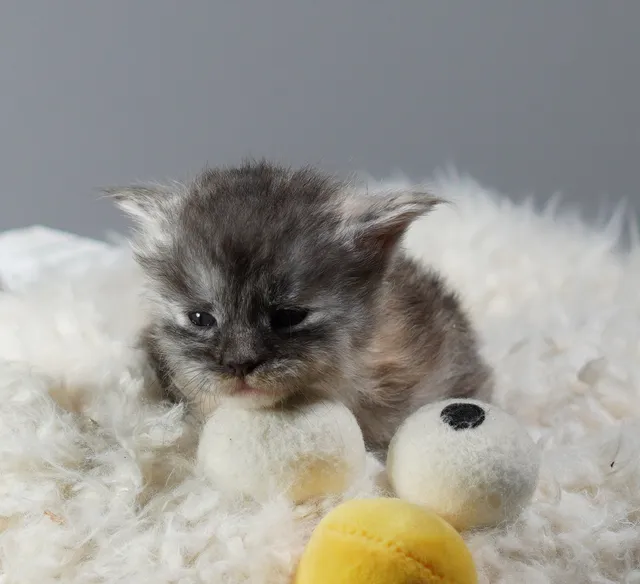
Maine Coon · 5 months old
Litter of 4 · 4 available (3 male, 1 female)
Listed 2 weeks ago
Eclipse Union Maincoons · Private seller
Find Maine Coon adverts for sale and for adoption on Mypetzilla now.
Similar breeds you may want to consider
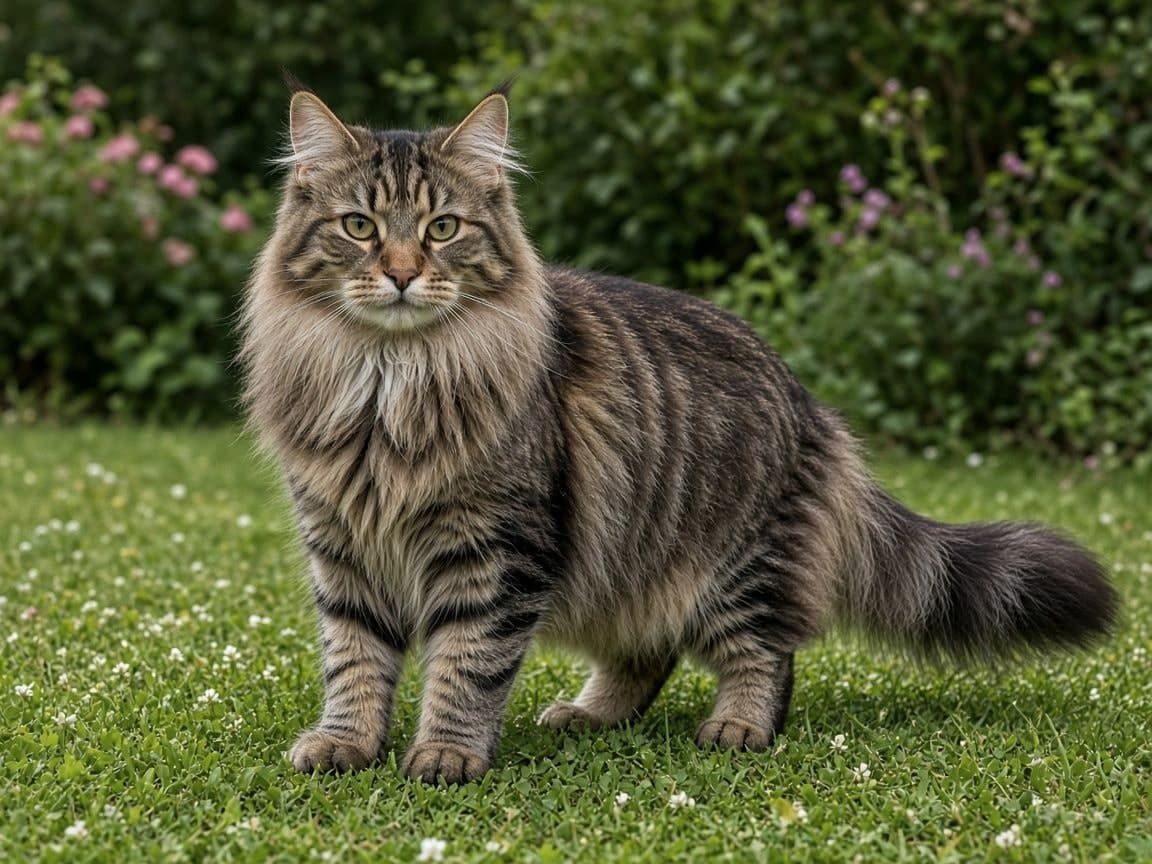
Norwegian Forest Cat
Gentle, friendly, playful, loving, intelligent, independent and reserved.
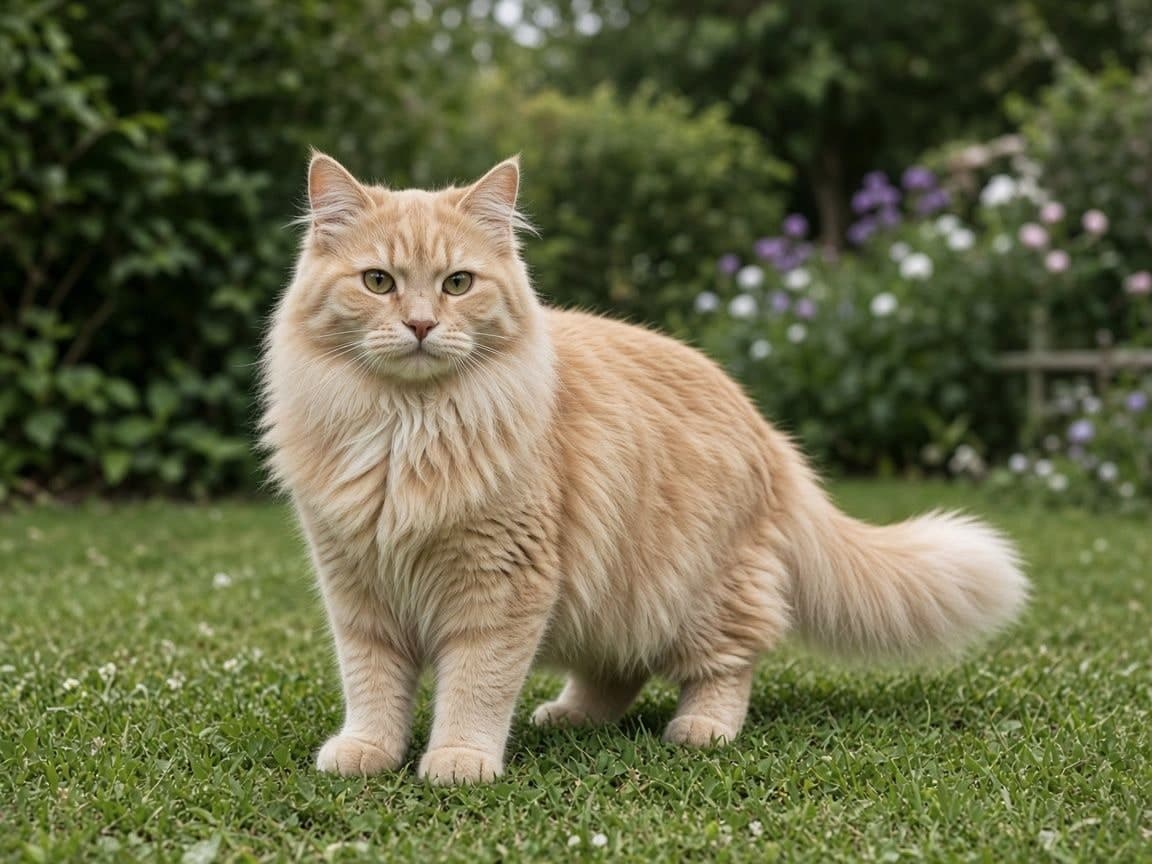
View breed guideRagaMuffin
Docile, affectionate, cuddly, calm, playful, friendly, intelligent and patient.
View breed guide
Maine Coon FAQs
Is the Maine Coon good with children?
Often good with children, with supervision. Individual cats vary with breeding, upbringing and health, so ask about the cat you are considering.
Can the Maine Coon be an indoor cat?
Usually happier with access outdoors. Indoor cats need daily play, places to climb and scratch, and a window to watch from.
How active is the Maine Coon?
Lively and playful. Short play sessions every day help any cat stay fit and settled.
Does the Maine Coon shed?
Tends to shed a lot.
How much grooming does the Maine Coon need?
Typically: about once a week.
Can the Maine Coon be left alone?
Often copes well alone during the day. Every cat needs company, play and someone to check on it each day.
Is the Maine Coon a talkative cat?
Talks sometimes. Individual cats vary with breeding, upbringing and health, so ask about the cat you are considering.
Does the Maine Coon get on with other cats?
Usually enjoys the company of other cats. Introduce cats slowly, with separate food, water, litter trays and resting places.
Is the Maine Coon good with dogs?
Often gets on with a cat-friendly dog. Individual cats vary with breeding, upbringing and health, so ask about the cat you are considering.
How long does the Maine Coon live?
Typically 9–15 years. Lifespan varies with genetics, weight, care and luck.
How big does the Maine Coon get?
Adults typically weigh 4.8–8.2 kg.